
Interventional cardiology SEO gets TAVR, Watchman, stent and leg-artery pages in front of the people who choose a cath lab. Those people are usually an adult child researching for a parent and the doctor who signs the referral. Most of the work sits on procedure pages, physician pages and Business Profiles, with technical fixes and reviews behind them.
General cardiology work, such as condition pages for AFib and heart failure, is in our cardiology SEO guide. This page stays with procedure programs, where Medicare coverage rules shape the copy and one operator may work at three sites in a week.
Research Keywords Patients and Referrers Use for Heart Procedures
Most interventional searches start after a clinic visit. A patient, or often an adult child, heard “TAVR” or “Watchman” from a cardiologist and wants to know what it means. A primary care doctor or general cardiologist searches for a place to send that patient.
A third search comes after the referral, when the patient types the operator’s name before the consult. What they read on the physician page often decides whether they keep the appointment.
| Procedure | Usual first searcher | Trigger for the search | Page that should rank |
|---|---|---|---|
| PCI and stents | Patient after an abnormal stress test or a heart attack | “Do I need a stent” or “stent recovery” | Stent procedure page with same-day discharge details |
| TAVR | Adult child of an older patient with aortic stenosis | A valve diagnosis and the phrase “without open heart surgery” | TAVR page with heart team steps and a candidacy section |
| Watchman (LAAC) | Patient with AFib who has trouble with long-term blood thinners | Bleeding, falls or a doctor mentioning an alternative | Watchman candidacy page with the decision-aid visit explained |
| Mitral repair (TEER) | Referring cardiologist | Heart failure with mitral regurgitation | Structural referral page with imaging and trial details |
| Peripheral angioplasty, stent or atherectomy | Patient with leg pain when walking | Calf pain, slow-healing foot wounds or a vascular test result | Leg pain symptom page linked to the PAD procedure page |
We sorted the searches below by what the person wants to do next. The list is ours and is a starting point to test, since local volume for a procedure like TAVR varies a lot from city to city.
| Intent group | Example searches | Page type | Example title tag |
|---|---|---|---|
| Procedure research | what is tavr; watchman procedure recovery; stent recovery time; atherectomy vs angioplasty | Procedure page | TAVR: What Happens Before, During and After | [Program] |
| Candidacy | am i a candidate for tavr; who qualifies for watchman; watchman shared decision making | Candidacy section or page | Who Qualifies for Watchman at [Hospital] |
| Symptom to procedure | leg pain when walking treatment; aortic stenosis treatment without open heart surgery; afib and blood thinner problems | Symptom page linked to the procedure | Leg Pain When Walking: PAD Testing and Treatment in [City] |
| Local provider | tavr hospital near me; watchman doctor [city]; interventional cardiologist near me; pad specialist [city] | Location or service-line page | TAVR Program in [City] | [Hospital] |
| Coverage and cost | does medicare cover watchman; outpatient heart cath cost; tavr medicare coverage | Insurance and cost section | Watchman and Medicare: Steps Before Your Procedure |
| Site of care | outpatient cardiac cath lab [city]; same day stent; vascular lab near me | Site-of-care page | Outpatient Cath Lab at [ASC Name], [City] |
| Operator lookup | dr [name] interventional cardiologist; dr [name] tavr | Physician page | Dr. [Name], Interventional Cardiologist | [Group] |
| Referral | refer for tavr evaluation [city]; structural heart referral; laao referral criteria | Referral page for physicians | Refer a Patient for Structural Heart Care | [Program] |
Open Google Keyword Planner, choose “Discover new keywords” and enter seed terms such as “TAVR” and “Watchman.” Set the location to the counties your referrals come from. Planner shows volume in wide ranges unless the account has active spend, so read the numbers as a ranking between terms. Exact counts come later.
Search Console gives the real queries. In the Performance report, add a query filter for each procedure name and look at the pages that show up. If “watchman recovery” lands on the home page, the program needs a recovery section on the Watchman page. Candidacy and referral searches bring in the most per visit, so build those groups first.
Google’s Health in personalized advertising policy treats invasive procedures as a sensitive category, so paid search can’t use customer match or lookalike segments for them. Our guide to Google’s healthcare ad rules has the rest.
Fix Technical SEO on Your Heart Program Website
Open the Pages report in Search Console first. It lists every URL Google found and why some are not indexed. On hospital heart sites we often see old procedure pages sitting under “Crawled, currently not indexed” while a newer copy lives elsewhere on the domain.
Check Crawling and Clean Up Procedure URLs
Use URL Inspection on each procedure page after you publish it. The tool shows whether Google can fetch the page and which canonical it chose.
Keep folders flat and readable. A pattern like /heart/structural/tavr/, /locations/outpatient-cath-lab/ and /refer/structural/ lets you filter Search Console by folder later. Avoid putting the year or a campaign name in a URL, since TAVR pages stay live for a decade.
Internal links carry the most weight on these sites. Every procedure page should link to the physicians who do it and the sites where it happens. It should also link to the referral page for that service line, and each physician page should link back. A structural heart hub that links to TAVR, Watchman, mitral repair and tricuspid pages gives Google a clear map of the program.
Speed Up Cath Lab Pages and Serve Them Over HTTPS
Google indexes the mobile version of a page. Many families read TAVR pages on a phone in a waiting room, so test every procedure template on a phone first. Core Web Vitals pass when Largest Contentful Paint is 2.5 seconds or less, Interaction to Next Paint is 200 milliseconds or less and Cumulative Layout Shift is 0.1 or less.
The usual problems are large cath lab hero videos, chat widgets that load before the text, unsized images and physician carousels. Lazy-load anything below the first screen. Every page and every form should load over HTTPS, including old PDF patient guides.
Merge Duplicate City Pages and Submit a Sitemap
Groups with several hospitals often copy one TAVR page into five city pages and swap the town name. Google treats those as near duplicates and picks one to show. Write a city page only when something real differs, such as the operators, the site address, the imaging available or the parking. Point any leftover copies at the main page with a rel=”canonical” tag.
Name image files for what they show, such as tavr-heart-team-example-hospital.jpg, and write alt text a screen reader user would find useful. Serve images in WebP or AVIF at the size they display. Submit an XML sitemap in Search Console that lists only live, indexable pages, and split it by folder if the site has more than a few hundred URLs.
Add Schema Markup for Cath Labs and Operators
Schema.org added IndividualPhysician in version 24. A doctor’s page uses that type, and the practicesAt property lists each MedicalOrganization where the doctor works. The site page uses MedicalClinic, or Hospital for a hospital lab. A procedure page can describe itself with MedicalProcedure and a procedureType such as PercutaneousProcedure.
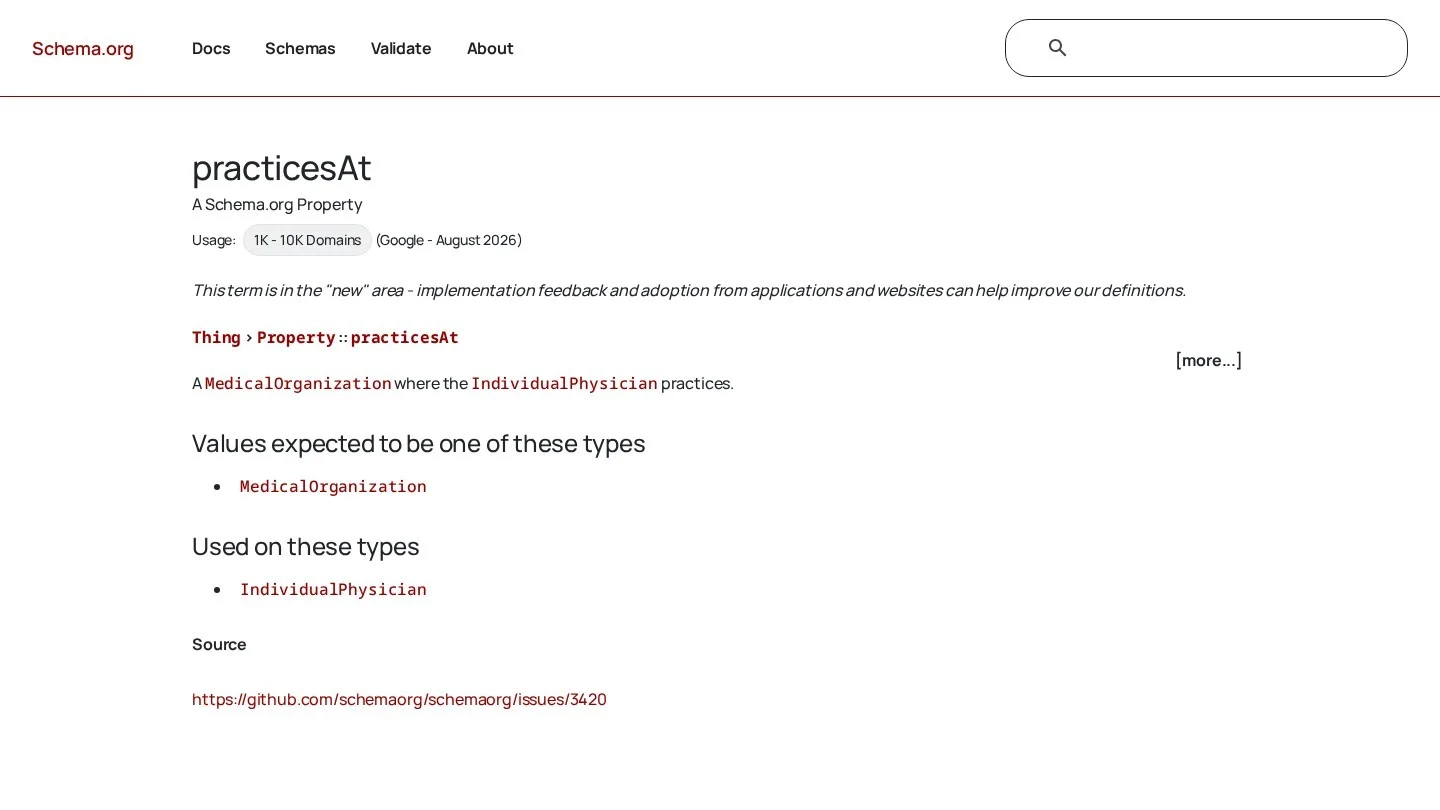
Our sample uses a fictional group. Swap in real names, URLs and the NPI, and put a site in the markup only if the visible page lists it too.
{
  "@context": "https://schema.org",
  "@graph": [
    {
      "@type": "MedicalClinic",
      "@id": "https://example-heart.com/locations/outpatient-center/#clinic",
      "name": "Example Heart Outpatient Cath Lab",
      "medicalSpecialty": "Cardiovascular",
      "telephone": "+1-555-010-0100",
      "address": {"@type": "PostalAddress",
        "streetAddress": "100 Example Ave, Suite 200",
        "addressLocality": "Springfield", "addressRegion": "IL",
        "postalCode": "62701", "addressCountry": "US"}
    },
    {
      "@type": "IndividualPhysician",
      "name": "Dr. Jane Example",
      "url": "https://example-heart.com/doctors/jane-example/",
      "medicalSpecialty": "Cardiovascular",
      "usNPI": "0000000000",
      "practicesAt": [
        {"@id": "https://example-heart.com/locations/outpatient-center/#clinic"},
        {"@type": "Hospital", "name": "Example General Hospital",
         "url": "https://example-heart.com/locations/general-cath-lab/"}
      ],
      "knowsAbout": ["Transcatheter aortic valve replacement",
                     "Percutaneous coronary intervention",
                     "Left atrial appendage closure"]
    },
    {
      "@type": "MedicalProcedure",
      "name": "Transcatheter aortic valve replacement (TAVR)",
      "procedureType": "https://schema.org/PercutaneousProcedure",
      "bodyLocation": "Aortic valve",
      "url": "https://example-heart.com/heart/structural/tavr/"
    },
    {
      "@type": "FAQPage",
      "mainEntity": [{
        "@type": "Question",
        "name": "How long does TAVR take?",
        "acceptedAnswer": {"@type": "Answer",
          "text": "Most TAVR procedures at Example Heart take one to two hours."}
      }]
    }
  ]
}
Google has no rich result for physicians, and it shows FAQ rich results only for well-known government and health sites. The markup still tells search engines which doctor works where. Test each template in the Rich Results Test and the Schema Markup Validator. Our healthcare SEO tools roundup covers both.
Keep Patient Data Out of Referral Form Tracking
The HHS Office for Civil Rights issued its guidance on online tracking technologies in December 2022 and revised it in March 2024. In June 2024 a federal court in Texas vacated the part covering public pages, where a visitor’s IP address meets a page about a condition. HHS dropped its appeal that August.
The rest of the guidance still applies. Tracking inside a patient portal, or on a form where someone books a TAVR consult, can send protected health information to the vendor. Any vendor that receives it needs a business associate agreement. Google says GA4 is not built for HIPAA-regulated data, so keep names, dates of birth and symptoms out of it. Use a form tool that signs a BAA, and send GA4 only a plain “form submitted” event with the service line.
Build Procedure, Candidacy and Referral Pages
We give every procedure page the same blocks in the same order. Open with who the procedure is for, in words a patient’s family would use, and then how the team decides. After that come the steps on the day, recovery, the site and the doctors who do the work. The page closes with one call to action for patients and one for referring doctors.
Put the target term in the title tag and the H1. “TAVR at Example General Hospital” works better than “Advanced Valve Solutions.” Write a meta description that answers the main question in under 155 characters.
Center Watchman Pages on the Shared Decision Visit
NCD 20.34, Medicare’s national coverage determination for percutaneous left atrial appendage closure, sets the patient criteria. A CHADS2 score of 2 or more qualifies, and so does a CHA2DS2-VASc score of 3 or more. The patient also needs a formal shared decision visit with an independent, non-interventional physician who uses an evidence-based decision tool on oral anticoagulation.
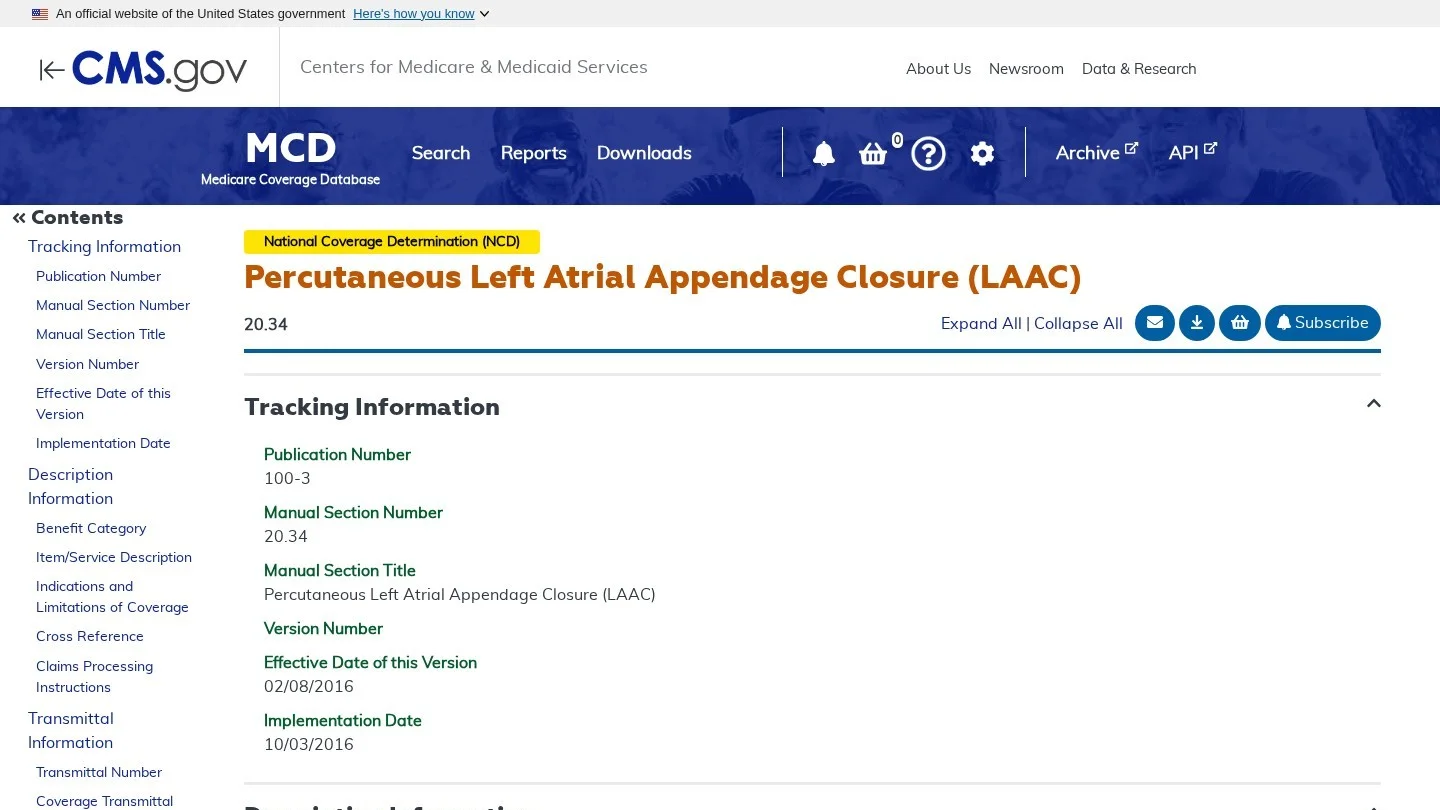
On the page, those rules become steps. One sentence explains the risk score. Another says who runs the shared decision visit and how to book it. Link the decision aid your program uses so the patient has read it before walking in.
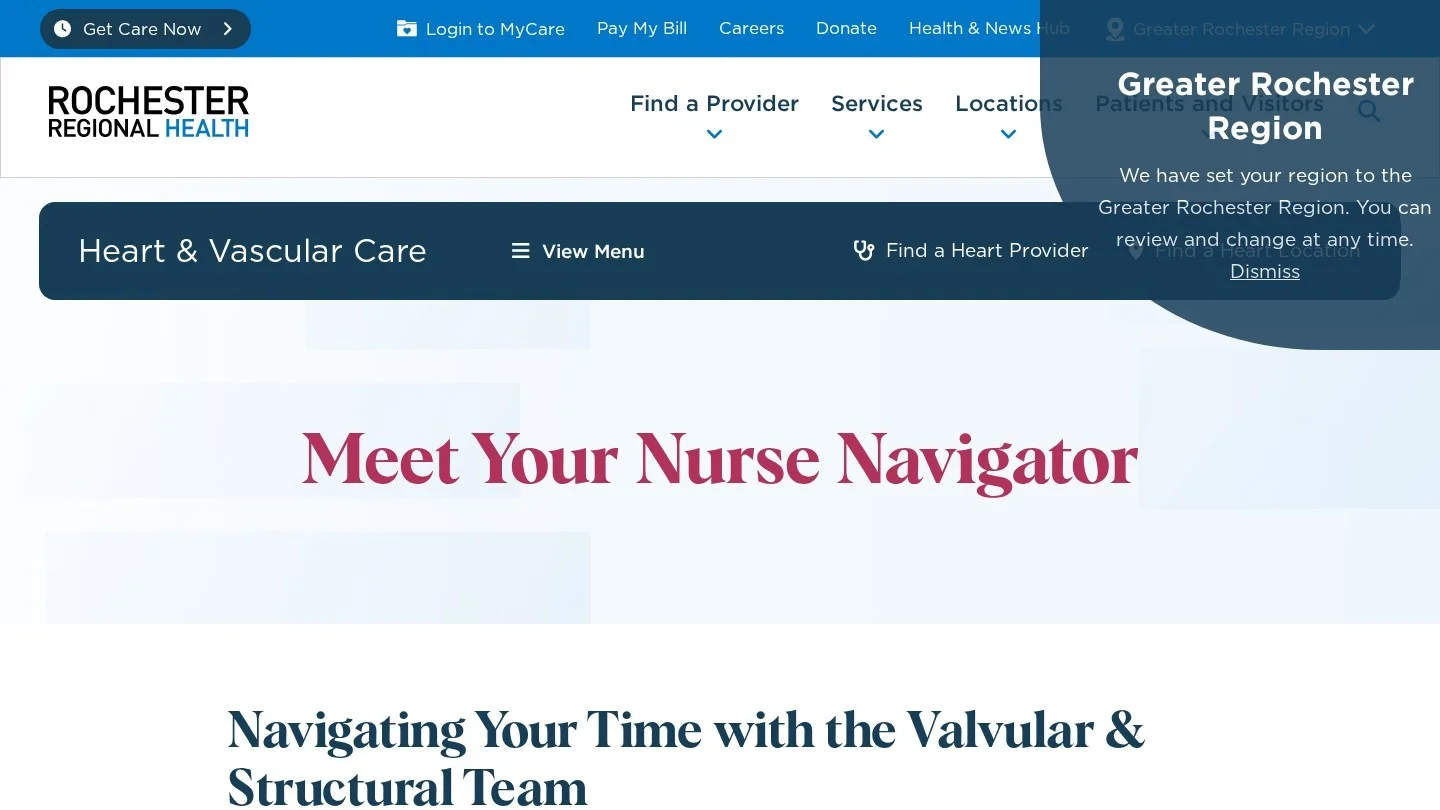
Rochester Regional Health’s Watchman nurse navigator page names the program coordinator and spells out his job. He goes over the chart with the patient’s providers and runs an education session before the physician consult. A direct phone number is on the page, along with the three electrophysiologists who lead the program.
Name the Whole Heart Team on TAVR Pages
Families researching TAVR ask who makes the call and how long the workup takes. Name the interventional cardiologist and the cardiac surgeon the patient will meet. Then list the tests before the procedure, such as an echo and a valve-planning CT scan.
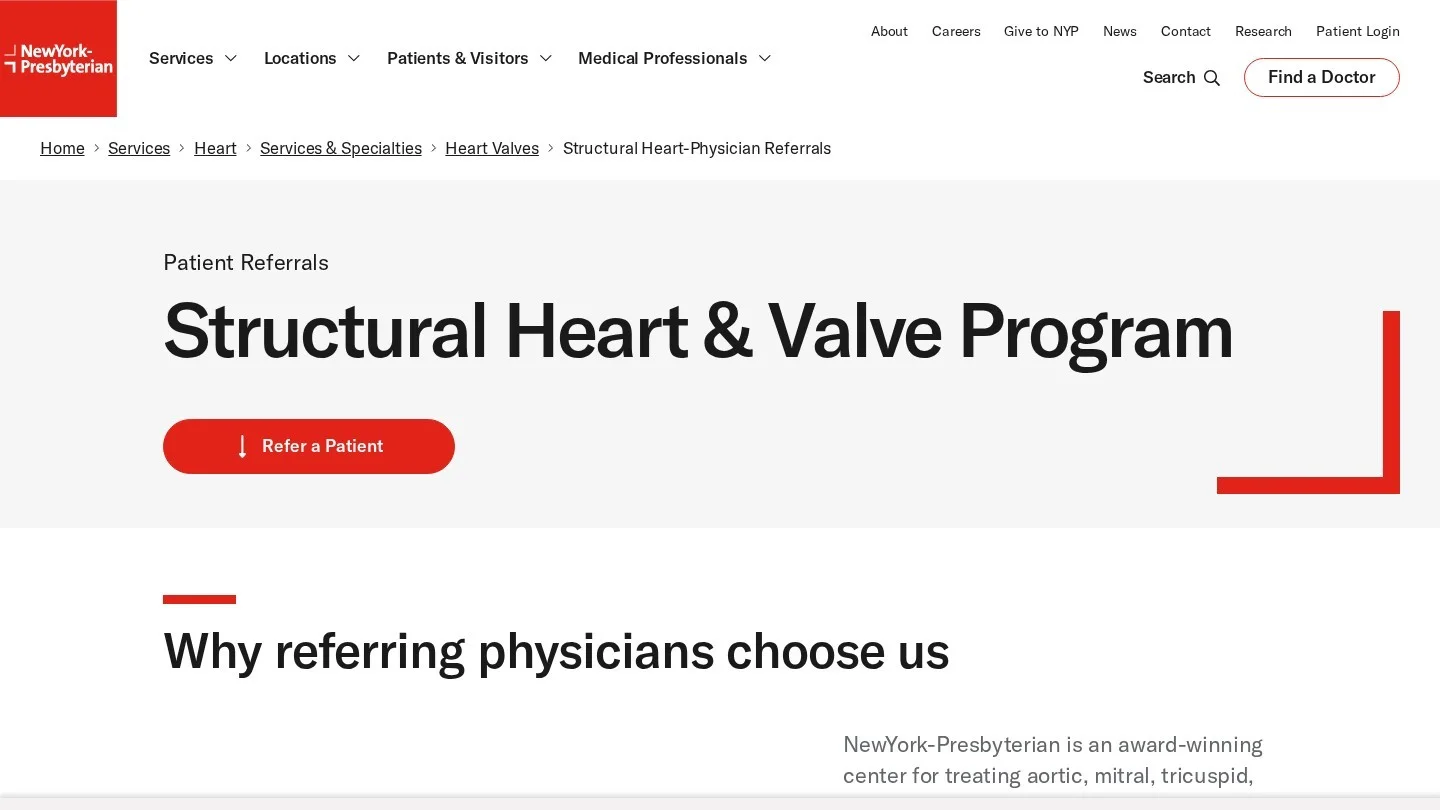
NewYork-Presbyterian’s heart valve referral page lists TAVR, transcatheter mitral and tricuspid options, MitraClip repair, pulmonary valve replacement, LAAO and balloon valvuloplasty together. It names the imaging behind them, including 3D and 4D echo and cardiac MRI. Every physician named there links to a profile, so the procedure topic is tied to real operators.
Explain Same-Day Discharge on Stent Pages
Stent patients worry most about the first 24 hours. Two nurse leaders on Parkview Health’s cath lab team wrote a same-day stent discharge article that starts with how cardiologists pick candidates. Nurses then check readiness before the patient leaves, and someone calls the next day to go over medications.
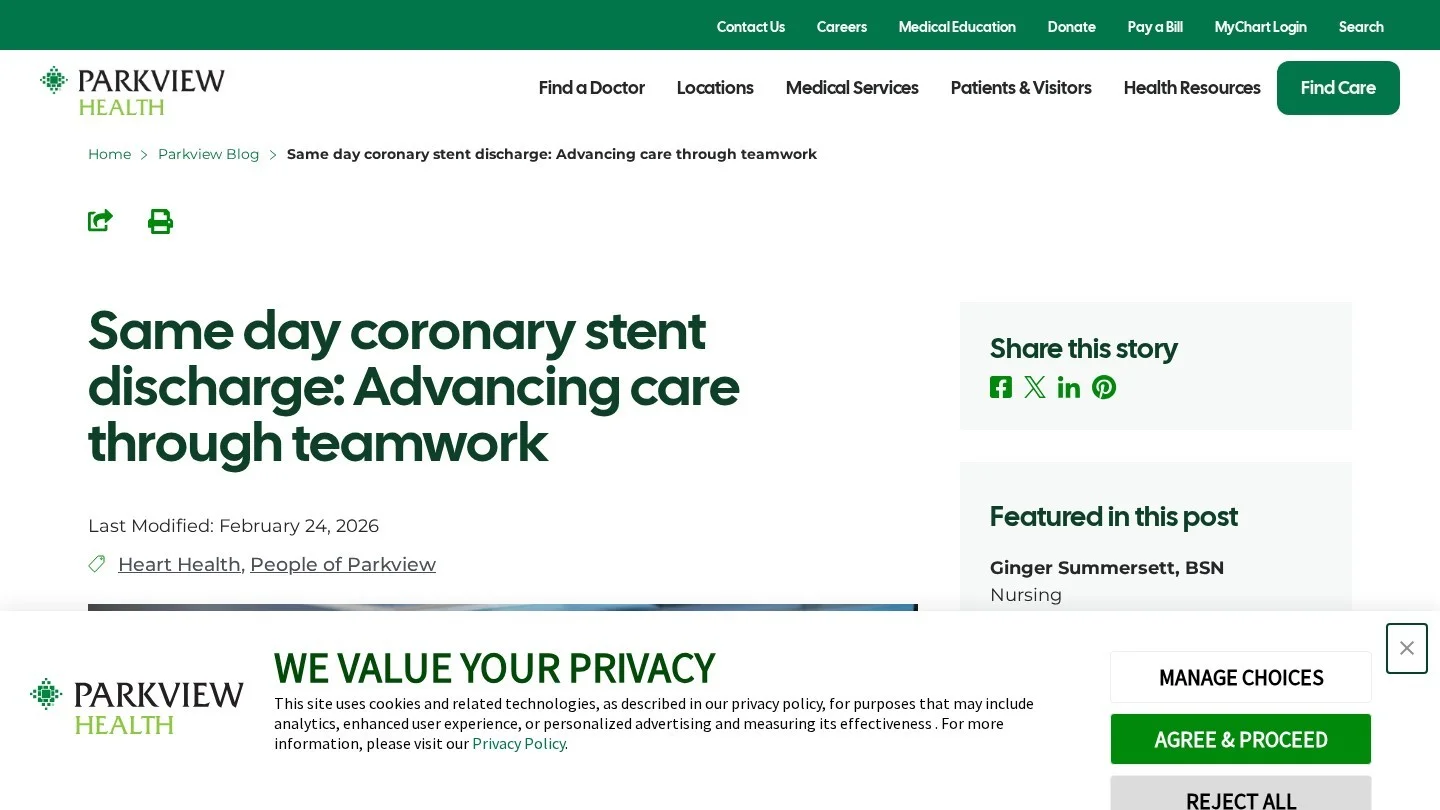
Link an article like that from the main PCI page. The PCI page targets “stent procedure” and the article targets “going home the same day after a stent.”
Open Peripheral Artery Pages With Leg Pain
PAD patients search for a symptom, usually calf pain when they walk or a foot wound that won’t heal. Penn Medicine Lancaster General Health’s angioplasty for PAD article opens on that symptom. It moves on to the balloon, the stent and the 30 to 90 minutes the procedure takes, then finishes with a phone number.
Copy that order for the PAD cluster. A symptom page catches the leg pain search and links to the procedure page, which covers angioplasty, stents and atherectomy. Every page in the cluster links to the site where the work happens.
Give Referring Doctors Their Own Pages
A referring cardiologist wants a phone number that reaches someone who can discuss the case. NewYork-Presbyterian’s referral page gives separate structural heart lines for its Columbia and Weill Cornell campuses, and its callback form opens with “Structural Heart” already selected.
Write one referral page per service line, since coronary, structural and peripheral referrals come from different doctors. Each page needs a direct line plus secure fax or e-referral. List the records to send, such as the latest echo, CT or ankle-brachial index result. Say how soon the first contact happens and when the consult note goes back. Link any open trials to their ClinicalTrials.gov listings.
Create a Page for Each Outpatient Cath Lab
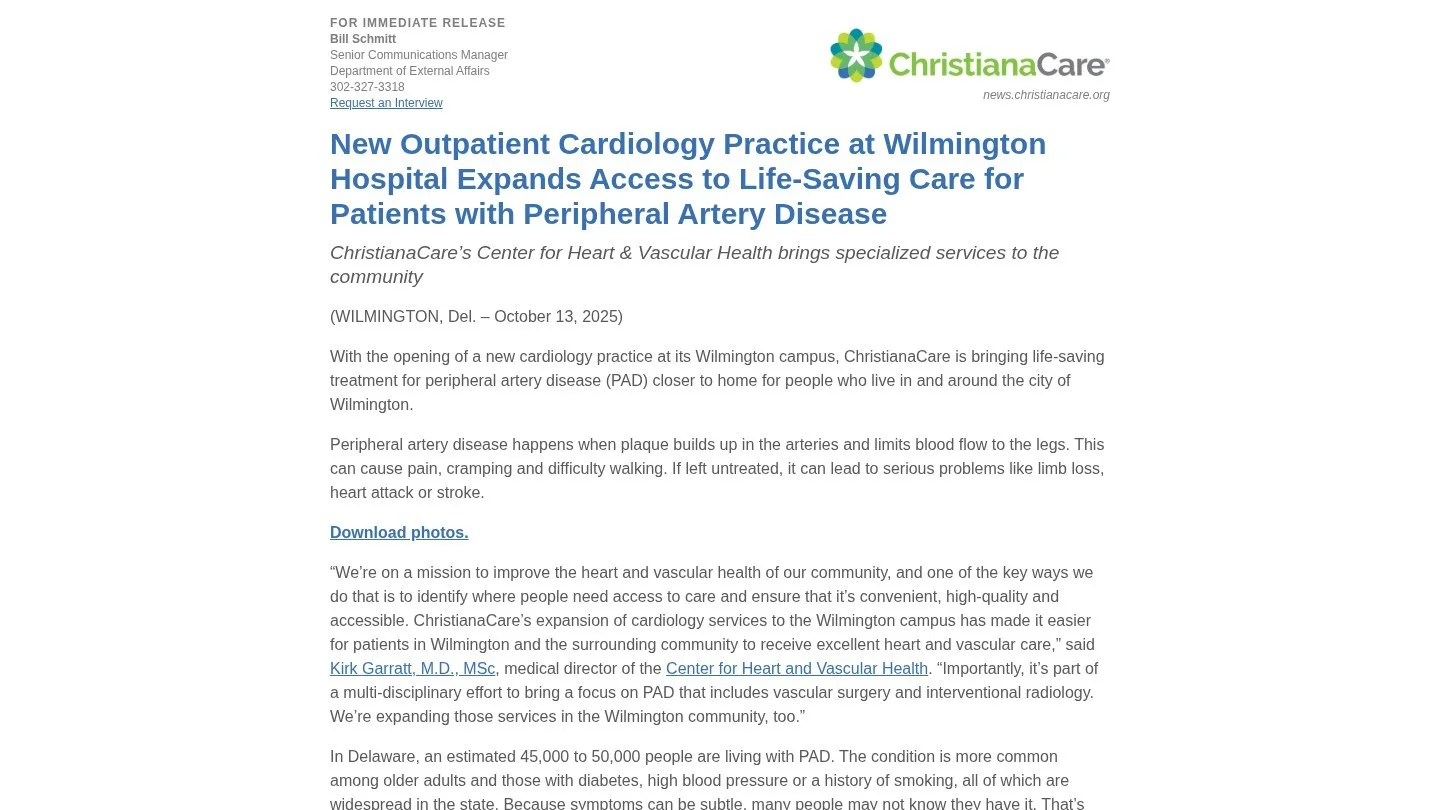
Medicare started paying ambulatory surgery centers for coronary angioplasty and stenting on January 1, 2020. Cardiac catheter ablation joined the ASC covered procedures list in the 2026 OPPS and ASC final rule. More cases are moving to outpatient sites, and each site needs its own page.
List what is done at the site and what stays at the hospital, and say that the cardiologist picks the setting for each patient. Families also look for arrival time, parking, visit length and who should drive the patient home. ChristianaCare’s announcement of an outpatient PAD practice in Wilmington gives the street address down to the floor. It lists Wednesday hours from 8 a.m. to noon and names the interventional cardiologist who sees patients there.
Publish TAVR and PCI Outcome Data Within Registry Rules
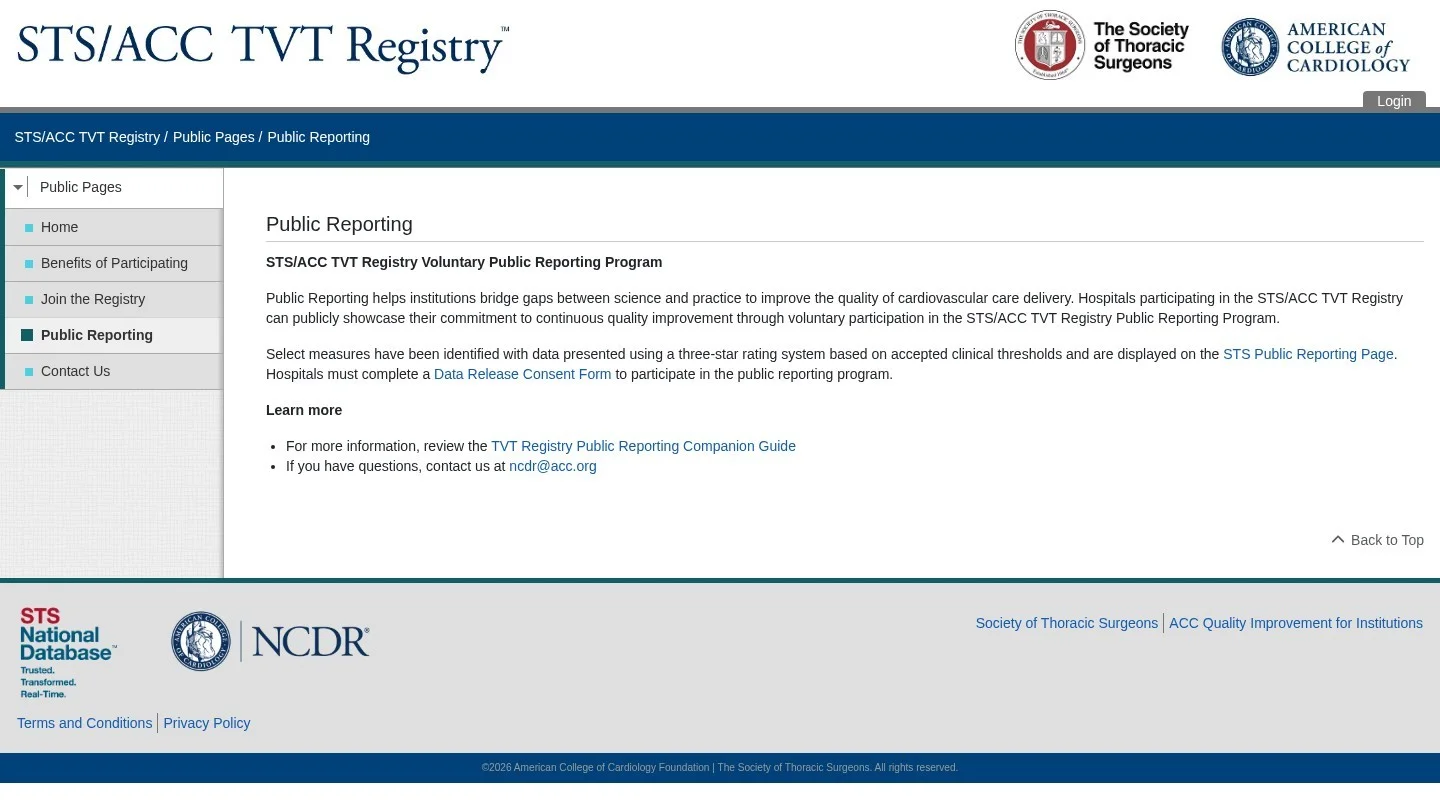
Registry star ratings flow through ACC’s NCDR public reporting program, which a hospital joins by signing a Data Release Consent Form. TAVR ratings come from the STS/ACC TVT Registry on a three-star scale.
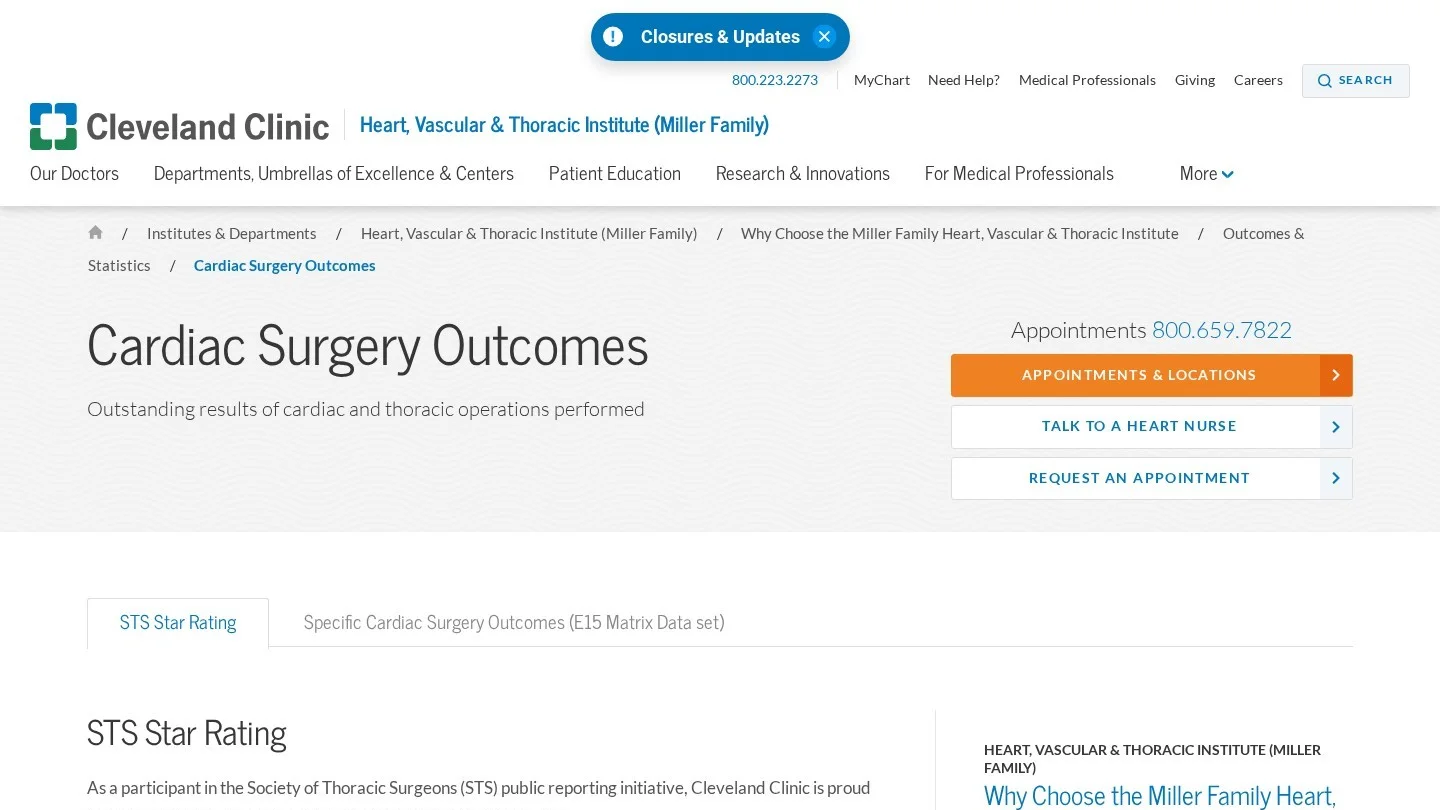
Cleveland Clinic’s cardiac surgery outcomes page lists each STS category where it holds three stars and puts the data period beside each one. Its TAVR line cites registry data from October 2021 to September 2024. Copy that layout.
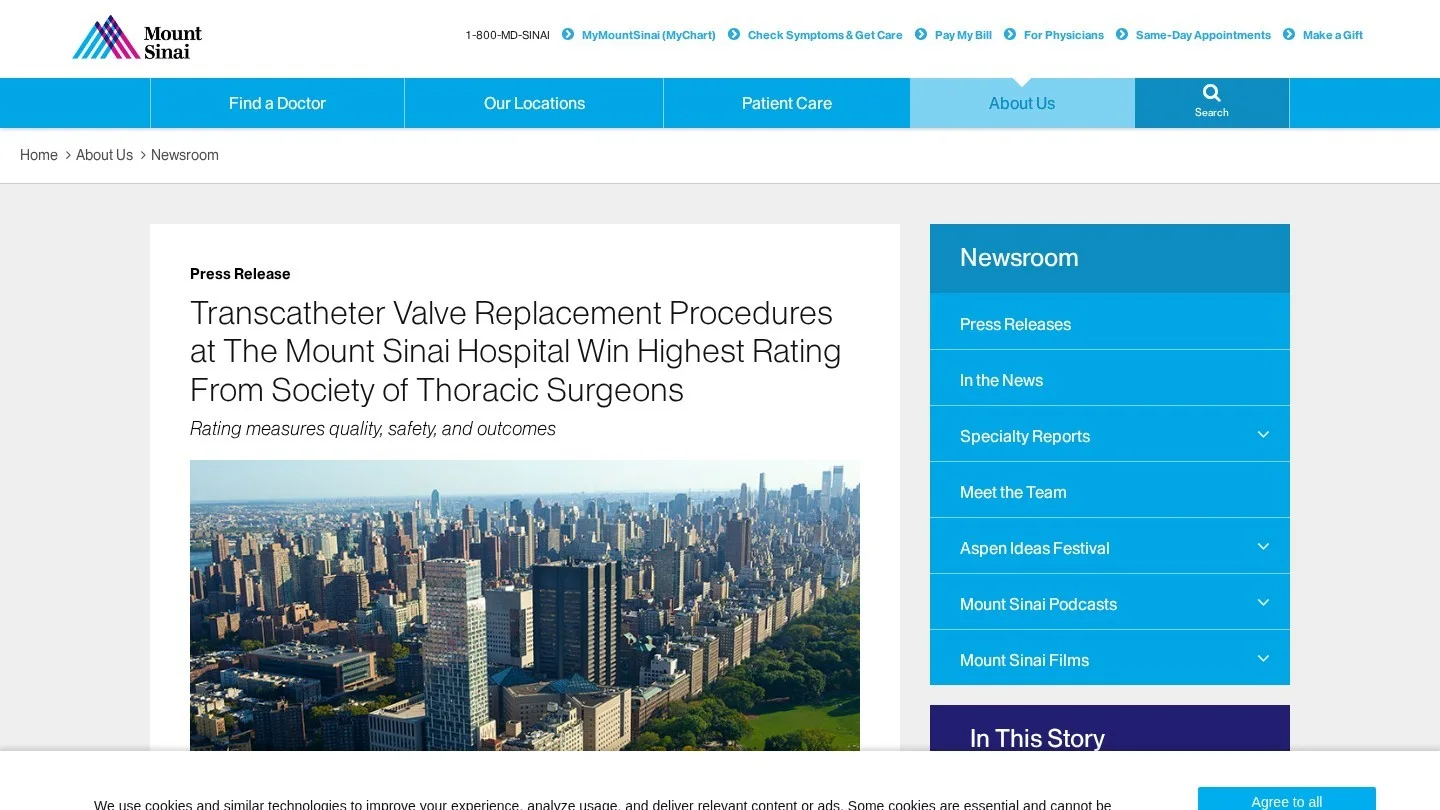
Mount Sinai’s November 2023 TAVR rating announcement explains what the stars measure. That covers death, stroke, bleeding, kidney injury and valve leakage within 30 days. Just 22 of 823 TAVR programs earned three stars that cycle.
| What you want to publish | Rule to follow on the page |
|---|---|
| STS or NCDR star rating | Name the registry and measure, give the data period and link to the public report |
| Procedure volume | Give the year and the procedure exactly, such as “513 TAVR procedures in 2022” |
| Internal outcome figures | Show observed against expected rates where the method allows, with dates and case counts |
| Any update | Replace the figures each reporting cycle and remove expired ratings |
Set Up Google Business Profiles for Each Heart Program Site
Give each public site its own Business Profile with its own address and phone line. A hospital cath lab, an outpatient surgery center and an office-based lab are three separate places that patients drive to. A heart program inside a hospital can have a department profile if it has a public entrance or phone line and a different category from the hospital.
Pick Categories, Services and Attributes
Pick the primary category that names what the site is. A physician practice uses Cardiologist. A surgery center that does diagnostic caths and elective PCI fits Surgical center, with Cardiologist as a secondary category if the doctors also see patients there. Add secondary categories only when the site really does that work.
In the Services list, add each procedure by its plain name and a one-line description, such as “TAVR evaluation and procedure.” Fill in the attributes that apply, like wheelchair-accessible entrance and online appointments. Link the website button to the matching location page, never the home page.
Post Photos and Updates Now That Q&A Is Gone
Upload real photos of the entrance, the waiting room, the parking lot and the team. A 30-second video of the walk from parking to check-in answers the question families ask most. Post updates when a new operator joins or a new device arrives, and link each post to the page that explains it.
Google confirmed in December 2025 that it was removing the public Q&A section in Maps. An AI “Ask” button now answers questions using the profile’s details and reviews. Owners can still answer questions in the profile, and those answers can feed Maps, but they no longer show in a public Q&A list. Put the facts people ask about, such as parking and referral rules, into the profile description and the website.
Keep Practitioner Listings Consistent to Avoid Suspensions
Google’s guidelines let each public-facing doctor in a group have a practitioner profile that carries only the doctor’s name. A solo practitioner who is the brand shares one profile, named in the “Brand: Doctor Name” format.
Keep the name, address and phone identical on the profile, the location page, the schema markup and every directory. Suspensions on heart sites usually trace back to a few habits. Watch for keywords stuffed into the business name, such as “Best TAVR Heart Center.” Duplicate profiles for one department cause trouble, and so do profiles at suites where no staff work. Fix the cause before asking for reinstatement.
List Every Interventional Cardiologist in Key Directories
Start with the NPPES NPI Registry, since several health directories pull practice addresses from it. Update the practice location in NPPES whenever a doctor changes sites. Then check the doctor’s listing on Medicare’s Care Compare, which draws on Medicare enrollment data.
Patients and referring doctors read Healthgrades, WebMD Care, Vitals, U.S. News Find a Doctor and Zocdoc. Doximity profiles matter more for referrals, because other physicians search it by name. Claim each one and copy the sites and procedures from your physician page.
For the practice and site listings, cover Apple Business Connect, Bing Places and Yelp. Then send the core data to the aggregators that feed smaller sites, including Data Axle, Foursquare and Neustar Localeze. One spreadsheet of every listing and login saves hours when a site moves.
Earn Links From Device Makers, Hospitals and Local News
Device makers run locators that list implanting centers. Boston Scientific’s Watchman implant center locator is one, and makers of TAVR valves and mitral repair systems keep similar finders. Ask your rep how the program is listed and whether the entry links to your Watchman or TAVR page. Fix the address if it is out of date.
Hospital affiliation pages come next. Every hospital where your operators hold privileges should link to their profiles or to your group. Society member directories, such as those of SCAI and the ACC, can add another verified mention for each doctor.
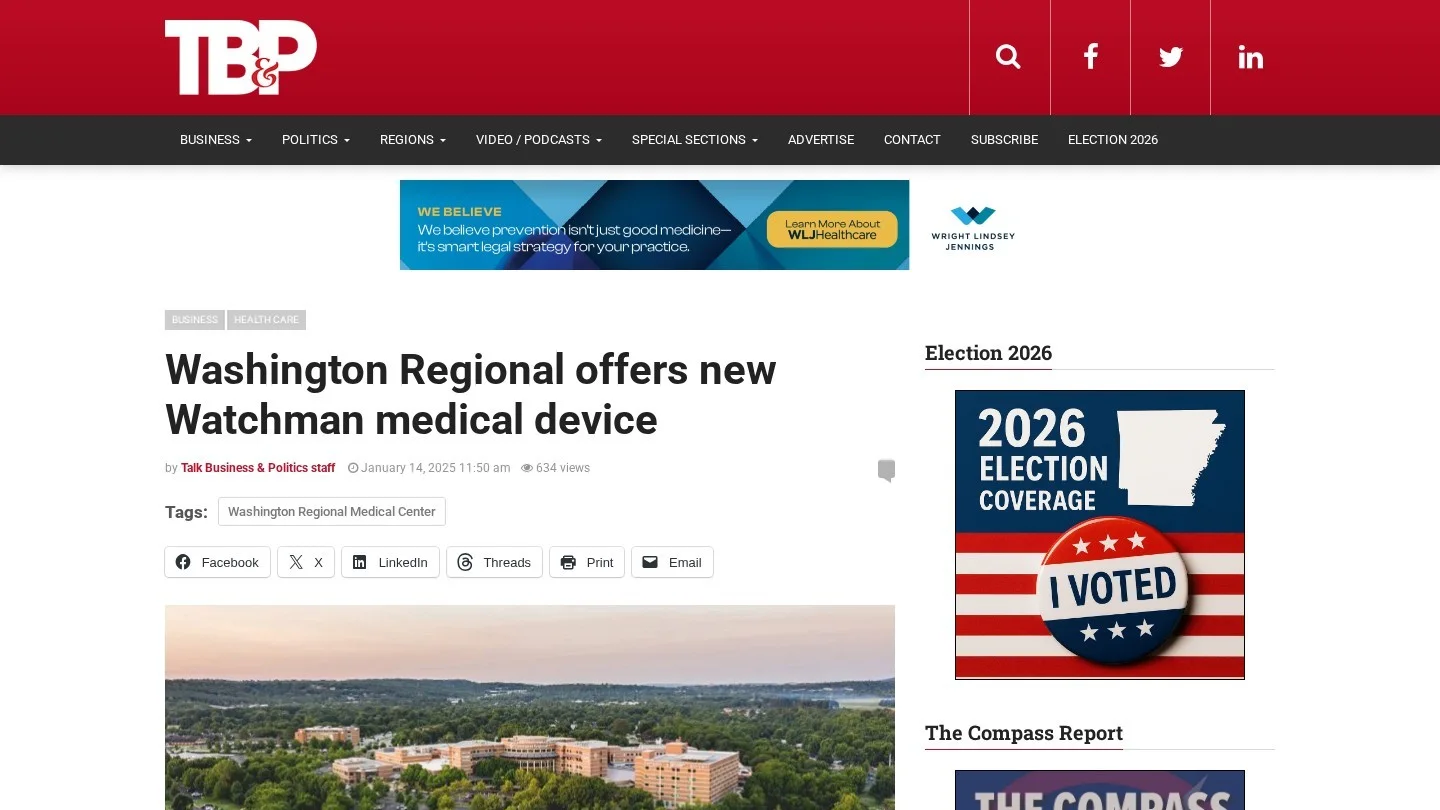
Local news links follow real milestones. When Washington Regional Medical Center added the Watchman FLX Pro in January 2025, Talk Business & Politics covered it and linked to the hospital’s website. The story named the cardiologist, gave the year the program started and explained the one-hour procedure. A first case, a 500th case or a new outpatient lab gives a reporter the same kind of story.
Sponsor a heart walk or a free PAD screening and ask for a link from the event page. Give referring practices a short page they can link to for “where we send valve patients.” Publish your own program data, such as average days from referral to consult, and pitch it to local reporters. Doctors who answer reporter queries on journalist request services can earn quotes with links in health stories.
Google’s spam policies treat buying or selling links that pass ranking credit as link spam. Large-scale link swaps and keyword-stuffed guest posts fall under the same rule. A sponsorship link is fine when it carries rel=”sponsored” or rel=”nofollow.” If a vendor offers a package of links for a fee, decline it politely.
Show Operator Credentials on Every Doctor Page
Put board certifications on every operator’s page, written the way the board names them. For most interventional cardiologists that means ABIM certification in Cardiovascular Disease and in Interventional Cardiology. Add fellowship training and the procedures the doctor does. List each site with its phone line.
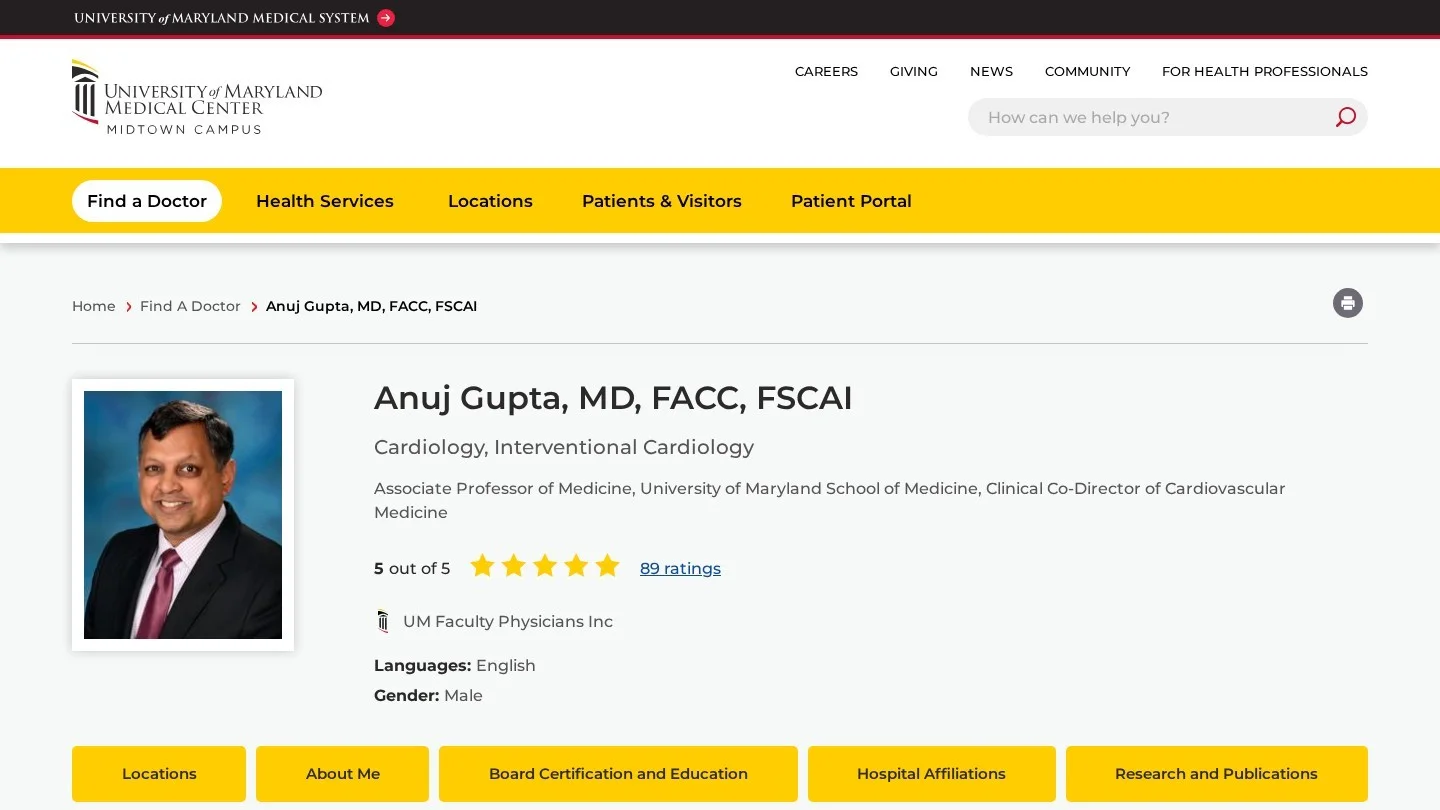
University of Maryland Medical System’s profile of Dr. Anuj Gupta shows the pattern. It gives his ABIM certification in Interventional Cardiology, three fellowships and his focus on severe aortic stenosis and TAVR. It also lists TAVR trials he has worked on, two office addresses with phone numbers and every hospital affiliation.
Every patient article needs a byline and a “medically reviewed by” line naming an interventional cardiologist, with a review date. Link the reviewer’s name to the profile. Use one brand name everywhere, so the program is “Example Heart Structural Program” on the site, the Business Profile, the device locator and the press release.
The FTC’s Endorsement Guides treat a patient story with an exceptional result as a claim that the result is typical. A “results may vary” line doesn’t fix that. Either hold proof that the outcome is typical or state clearly what patients can generally expect. Some state medical boards add their own rules on testimonials, so check yours.

Publish trust pages too. An About page with the program’s history and volume by year, an editorial policy, a privacy notice and an insurance page answer what families check before they call.
Get Cited in AI Answers to TAVR, Watchman and Stent Questions
Google says pages need no special markup to appear in AI Overviews. A page has to be indexed and eligible for a snippet. ChatGPT and Perplexity pull from pages they can crawl and from sources they trust.
Write a direct answer under each question heading. Put the answer in the first one or two sentences, then add detail. Banner Health’s TAVR page is built this way. Its headings include “Who may be a candidate for TAVR?” and “How long does the procedure take?” Its FAQ answers “How long is TAVR recovery?” with “Many people feel better in 30 days, though a full recovery can take a few months.”
AI tools match a program across sources by its name, address and services. If the Watchman locator, Healthgrades and your site each spell the program differently, the tool may not connect them. Keep the entity details identical, and keep listings current on the directories and review sites these tools read.
Large hospitals often have Wikipedia articles built from published facts like founding year and notable firsts. Most private groups won’t qualify, and staff should never write their own article. Get those facts into local news and your About page.
To track AI visits in GA4, build a custom channel group with a rule on session source. Match chatgpt.com, perplexity.ai, gemini.google.com and copilot.microsoft.com. AI Overview clicks are counted with regular web results in Search Console. Our healthcare AEO agencies page lists firms that do this work for hospitals.
Collect Reviews After Every Procedure
Ask every patient for a review at the same point, such as the follow-up visit a week after the procedure. Send a text with a direct link to the right site’s Business Profile. Don’t screen out unhappy patients first, since Google’s review policy bars selective asking.
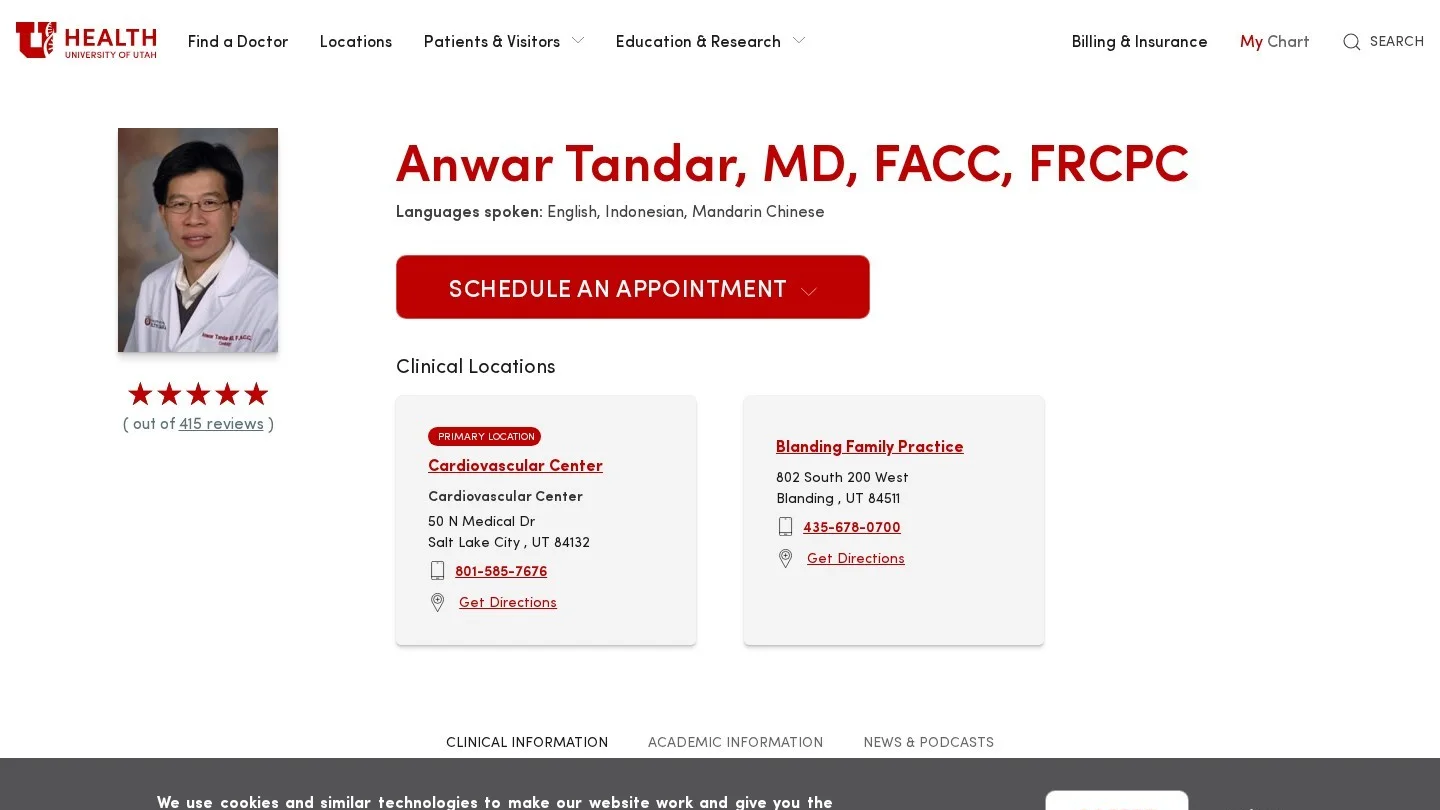
Some health systems publish their own survey ratings on physician pages. University of Utah Health’s profile of Dr. Anwar Tandar, who co-directs its valve clinic and TAVR program, shows a 4.9 out of 5 average from 415 reviews. The page explains that ratings come from the patient experience survey and that comments are de-identified. Several comments mention Watchman and valve procedures by name.
Reply to reviews without confirming that the writer is a patient. Thank the person and invite them to call the patient relations line. Leave out any detail of care. HHS settled with a New Jersey psychiatric practice for $30,000 in 2023 after replies to online reviews disclosed patient information.
The FTC’s rule on consumer reviews and testimonials took effect on October 21, 2024. It bans fake reviews and reviews bought on the condition that they be positive. Staff reviews need a clear disclosure. Threats used to suppress bad reviews are banned too, and civil penalties apply to each violation. Our list of healthcare reputation management agencies covers firms that run compliant review programs.
Track Referrals, Calls and Rankings Every Month
Track each page group in Search Console by folder. Filter the Performance report by folders such as /refer/ or /locations/ and compare clicks month over month. Add a query filter for each procedure to see which terms are growing.
Business Profile Performance shows calls and direction requests for each site. In GA4, mark each form submission and each tap on a phone number as a key event. Keep patient details out of the event, and record only the service line.
Phone calls are most of the volume for these programs. Use a call tracking service that signs a BAA, and turn off recording and transcription unless that agreement covers them. Count new consults and referrals by service line in the practice system, then match them to the month’s search data.
| Metric | Where it comes from | This month | Last month | Note |
|---|---|---|---|---|
| Clicks to procedure pages | Search Console, folder filter | Split by TAVR, Watchman, PCI and PAD | ||
| Clicks to referral pages | Search Console, /refer/ filter | Referring doctor searches | ||
| Calls and direction requests | Business Profile Performance, per site | One row per site | ||
| Referral and consult forms | GA4 key events | Service line only, no patient data | ||
| Tracked calls | BAA-covered call tracking | First-time callers by service line | ||
| AI referrals | GA4 custom channel group | ChatGPT, Perplexity, Gemini, Copilot | ||
| New consults and referrals | Practice management system | Counted by service line | ||
| New reviews and average rating | Business Profiles | Per site |
Follow This 90-Day Plan for an Interventional Group
Our worked example is a fictional group with eight interventional cardiologists across three sites. The hospital cath lab does all six procedures. The surgery center handles diagnostic cath and elective PCI, and the office-based lab does peripheral cases only. The group needs 26 pages.
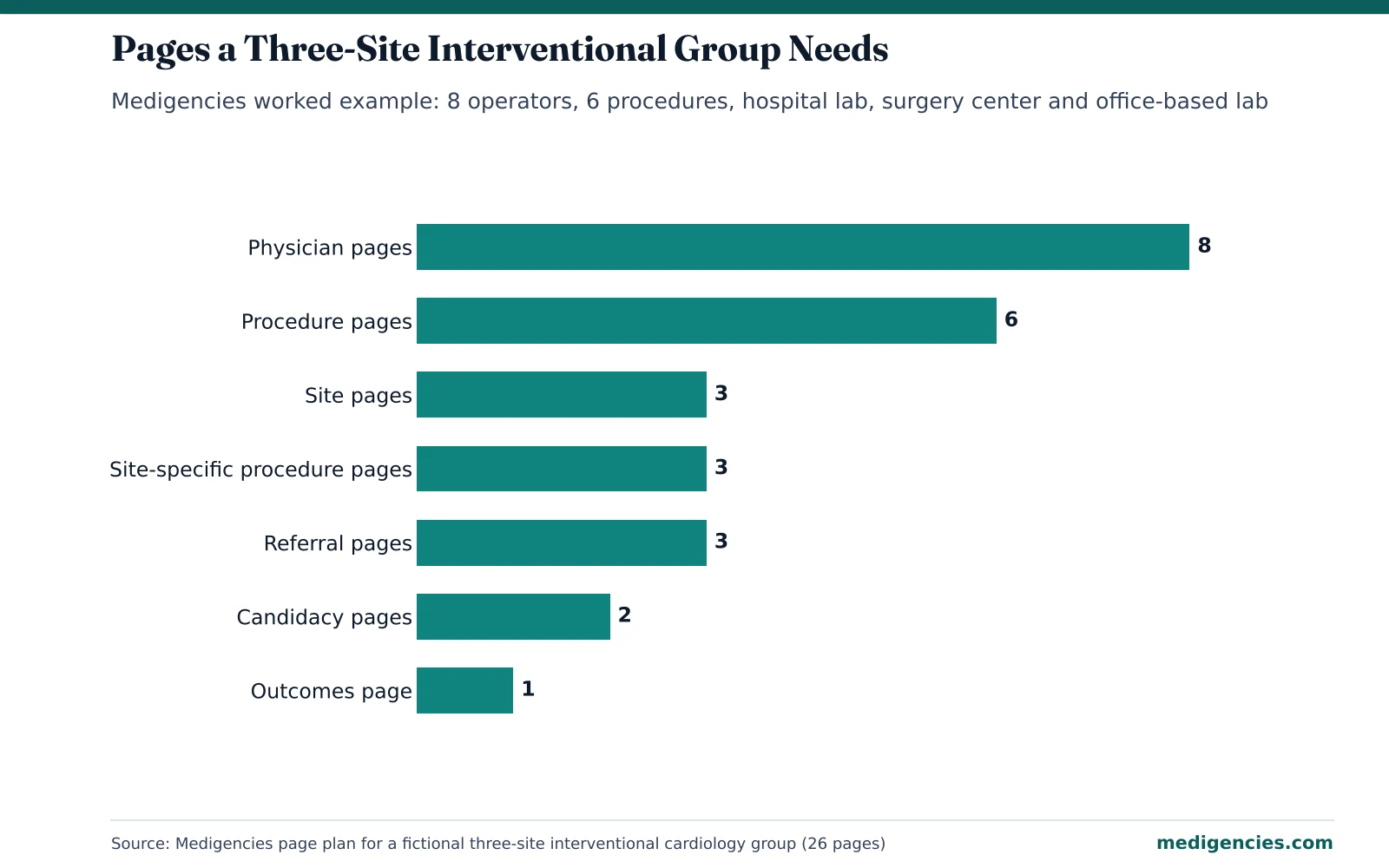
| Weeks | Work | Done when |
|---|---|---|
| 1 to 2 | Search Console and GA4 audit, BAA review for forms and call tracking, keyword list by service line | Tracking sends no patient data and every page group has a folder |
| 3 to 4 | Fix indexing errors, canonicals, Core Web Vitals and the XML sitemap | Pages report shows no important URLs excluded |
| 5 to 6 | Publish TAVR and Watchman candidacy pages and three referral pages | Five pages live with schema and internal links |
| 7 to 8 | Publish six procedure pages and three site pages; set up or clean three Business Profiles | Each profile links to its own location page |
| 9 to 10 | Eight physician pages with credentials and practicesAt markup; claim NPPES, Doximity and directory listings | NAP matches across every listing |
| 11 to 12 | Device locator updates, hospital affiliation links and one local news pitch; start the review request flow | First new links and reviews recorded |
| 13 | Outcomes page if consent allows, three site-specific procedure pages, first monthly report | Report shared with physician leads |
A hospital web team can do most of this, as long as a cardiologist reviews each page. Groups without that team can compare firms on our cardiology SEO agencies page, the wider healthcare SEO agencies list or the cardiology marketing agencies directory. Health systems with several heart programs may prefer firms on our hospital and health system marketing agencies list. Referral tracking and front-desk call handling are in our cardiologist marketing guide.
Settle the Common Interventional Cardiology SEO Questions
Should TAVR and Watchman Have Separate Pages?
Yes. TAVR treats aortic stenosis. Watchman is for people with non-valvular AFib, and Medicare covers the two under separate rules. Link both from a structural heart hub so referring doctors see the full list in one place.
Can an Outpatient Cath Lab Rank for Stent Searches?
Yes, for local searches tied to the site, like “outpatient cath lab” plus a city name. The main stent page belongs on the practice or hospital site, with a link from it to the outpatient lab’s page.
Can We Post Our STS Star Rating on the Home Page?
Check the Data Release Consent Form your hospital signed and the registry’s companion guide, which sets the display details. Wherever the stars appear, name the registry and the measure, give the data period and link to the public report.
Should Each Interventional Cardiologist Have a Google Profile?
In a group, each public-facing doctor can have one, separate from the practice profile. Link the doctor’s profile to the physician page, and list the same site address shown there. A doctor who works at three sites still has one practitioner profile.
How Long Before New Procedure Pages Bring Referrals?
Google often indexes a new page within days, but rankings for competitive terms like “TAVR” plus a city can take several months. Referral pages for doctors usually move first, because few hospitals publish them. Measure by consults and referrals per service line, and give each page a full quarter before you rewrite it.
Compare Agencies for This Topic
More From the Blog

Guides
Cataract Surgery Center SEO: The Complete Guide
A full SEO guide for cataract surgery centers, from keywords and technical fixes to lens pages, Business Profiles, directories, links, AI citations, reviews and…
Nov 4, 2026

Statistics
Childhood Cancer Survival Rate Statistics
Childhood cancer survival rates by type, age and decade, with Medigencies calculations and guidance on communicating survival data ethically to families.
Nov 4, 2026

Statistics
Heart Disease Statistics by Country
Heart disease death rates across G20 countries and world regions, with our analysis of the US gap, 30-year trends and campaign takeaways for cardiology…
Nov 4, 2026