
Google allows healthcare PPC ads in the United States, but several health topics need certification first, and a few are banned outright. Online pharmacies and telemedicine providers need a third-party credential such as LegitScript before Google will certify them. Drug and alcohol addiction treatment centers need LegitScript certification too. Speculative and experimental treatments cannot be advertised at all, and miracle cure claims break a separate policy.
Health is also a sensitive category for audience targeting, so customer lists and lookalike audiences are off the table for many health ads. On top of Google’s rules sit federal and state privacy laws on tracking pixels. This guide walks through each rule as Google’s policy pages state it on 2 November 2026, with links to the official pages and screenshots of where to find them.
Seven Google Health Ad Rules to Check Before Launch
- US ads may name prescription drugs without certification, but bidding on those drug names as keywords needs Google certification (Restricted drug terms).
- Online pharmacies need LegitScript, NABP Digital Pharmacy Accreditation or a .pharmacy domain; telemedicine providers need LegitScript (Healthcare and medicines policy).
- Addiction treatment advertisers in the US, Australia, Canada, France, Ireland and New Zealand must apply and be approved (Addiction services).
- Speculative and experimental treatments are banned; FDA-licensed cell and gene therapies may be promoted by the license holder (Google).
- Health ads cannot use customer match, your data segments, audience expansion or lookalike segments (Health in personalized advertising).
- Most violations bring a warning at least 7 days before suspension, but unauthorized pharmacies and opioid painkiller ads are treated as egregious (Google).
- A Texas court vacated part of HHS’s tracking guidance in June 2024, but pixels on patient portals and intake forms still carry HIPAA risk (Epstein Becker Green).
How Google’s Healthcare and Medicines Policy Is Organized
Google groups most health rules under one page, the Healthcare and medicines policy. It says healthcare ads must follow local law and industry standards, that some content cannot be advertised at all, and that some can run only in certain locations by approved advertisers. When a certified domain targets an allowed location, the ad shows as Eligible (limited) and serves there.
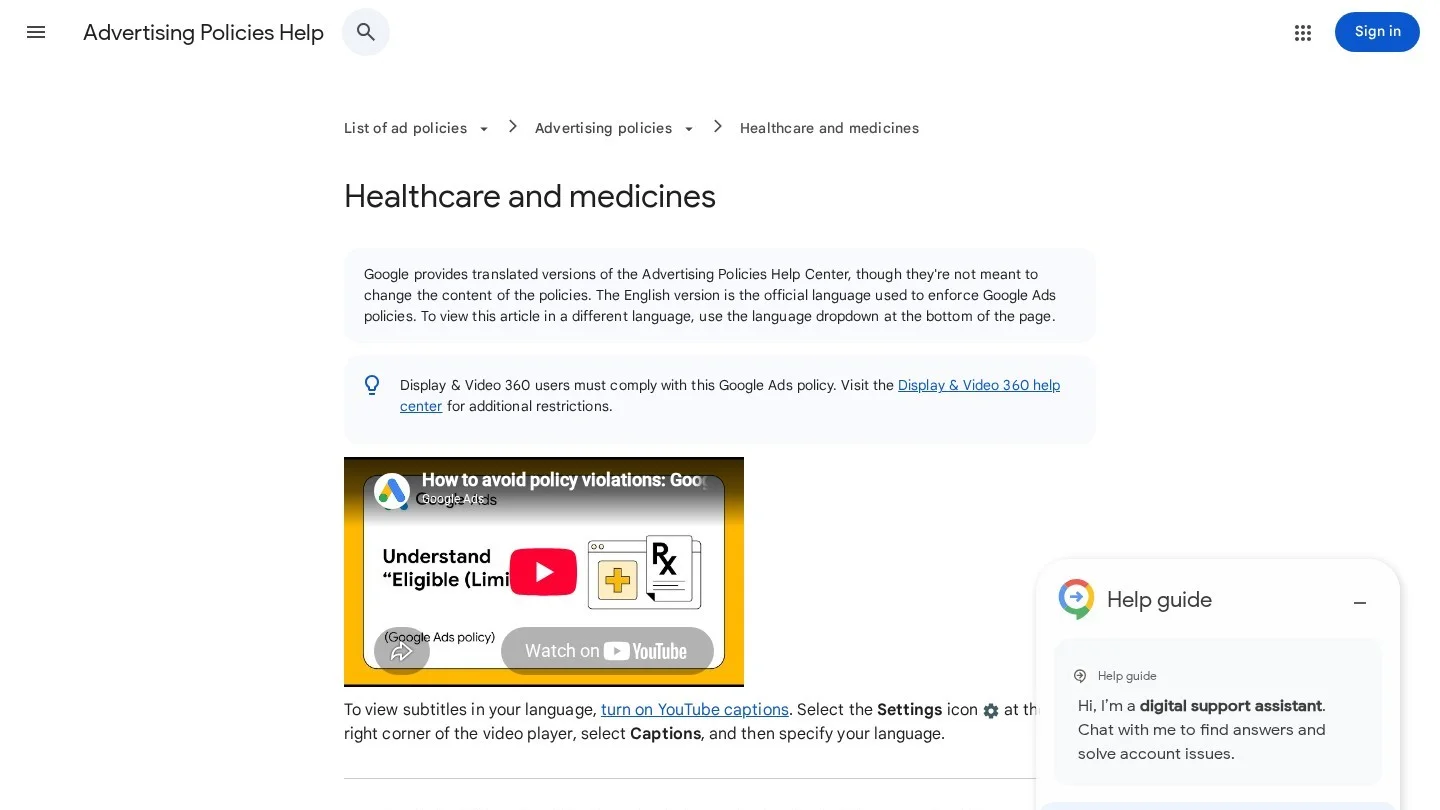
The table sums up each section for campaigns that target the United States. Read it as a map, then open the linked policy page before you build anything, since Google updates these pages several times a year.
| Policy section | US status | What you need |
|---|---|---|
| Restricted drug terms | Allowed in ads and landing pages | Google certification to keyword-target drug names |
| Online pharmacies | Allowed with limits | LegitScript, NABP Digital Pharmacy Accreditation or .pharmacy, then Google certification |
| Telemedicine that prescribes | Allowed with limits | LegitScript Healthcare Merchant Certification, then Google certification |
| Pharmaceutical manufacturers | Select locations only | Google certification |
| Addiction services | Allowed with limits | LegitScript certification, then Google approval |
| Prescription opioid painkillers | Prohibited (egregious) | Narrow exceptions, including certified US addiction treatment providers |
| Speculative and experimental treatment | Prohibited | FDA-licensed cell or gene therapy holders may promote; education allowed |
| Abortion | Allowed with limits | Certification as a provider or non-provider of abortions |
| HIV home tests | Allowed with limits | FDA-approved tests only |
| Health insurance | Allowed with limits | G2RS certification, plus an extra certificate for ACA plans |
| Unauthorized pharmacies | Prohibited (egregious) | Account suspension without prior warning |
Prescription Drug Names in US Ads and Keywords
Many clinics misread this rule because it changed recently. Under the current Restricted drug terms page, campaigns that target Canada, New Zealand or the United States may use prescription drug terms for promotion, in line with local law. Certification is not needed to put those terms in ad text or on landing pages. It is needed to keyword-target them.
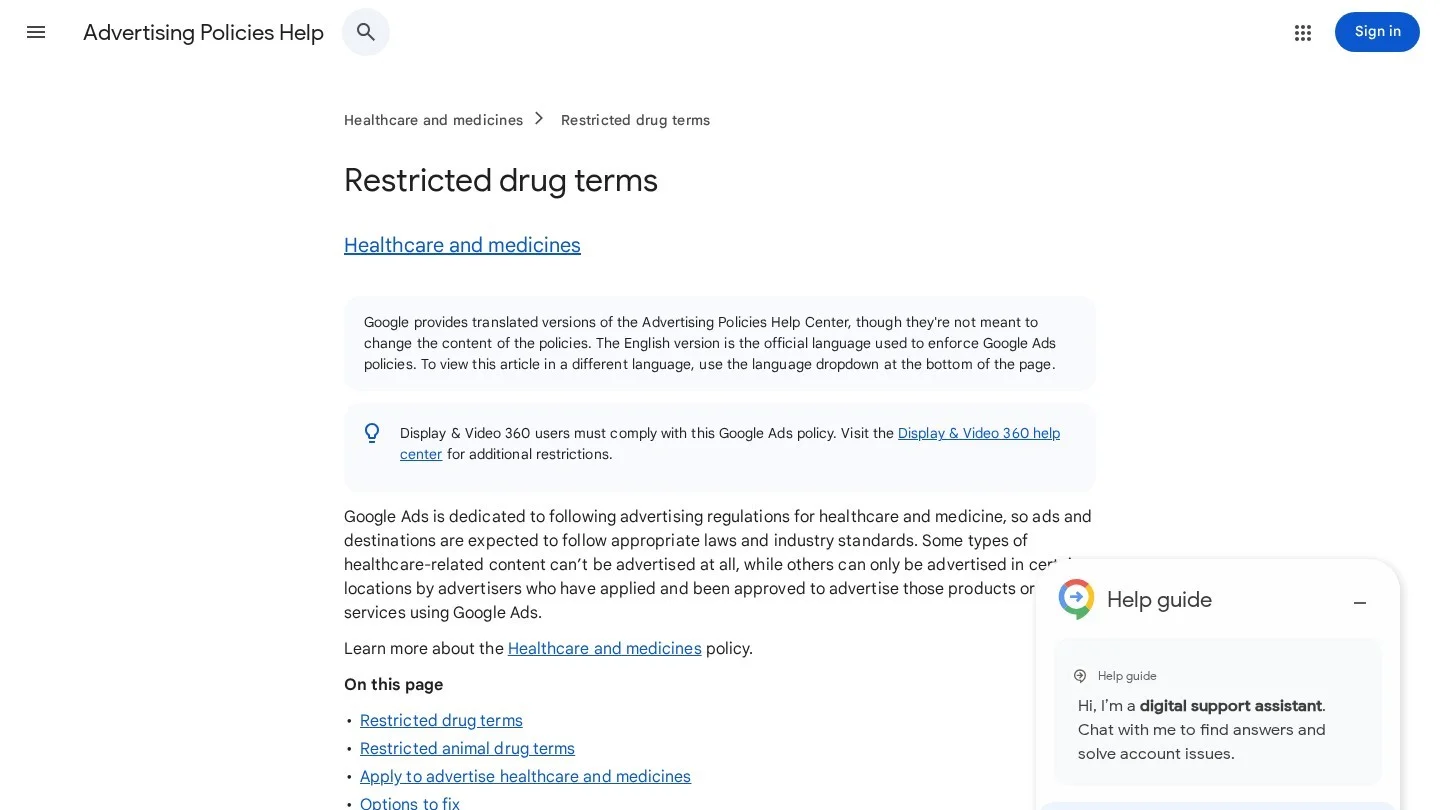
Google posted this version on 14 October 2025, with enforcement starting 29 October 2025 and ramping up over four to six weeks (Google). Outside those three countries, drug names cannot appear in ads or landing pages that sell. Plain uses are still fine, such as legal notices, safety warnings, public health campaigns and research papers. A few months earlier, Google retired its Restricted Medical Content label in August 2025 and said its policy for targeting drug keywords was not changing (PPC Land).
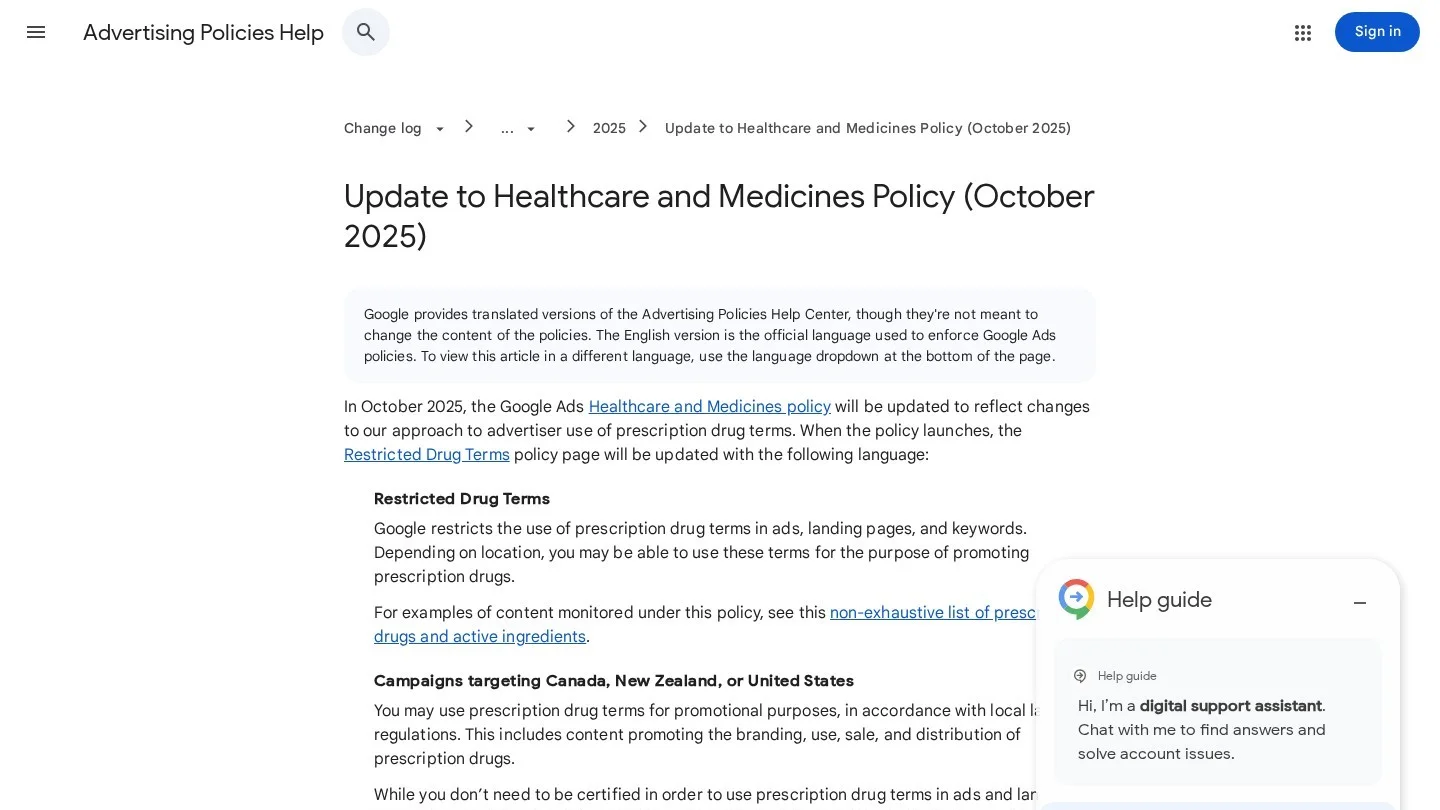
In practice, a weight loss clinic in Ohio can write an ad that mentions a GLP-1 brand name and send it to a page that discusses the drug. It cannot bid on that brand name as a keyword unless it is certified. Clinics that skip certification can still bid on service terms such as medical weight loss clinic near me. For broader cost context, our healthcare PPC statistics page lists cost per click by specialty.
Online Pharmacy and Telemedicine Certification
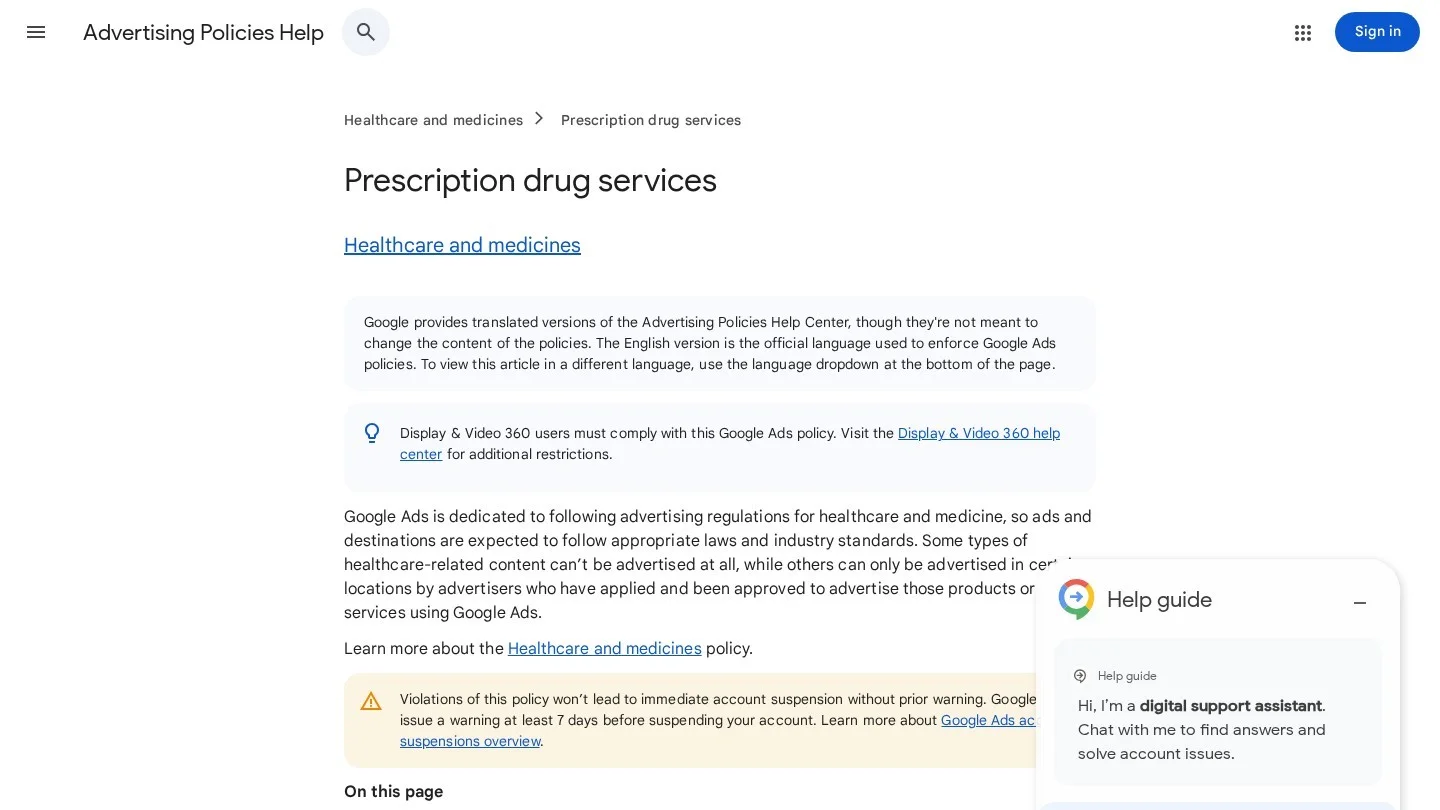
Google restricts any service tied to the online prescribing, dispensing or sale of prescription drugs, and its Prescription drug services page says it errs on the side of caution. In the US, the policy allows online pharmacies accredited by one of three programs:
- LegitScript’s Healthcare Merchant Certification Program, for internet pharmacies that take refills, transfers or new prescriptions, or fill by mail.
- NABP Digital Pharmacy Accreditation, for pharmacies with full online functions.
- The .pharmacy top-level domain under the Healthcare Merchant Accreditation Program.
Telemedicine providers that prescribe need LegitScript’s Healthcare Merchant Certification. After the third-party credential, you still apply to Google. The application goes in at the child account level, not the manager (MCC) account, and Google asks you not to apply for a category that does not match your business model.
Ro, the telehealth company, shows why brands bother. In a LegitScript customer story, founder Zachariah Reitano calls certification a symbol of trust and says it made working with Google and Bing on online advertising much easier. The story is LegitScript’s own marketing, so treat it as one company’s experience, but it shows how a large telehealth brand uses the credential.
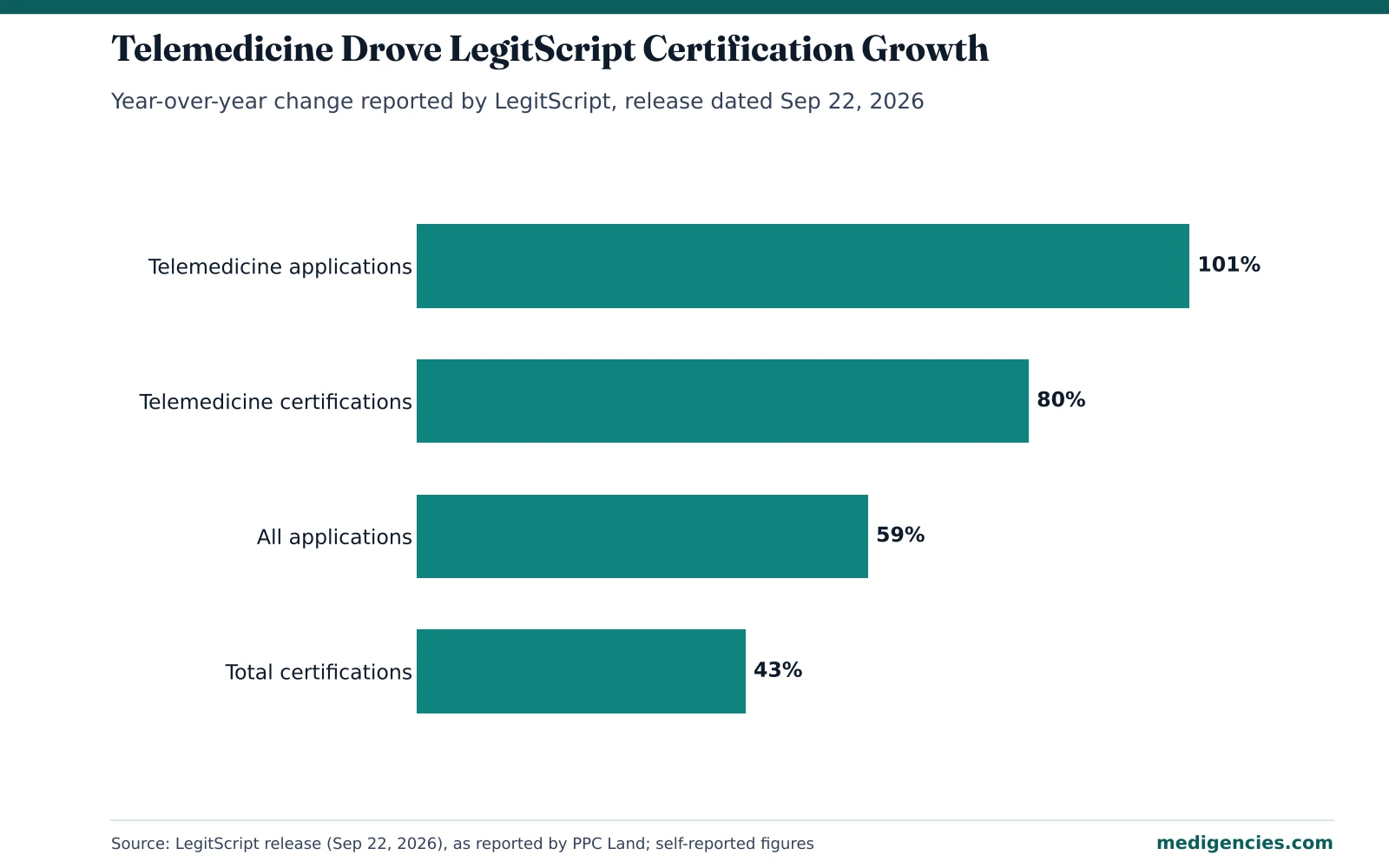
Demand for the credential is rising. In a release dated 22 September 2026, LegitScript said telemedicine applications rose 101% over the past year. Telemedicine certifications rose 80%, and all applications rose 59% (PPC Land). The figures are self-reported and the release does not name the exact twelve months.
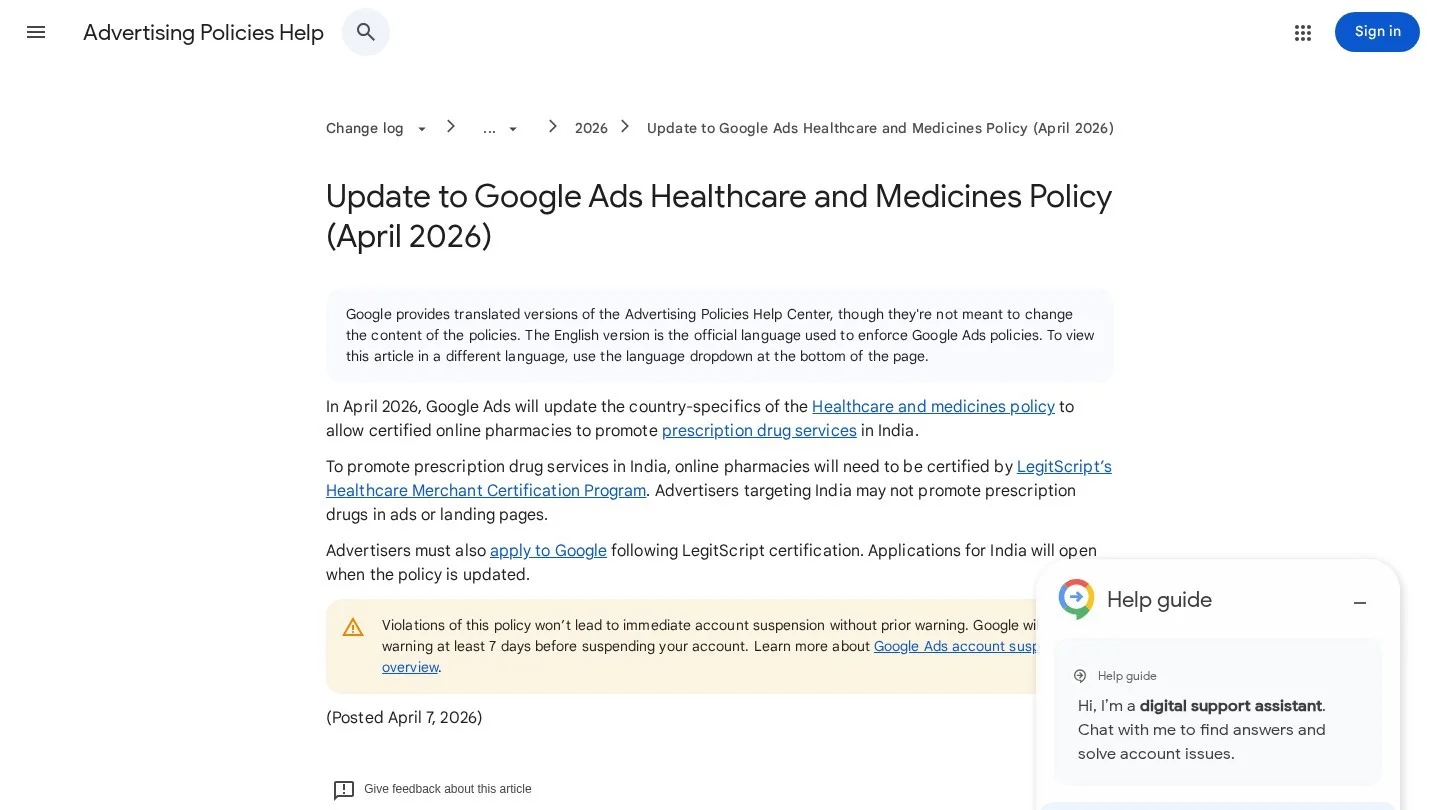
Google keeps adding countries. An April 2026 update lets online pharmacies with LegitScript certification advertise drug services in India. Applications opened when the policy changed (Google).
Addiction Treatment Ads and LegitScript Certification
Google restricts ads for recovery-oriented drug and alcohol addiction services. The Addiction services page covers treatment centers, sober living homes, mutual help groups, lead sellers, referral agencies and crisis hotlines for drugs and alcohol. Advertisers must apply and be approved before running these ads in Australia, Canada, France, Ireland, New Zealand and the United States. Each country or group of countries needs its own application. Help for nicotine addiction, behavioral addiction and impulse control disorders falls outside this policy.
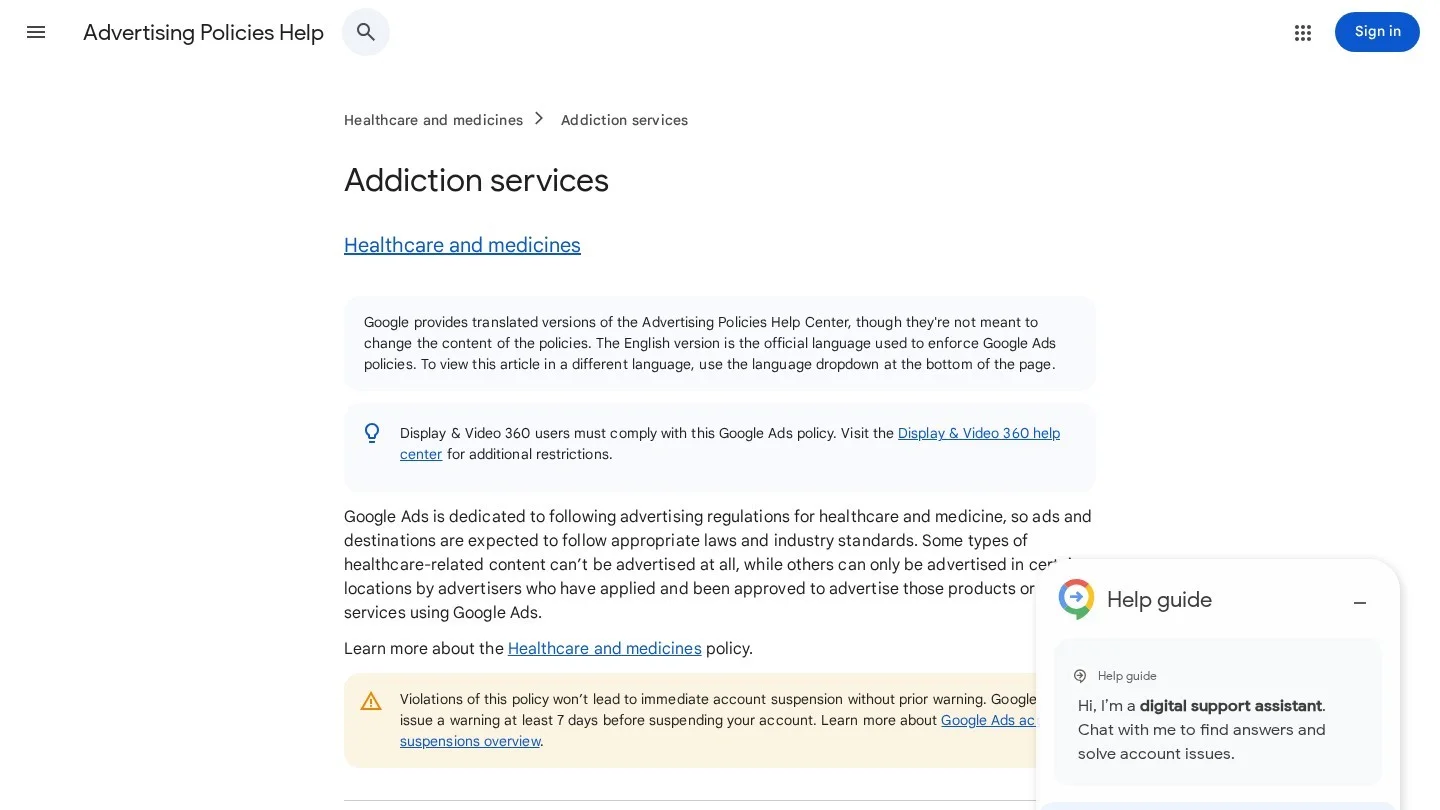
In the US, the policy says you must be certified by LegitScript as an addiction services provider. Not every service is eligible. LegitScript charges a fee for review and monitoring, though it may waive it in some cases. LegitScript reviews applicants against 16 certification standards.
| Standard group | What LegitScript checks | Example of a fix before applying |
|---|---|---|
| Licensure, legal compliance, policies | Registration, licenses and written procedures | Upload current state licenses for every facility |
| Facility location and disclosure | Proof of lease or ownership; all properties and entities | List every sober living home you control |
| Qualifications and prior history | Clinical staff training; past violations | Gather staff credentials and disclose old citations |
| Insurance and privacy | Insurance where law requires; protected data rules | Confirm your privacy notice covers web forms |
| Medication assisted treatment | Only permitted drugs used or promoted | Check MAT pages name approved medicines only |
| Website content and advertising | Facility address shown; ads accurate and not misleading | Add each facility’s street address to the site |
| Lead generators, incentives, affiliates, transparency | No hidden lead-gen ties; incentives disclosed; partners comply | End any paid patient referral deals |
Cardinal Digital Marketing, a healthcare agency in Chamblee, Georgia, publishes a step-by-step guide to the process. You create a LegitScript account and pay a review fee. Then you fill in a questionnaire and fix any issues the analysts flag. The annual fee is due only once you are approved. It says the process usually takes a few weeks to a couple of months and dates the requirement for paid search to September 2017.
Opioid painkillers sit under a stricter rule. Google bans ads that promote or sell prescription opioid painkillers, and it treats a breach as egregious. Drugs used to treat opioid use disorder are not part of the ban. Certified US addiction treatment providers are also on the list of exceptions (Google). If you run rehab campaigns, our lists of addiction treatment marketing agencies and addiction treatment PPC agencies can help you find teams that handle certified accounts. Drug makers can start with our pharma and life sciences marketing agencies.
Experimental Treatments and Unproven Health Claims
Google bans ads for speculative or experimental treatments. In the US, entities that hold an FDA license or approval for a cell or gene therapy may promote it. Ads that only teach or inform are allowed whatever the approval status (Google). Clinical trial recruitment is prohibited in most locations, and where it is allowed, ads cannot promote prescription drugs, create misleading expectations or imply the product is safe.
A separate policy, Unreliable claims, covers what you say about treatments that are allowed. It bans unproven claims of cures for incurable conditions, with miracle cures for arthritis, diabetes, Alzheimer’s disease or cancer as examples. It bans unrealistic weight loss claims, such as eat whatever you want and lose 10 pounds in a month. If you guarantee results, you need a clear refund policy, and testimonials that cite specific results need a visible note that results vary.
A regenerative medicine clinic offering stem cell injections for knee pain is a common case. If the therapy lacks FDA licensing, ads promoting it are out. An article explaining what the research shows may still run as education, as long as it does not sell the treatment.
Other Restricted Health Topics in US Campaigns
Several smaller rules catch advertisers by surprise. All come from the same Healthcare and medicines policy.
- Abortion: in the US, UK and Ireland, advertisers using abortion-related queries must first be certified as either providing or not providing abortions.
- HIV home tests: allowed in the US for FDA-approved tests only.
- Birth control, fertility testing, surrogacy and STI testing: not allowed in certain locations, so check each country you target.
- Health insurance: US advertisers need G2RS certification, plus an added certificate for Affordable Care Act plans. Dental, vision and travel health insurance ads are not restricted.
- Unapproved substances: banned whatever their legal status, including products with ephedra and hCG for weight loss. DHEA is allowed only in campaigns targeting the United States.
Audience Targeting Limits for Health Ads
Google’s Health in personalized advertising policy treats health as a sensitive interest. It covers physical and mental health conditions. It covers products that treat long-term conditions, such as OTC medicines and devices. It also covers intimate health issues, surgery and injections, including cosmetic work, and disabilities, even when the ad speaks to a caretaker.
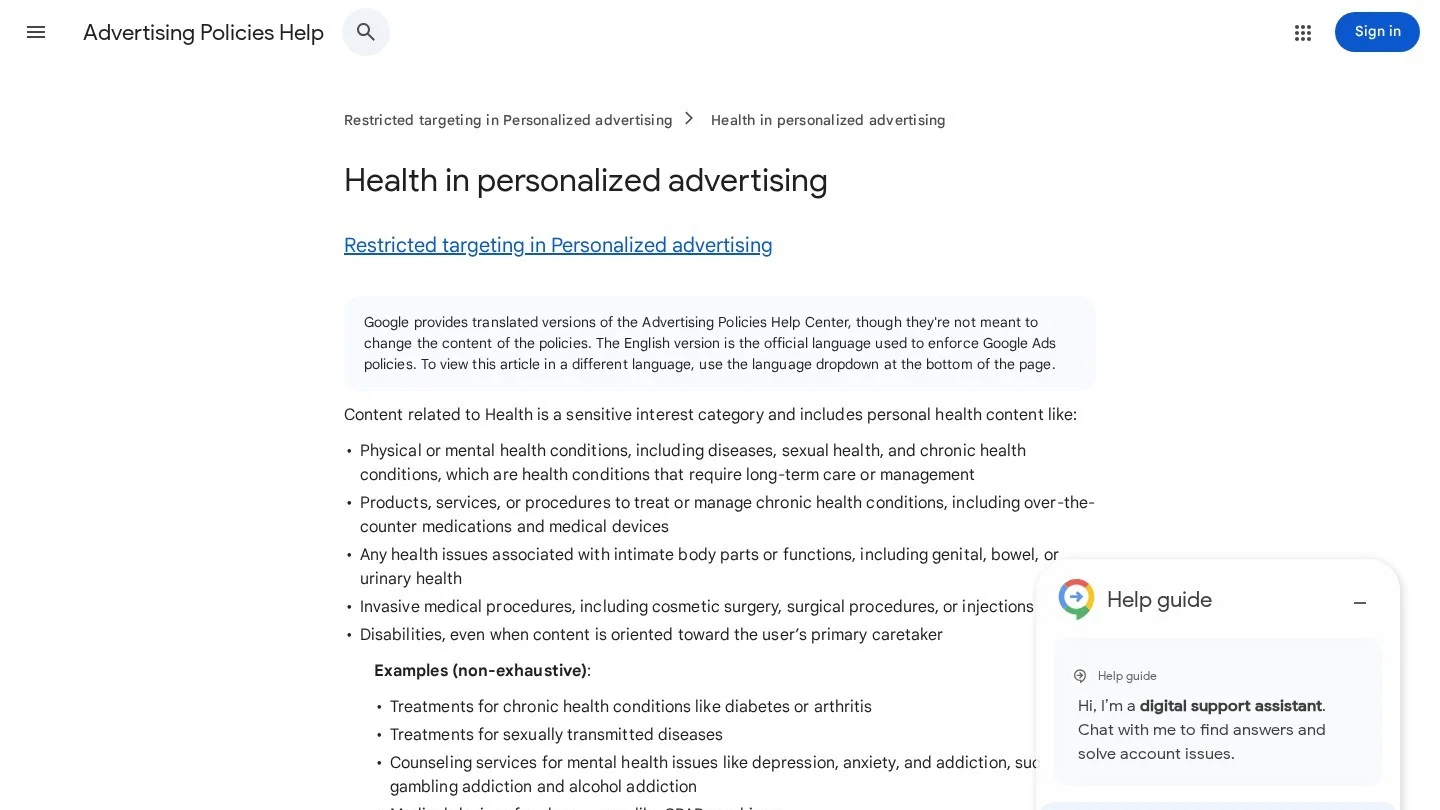
For these ads, customer match, your data segments, audience expansion and lookalike segments are not supported, because they may carry sensitive signals. Google’s own audiences still work. These include in-market, affinity, life event, age and location targeting. Custom segments work with conditions, and people under 18 get no personalized ads at all.
For a dermatology practice or any of the medical practice PPC agencies that run its ads, this means an uploaded list of past acne patients cannot be used to find similar people. Keywords, location and Google’s predefined audiences carry the campaign instead. The same thinking applies off Google, which our guide to programmatic advertising in healthcare covers.
HIPAA Tracking Rules and Consumer Health Data Laws
Google’s rules decide whether an ad can run. Privacy law decides what you can track after the click. HHS’s Office for Civil Rights issued its guidance on online tracking technologies in December 2022 and replaced it with an update on 18 March 2024. On 20 June 2024, a federal court in the Northern District of Texas vacated the part saying HIPAA applies when a tracker links an IP address to a visit to a public page about a health condition. OCR withdrew its appeal on 29 August 2024 (Epstein Becker Green; American Bar Association).
That ruling narrowed the rule but did not end the risk. Advocate Aurora Health agreed to a $12.225 million class action settlement over tracking tools on its website, patient portal and scheduling app. The tools included the Meta Pixel and Google Analytics, and about 3 million people were notified (HIPAA Journal). Keep conversion tags off patient portals, intake forms and booking flows unless the vendor signs a business associate agreement, and send only non-health conversion events to Google Ads.
State law adds more. Washington’s My Health My Data Act has been in effect since 31 March 2024. It requires clear opt-in consent before a business collects or shares consumer health data. It bans geofences of 2,000 feet or less around places that give in-person care. Consumers can also sue under the state consumer protection law (Benesch). A clinic that geotargets ads around a competitor’s Seattle office could run into that ban.
What Google Does When a Health Ad Breaks the Rules
For most health policies, Google says violations will not lead to immediate suspension, and a warning will come at least 7 days before an account is suspended (Google; Unreliable claims). Two cases are stricter: unauthorized pharmacies, which sell drugs without a prescription or a license, and ads for opioid painkillers. Google treats them as egregious, suspends accounts without prior warning, and reinstates them only in compelling circumstances.
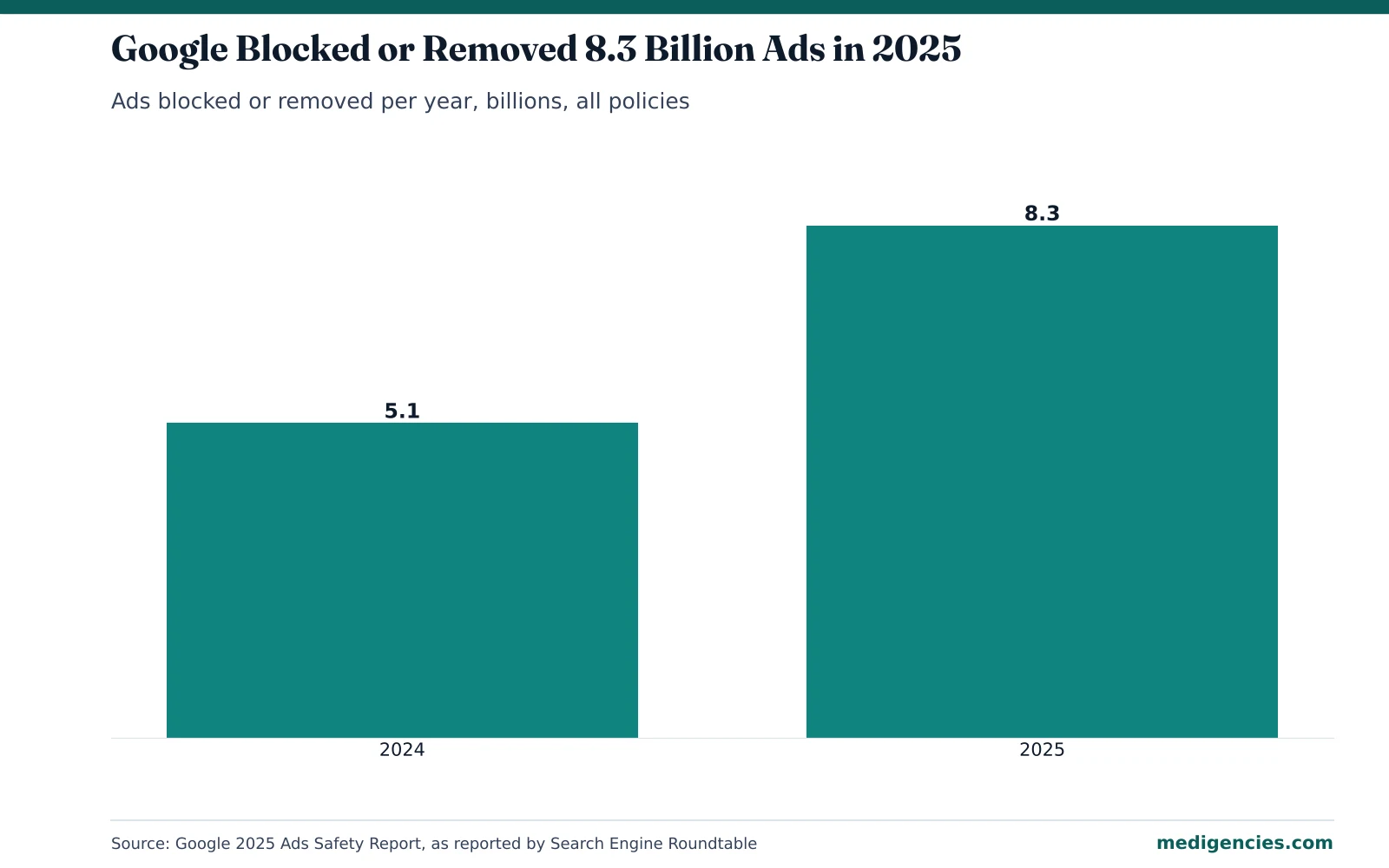
Enforcement volume keeps climbing. Google’s 2025 Ads Safety Report says it blocked or removed 8.3 billion ads in 2025, up from 5.1 billion the year before, and suspended about 24.9 million advertiser accounts (Search Engine Roundtable).
Budget Math for a Certified Rehab Search Campaign
Certification costs money and time, so it helps to know what a certified campaign may return. LocaliQ studied 3,542 US healthcare search campaigns from 1 October 2024 to 30 September 2025. For addiction recovery, it found these medians: a 4.57% click-through rate, a $3.46 cost per click, a 0.50% conversion rate and a $120.30 cost per lead (LocaliQ). LocaliQ computes each median on its own, so they do not line up as one campaign.
| Input | Median CPC view | Median CPL view |
|---|---|---|
| Monthly budget | $10,000 | $10,000 |
| Clicks at $3.46 | 2,890 | Not used |
| Leads | 14.5 at 0.50% conversion | 83.1 at $120.30 per lead |
| Cost per lead | $692 | $120.30 |
| Implied conversion rate | 0.50% | 2.88% |
The gap between $120 and $692 per lead comes almost entirely from conversion rate. That is why landing pages, call answering and intake speed matter so much in rehab marketing. Admissions teams that pick up within a few rings move a campaign toward the better column. If you want help, our list of healthcare PPC agencies includes firms that publish addiction work, and the get matched form can narrow the field.
A Pre-Launch Checklist for Google Health Campaigns
- Map each service and product to a policy section using the table above.
- Get any third-party credential first: LegitScript, NABP or G2RS.
- Apply for Google certification at the child account level, one application per location group where required.
- Remove drug names from your keyword list until certification is approved.
- Check ad text and landing pages for cure claims, guarantees without a refund policy, and testimonials without a results-vary note.
- Switch off customer match, lookalike and audience expansion for health campaigns.
- Audit tags on portals, forms and booking tools, and get business associate agreements where PHI may flow.
- Check state law for every targeted state, starting with Washington if you use geofencing.
- Save screenshots of the policy pages you relied on, with the date, in case of review. For home care advertisers, our home healthcare marketing tips show how these rules apply to retargeting.
Questions Clinics Ask Before Running Google Health Ads
Can a Medical Practice Run Google Ads Without Certification?
Yes. A typical practice that promotes visits, surgery or therapy needs no special certification. Certification is for online pharmacies, telehealth firms that prescribe, rehab centers, drug makers, abortion ads and health insurance. It is also needed to bid on drug names as keywords (Google).
Can I Use Ozempic or Other Drug Names as Keywords?
Only with Google certification. In the US, Canada and New Zealand, you can mention drug names in ads and on landing pages without certification, but keyword targeting them requires it (Google).
How Long Does LegitScript Certification Take?
Cardinal Digital Marketing’s guide says it usually takes a few weeks to a couple of months, depending on the scope of the business (Cardinal Digital Marketing).
Can Healthcare Ads Use Remarketing Lists?
Not the advertiser-curated kind. Health ads cannot use customer match, your data segments, audience expansion or lookalike segments, though Google’s predefined audiences remain available (Google).
Is the Meta Pixel Allowed on a Hospital Website?
On public pages, the federal rule is narrower since the June 2024 ruling. Portals, forms and booking tools still carry HIPAA risk, and state laws such as Washington’s add consent rules (Epstein Becker Green; Benesch).
Google Ads Policy Pages and Legal Updates We Checked
- Google Ads Help: Healthcare and medicines
- Google Ads Help: Restricted drug terms
- Google Ads Help: Update to Healthcare and Medicines Policy (October 2025)
- PPC Land: Google removes Restricted Medical Content label (2025)
- Google Ads Help: Prescription drug services
- Google Ads Help: Addiction services
- Google Ads Help: Update to Healthcare and Medicines Policy (April 2026)
- LegitScript: Roman Health customer story
- PPC Land: Telemedicine applications to LegitScript jump 101% (Sep 2026)
- LegitScript: Addiction treatment certification standards
- Cardinal Digital Marketing: LegitScript certification for addiction treatment centers
- Google Ads Help: Unreliable claims
- Google Ads Help: Health in personalized advertising
- HHS OCR: Use of Online Tracking Technologies by HIPAA Covered Entities
- Epstein Becker Green: OCR withdraws appeal on tracking guidance
- American Bar Association: HHS dismisses appeal in tracking lawsuit
- HIPAA Journal: Advocate Aurora Health pixel settlement
- Benesch: Washington’s My Health My Data Act now in effect
- Search Engine Roundtable: Google 2025 Ads Safety Report
- LocaliQ: Healthcare search advertising benchmarks
Compare Agencies for This Topic
Addiction Treatment Marketing AgenciesMedical Practice Marketing AgenciesPharma and Life Sciences Marketing AgenciesHealthcare PPC Agencies
More From the Blog
Guides
Cataract Surgery Center SEO: The Complete Guide
A full SEO guide for cataract surgery centers, from keywords and technical fixes to lens pages, Business Profiles, directories, links, AI citations, reviews and…
Nov 4, 2026

Guides
Interventional Cardiology SEO Guide for Cath Lab and Structural Heart Programs
A full SEO guide for interventional cardiology groups, from keyword research and technical fixes to procedure pages, Business Profiles, citations, links, AI search, reviews…
Nov 4, 2026

Statistics
Childhood Cancer Survival Rate Statistics
Childhood cancer survival rates by type, age and decade, with Medigencies calculations and guidance on communicating survival data ethically to families.
Nov 4, 2026