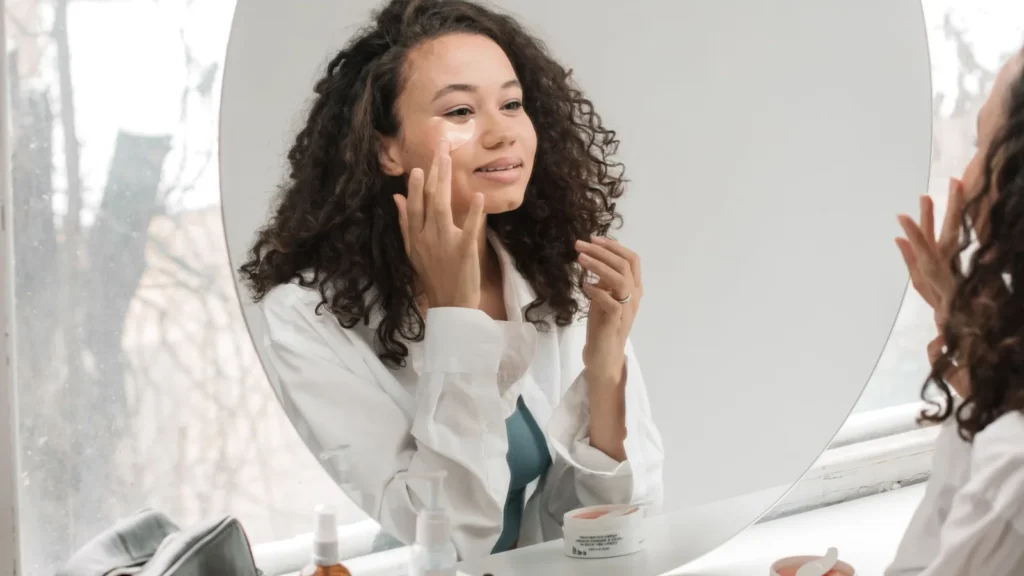
Acne affects nearly 50 million Americans each year and 85% of adolescents. Among 10 to 24 year olds worldwide, the 2021 rate was 9,790.5 per 100,000, close to 1 in 10 at any moment, and it peaks at ages 15 to 19.
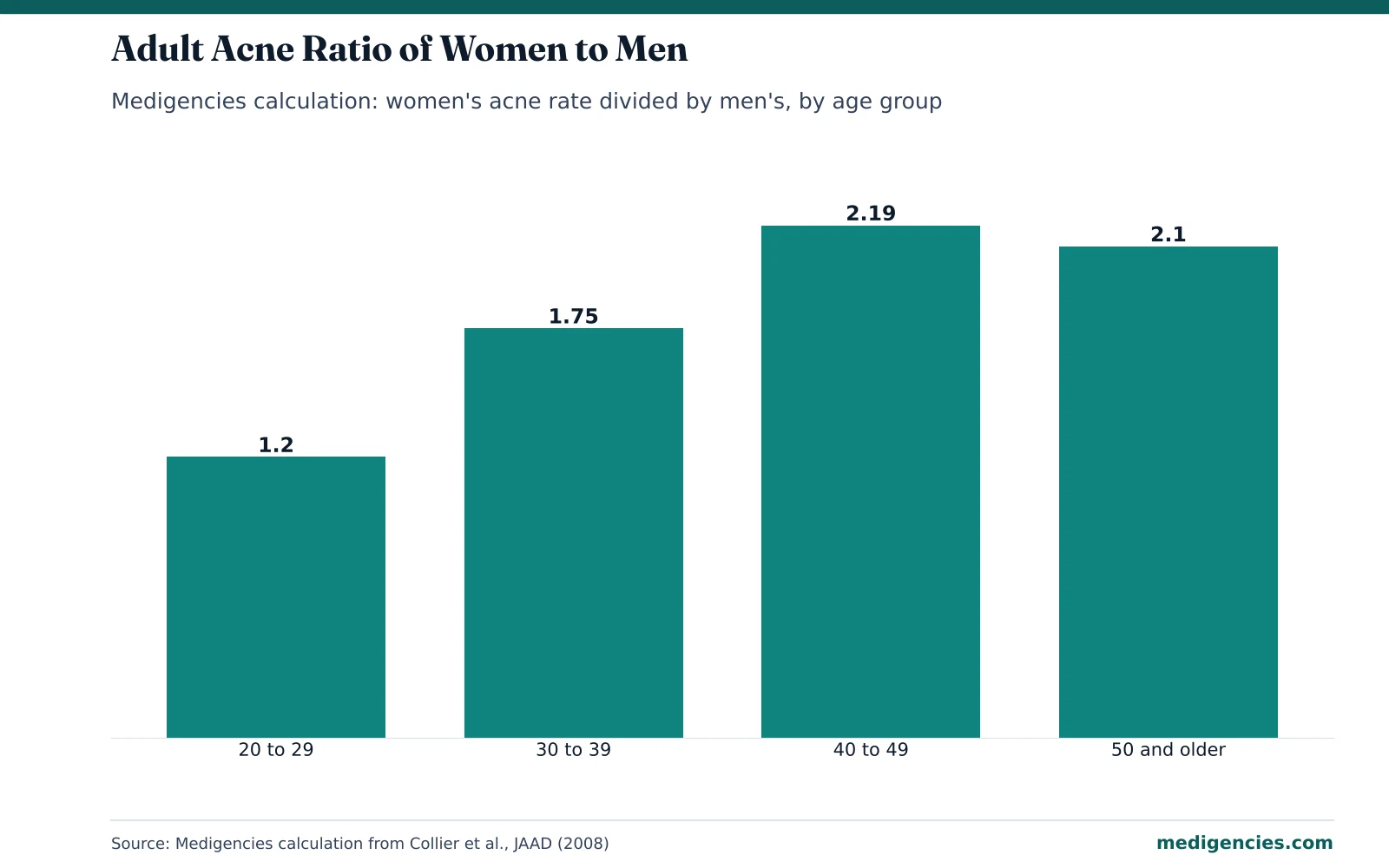
After the teen years, acne hangs on longer in women. In a US survey of 1,013 adults, 26.3% of women in their 40s reported acne against 12.0% of men. That’s 2.2 to 1 by our calculation, which is why we’d aim adult acne marketing at women in their 30s and 40s.
Six Acne Numbers to Plan a Skin Clinic Calendar Around
- Global acne prevalence in 10 to 24 year olds rose 14.3% between 1990 and 2021 (our calculation from GBD 2021 rates).
- Young women carry a 25% higher rate than young men, a gap of 2,184 cases per 100,000.
- Women keep about half of their 20s acne rate into their 40s; men keep about a quarter.
- In one large community study, about 5 in 6 adult acne cases had carried on from the teen years.
- Roughly 7 in 10 people with acne have mild disease, and about 3 in 10 have moderate or severe acne.
- Hyperpigmentation was 2.6 times as common in African American women as in Caucasian women in a study of 2,895 women.
How Many People Have Acne in the US and Worldwide
Nearly 50 million Americans have acne each year, which makes it the most common skin problem in the country. It shows up in 85% of adolescents, and many adults, women especially, either keep it past their teens or get it for the first time later on.
For the long view we used the Global Burden of Disease (GBD) 2021 study. For people aged 10 to 24, the age-standardized prevalence was 8,563.4 per 100,000 in 1990 and 9,790.5 per 100,000 in 2021. Our calculation puts the rise at 14.3% over 31 years, with the fastest growth in the youngest group, ages 10 to 14.
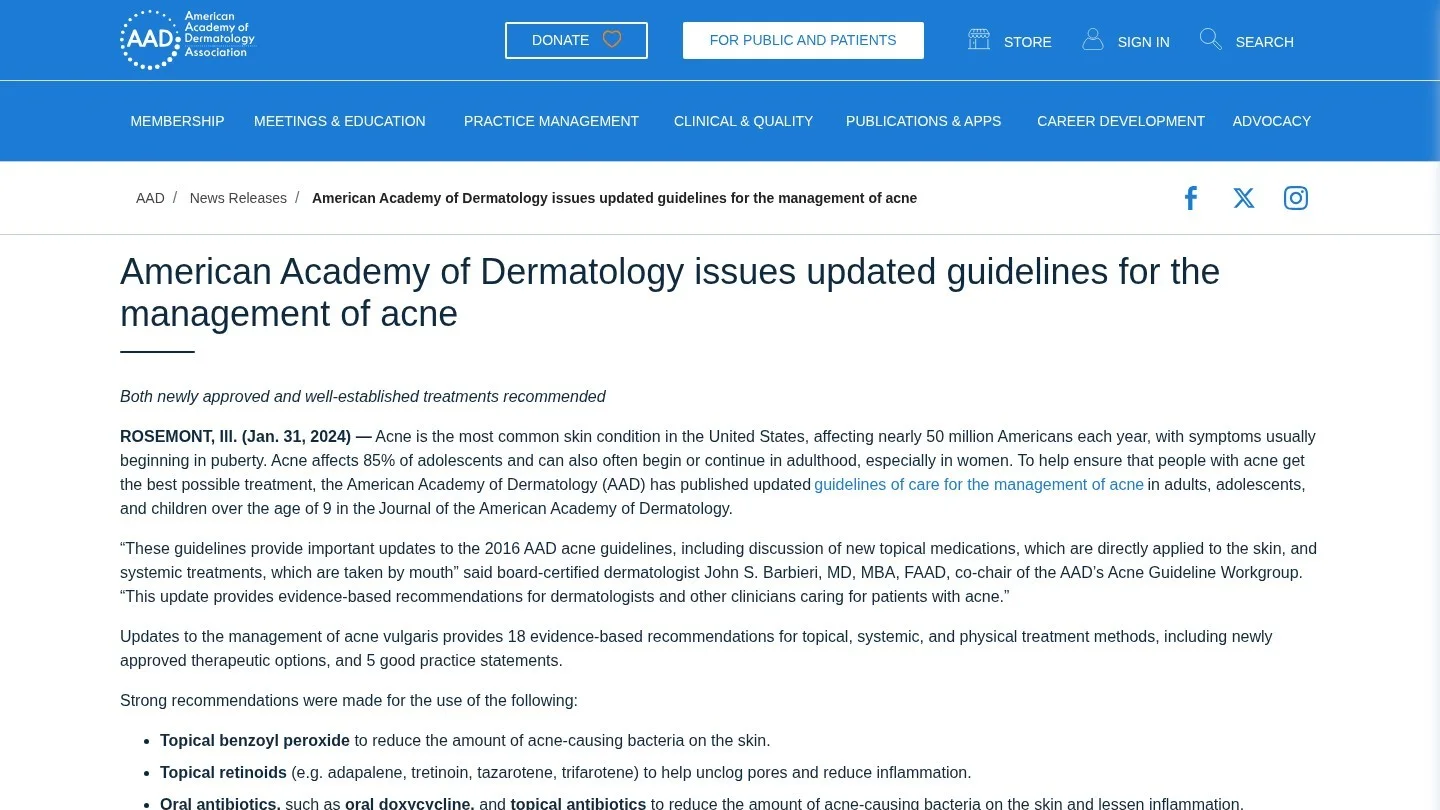
Among women aged 15 to 49, the number of acne cases climbed faster, reaching 89.3 million in 2021, up from 65.0 million in 1990. That 37.4% jump is bigger than the rate change because there are more women in that age group now.
| Measure | Figure | Population and period |
|---|---|---|
| Americans with acne each year | Nearly 50 million | US, AAD guideline release, January 2024 |
| Adolescents affected | 85% | US, AAD guideline release, January 2024 |
| Prevalence, ages 10 to 24 | 9,790.5 per 100,000 | Global, GBD 2021 |
| Change in that rate since 1990 | +14.3% (our calculation) | Global, GBD 1990 vs 2021 |
| Rate in young women vs young men | 10,911.8 vs 8,727.8 per 100,000 | Global, ages 10 to 24, GBD 2021 |
| Acne cases in women aged 15 to 49 | 89.3 million (65.0 million in 1990) | Global, GBD 2021 |
| Peak age in a 17,345-person study | 46.8% at age 19 | Six Chinese cities, community survey |
A 14% rise spread over three decades won’t show up in a practice’s year-on-year numbers. Plan around the 50 million Americans with acne each year, because that demand exists in every town, every month. We’d give acne its own pages and its own budget all year, then add a push before back-to-school and prom season.
Acne by Age, With a Teen Peak and a Long Adult Tail
In a community study of 17,345 people across six Chinese cities, nobody under 10 had acne. The rate was 1.6% at age 10, climbed with every year of age after that, hit 46.8% at age 19 and then eased off slowly. GBD 2021 also puts the highest rates in the 15 to 19 band.
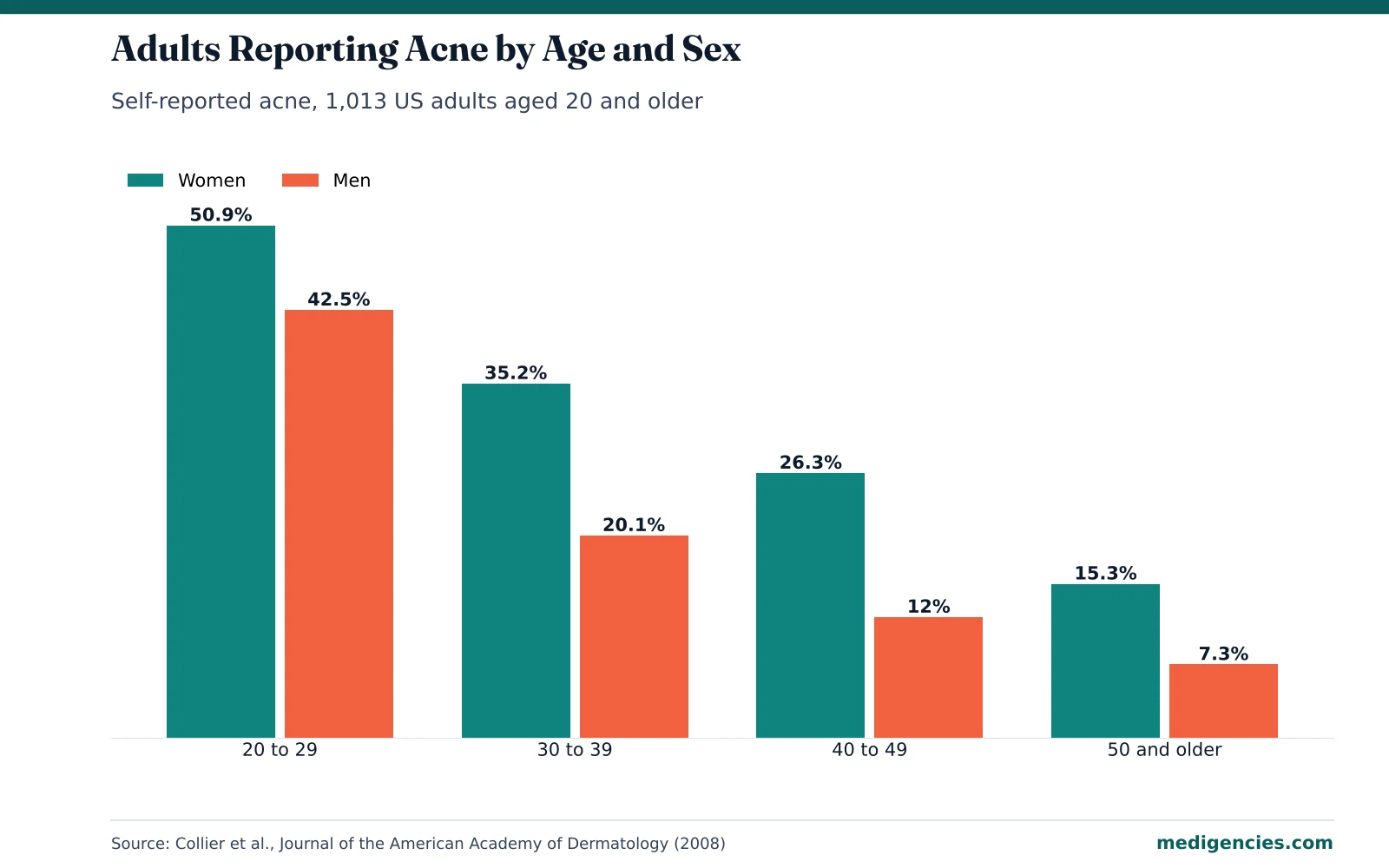
In a US survey of adults aged 20 and older, half of women in their 20s still had acne, and so did 15.3% of women aged 50 and over. Nearly three in four respondents (73.3%) had had acne at some point in life.
Most adult acne is old acne that never left. In the Chinese study, 83.3% of adult cases were persistent and 16.7% were late onset. That’s about 5 to 1, so for every adult whose acne first appears after the teen years, five have had breakouts since their school days.
Teen acne and adult acne need separate pages. With 12 to 17 year olds, a parent usually books and pays, so that page answers parent questions about insurance and after-school appointment times. Adults in their 20s and 30s book for themselves, often after trying several products. Open their page with “still breaking out?” and say what a dermatologist adds once store-bought products have stopped working.
The Adult Female Acne Gap, Measured Decade by Decade
Women had higher acne rates than men in every adult decade of the US survey, and each gap was statistically significant. We added the point gap and the women-to-men ratio to each published row. The last column estimates what share of acne cases would be female in a market with equal numbers of men and women.
| Age | Women with acne | Men with acne | Gap (points) | Women to men ratio | Female share of cases* |
|---|---|---|---|---|---|
| 20 to 29 | 50.9% | 42.5% | 8.4 | 1.20 | 54.5% |
| 30 to 39 | 35.2% | 20.1% | 15.1 | 1.75 | 63.7% |
| 40 to 49 | 26.3% | 12.0% | 14.3 | 2.19 | 68.7% |
| 50 and older | 15.3% | 7.3% | 8.0 | 2.10 | 67.7% |
The ratio jumps in the 30s and stays above 2 to 1 after 40. Women’s acne rate fell 48% between their 20s and their 40s, so about half of it stayed. Men’s fell 72% over the same span, which left them with about a quarter.
The gap starts before adulthood. In GBD 2021, the rate for ages 10 to 24 was 10,911.8 per 100,000 in young women and 8,727.8 in young men, so the female rate runs about 25% higher, or 2,184 more cases per 100,000. In the Chinese study, males were higher in the late teens and 20s, and females took over after age 30.
Women get adult acne more often than men, and first-time adult acne is most common in women going through menopause, which fits the 2.10 ratio we calculated for the 50-plus group.
With equal numbers of men and women, about 69% of acne cases in the 40s would be female. For most dermatology practices, women aged 30 to 49 are the adult acne audience. Picture a patient who has had breakouts for 15 or 20 years and wants a plan she can fit around work. We’d give her a page called “Adult Acne Treatment for Women” that covers hormone-related causes and a realistic timeline, because a general acne page won’t speak to her.
Drug names cause trouble in paid search. The 2024 AAD acne guidelines include hormonal therapies such as combined oral contraceptives and spironolactone as conditional options, and isotretinoin for severe acne or acne that does not respond to standard treatment. All are prescription drugs, and Google restricts prescription drug terms in ads, landing pages and keywords. Write the ad about the condition and the visit. Treatment options go on the page, explained in plain educational language. Certification is covered in our guide to Google’s healthcare ad rules.
How Many Acne Patients Are Mild, Moderate or Severe
Of the 1,399 people with acne in the 17,345-person Chinese study, 68.4% had mild acne, 26.0% moderate and 5.6% severe. Per 1,000 people with acne, that is 684 mild, 260 moderate and 56 severe, so close to a third are moderate or severe.
In a Brazilian study of 452 adolescents aged 10 to 17, acne was milder still. Comedonal acne appeared in 61.1% of them, mild acne in 30.6% and moderate papulopustular acne in 7.6%.
| Severity | Share of people with acne | Per 1,000 with acne | Who should own the patient | Page or offer that fits |
|---|---|---|---|---|
| Mild | 68.4% | 684 | Med spa, esthetician, primary care, dermatology | Acne facials, peels, skincare plans, “when to see a dermatologist” guide |
| Moderate | 26.0% | 260 | Dermatology | Acne treatment page with visit steps, insurance, follow-up schedule |
| Severe | 5.6% | 56 | Dermatology | Severe and cystic acne page, scarring prevention, monitoring visits |
Severity also tracks with emotional strain. In a Norwegian study cited in a 2016 review, girls with significant acne reported suicidal thoughts at 25.5%, against 11.9% for girls with mild acne. For boys the figures were 22.6% and 6.3%.
Keep those mental health figures out of ad copy, since fear-based or shaming lines (“Hiding your face?”) hurt the very people you want to reach. Say plainly what treatment involves, and add a line on the page that the clinic takes the emotional side of acne seriously. The moderate and severe third mostly want to be seen soon, so show the next open new-patient slot.
Acne and Dark Marks in Skin of Color
Clinical acne was found in 37% of African American women and 32% of Hispanic women in a study of 2,895 women aged 10 to 70. The rates were 30% for Asian women, 24% for Caucasian women and 23% for Continental Indian women. Hyperpigmentation varied far more between groups.
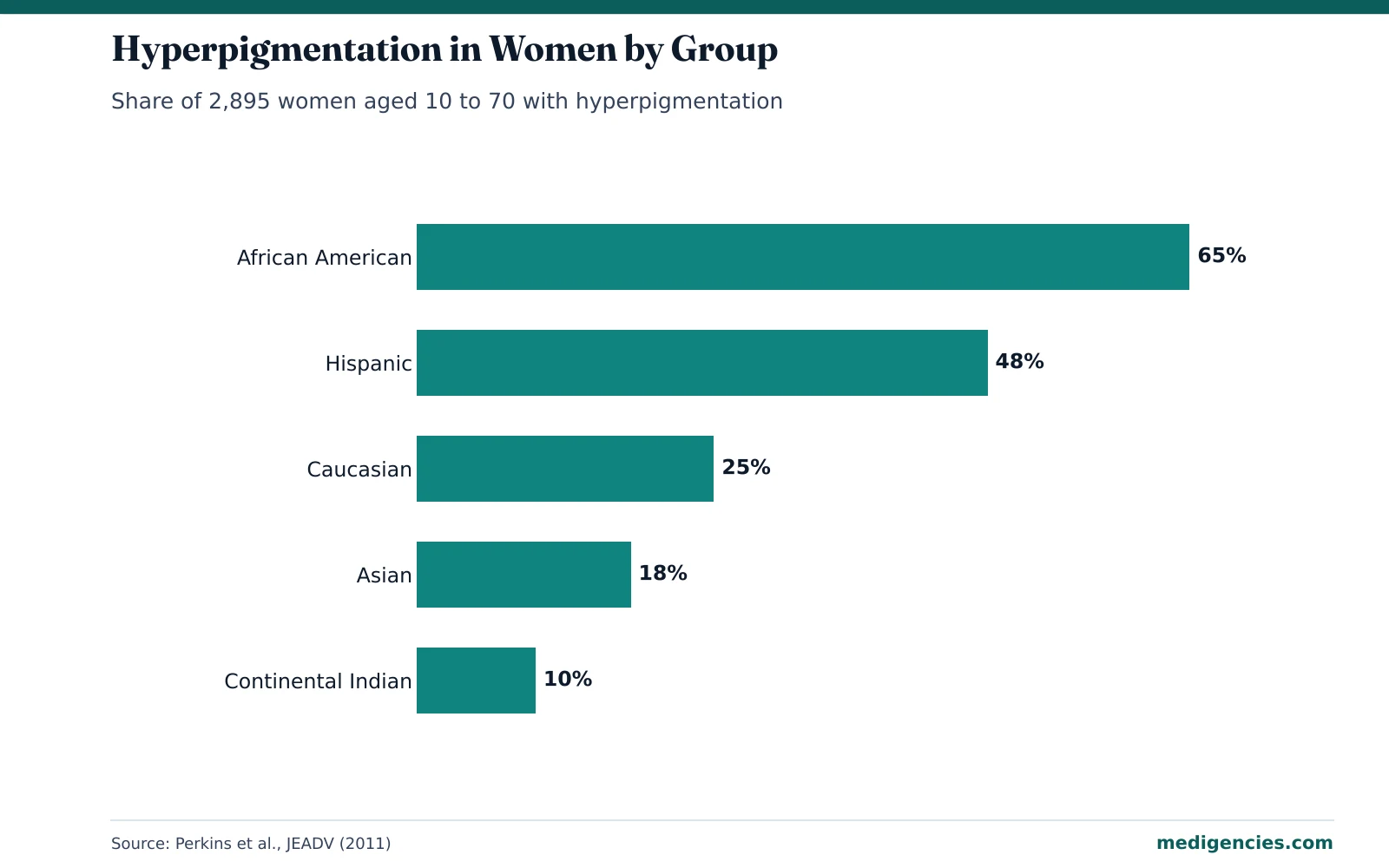
We divided the published rates. Hyperpigmentation was 2.6 times as common in African American women as in Caucasian women, and 3.6 times as common as in Asian women. Dyspigmentation and atrophic scarring were also more common in African American and Hispanic women than in the other groups.
Many patients with darker skin book because of the dark marks acne leaves behind. Give acne dark spots and post-acne marks their own page. Use results photos from a range of skin tones (with written consent) and say which treatments suit which skin types. A med spa offering lasers or peels should state plainly that settings depend on skin type.
Acne Patient Segments Mapped to Message and Channel
Each row in this plan ties one patient group to a figure from the sections above, the message we’d use and where we’d run it.
| Segment | Data signal | Message | Channel | What to avoid |
|---|---|---|---|---|
| Teens 12 to 17 (parent books) | 85% of adolescents affected | What a first visit involves, insurance, after-school slots | Google Search, parent-focused blog posts, school-season emails to existing families | Targeting minors with personalized ads; before/after photos of minors |
| Young adults 18 to 29 | Peak at 19; 50.9% of women and 42.5% of men in their 20s | “Still breaking out?” and what prescription care adds | Search, short video, Instagram | Drug names in ads and keywords |
| Women 30 to 49 | Ratio over women of 1.75 to 2.19 | Adult and hormone-related acne, combined acne and anti-aging plans | Search, email to existing patients, med spa cross-referral | Promising “clear skin for good” |
| Moderate to severe cases | 31.6% of people with acne | Scarring prevention, quick access, follow-up plan | Search, referral pages for primary care | Fear or shame messaging |
| Skin of color | Hyperpigmentation 2.6 times the Caucasian rate in African American women | Dark marks, safe treatment by skin type | Search, YouTube explainers, community partners | Using only light-skinned results photos |
Google treats physical health conditions as a sensitive interest category for personalized ads. That rules out Customer Match, your data segments, audience expansion and lookalike segments. Predefined Google audiences such as in-market and affinity segments are still allowed. Search terms and location end up doing most of the work, which suits a condition people type in by name. For the 18 to 29 group we would add short video and Instagram, and our list of healthcare social media agencies covers firms that run organic content for clinics.
Testimonials fall under FTC endorsement guidance. If an advertiser cannot show that a testimonial reflects what people generally achieve, the ad must make the generally expected results clear. So a “my skin cleared in four weeks” quote needs the generally expected result next to it. Firms that run review programs are in our list of healthcare reputation management agencies.
What the Acne Figures Mean for Dermatology Practices
We would put at least five acne pages on a dermatology site, covering teen acne, adult acne in women, acne scars, dark marks after acne, and severe or cystic acne. Each one lines up with a segment in the table above. Our dermatology SEO agency list includes firms that build this kind of condition cluster.
Persistent adult acne outnumbers late-onset cases 5 to 1, so most adult patients arrive having used products for years. Name what they have probably tried, such as benzoyl peroxide washes, and say what a prescription plan adds on top.
Track new acne patients by segment. Our 69% estimate is a benchmark for acne visits in the 40s, and a practice seeing far fewer women than that has a content or channel gap. For outside help there’s our list of dermatology marketing agencies, and our healthcare PPC statistics give cost benchmarks.
What the Acne Figures Mean for Med Spas
About 684 of every 1,000 acne cases are mild. A med spa can treat this group with acne facials, peels and skincare plans, under its medical director’s protocols. Moderate and severe cases go to a dermatologist, and putting that referral path in writing protects the patient and the spa.
Med spas and dermatologists overlap most on acne scars and dark marks. A spa page for “acne scar treatment” should state who is a candidate and how many sessions are typical, with results photos across skin tones. Our med spa SEO guide shows how to structure treatment pages, and med spa marketing agencies can run the campaigns.
Avoid cure language, because “Clear skin guaranteed” runs against the FTC’s expected-results standard. “A treatment plan for breakouts and marks” describes the service and promises no outcome.
Questions People Ask About Acne Rates and Age
What Percentage of Adults Have Acne?
In a US survey of 1,013 adults, acne was reported by 50.9% of women and 42.5% of men in their 20s. The rates fell with each decade to 15.3% of women and 7.3% of men aged 50 and over.
Is Acne More Common in Women or Men?
Women have higher rates overall. Among 10 to 24 year olds worldwide, the female rate was about 25% higher in 2021. In US adults, women in their 40s reported acne 2.2 times as often as men by our calculation.
At What Age Is Acne Worst?
Prevalence is highest at ages 15 to 19 in GBD data. In one large community study, acne peaked at age 19, when 46.8% of people had it.
How Many People Have Severe Acne?
In a study of 17,345 people, 5.6% of those with acne had severe disease and 26.0% had moderate disease. The other 68.4% had mild acne.
Is Acne Getting More Common?
Yes, slowly, with the age-standardized rate in 10 to 24 year olds rising 14.3% between 1990 and 2021. Acne cases in women aged 15 to 49 rose 37.4% over those years, partly because the population grew. Our psoriasis prevalence statistics cover a related skin condition.
Acne Studies, Guidelines and Ad Policies Behind These Figures
- American Academy of Dermatology, Updated Guidelines for the Management of Acne (January 31, 2024)
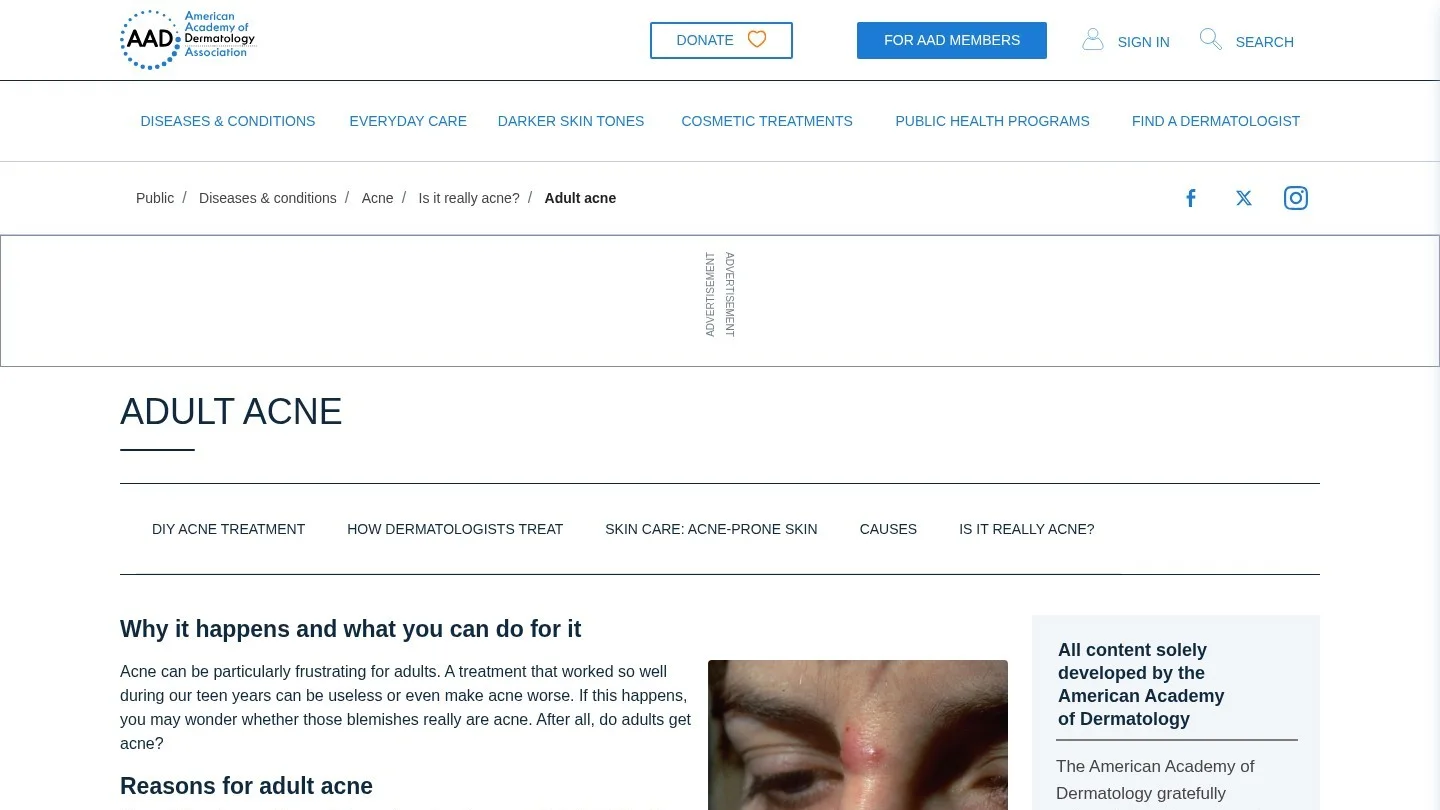
- American Academy of Dermatology, Adult Acne
- Zhu et al., Global, Regional and National Burdens of Acne Vulgaris in Adolescents and Young Adults Aged 10 to 24 Years, 1990 to 2021, British Journal of Dermatology (2025)
- PubMed record for Zhu et al. (2025)
- Temporal and Spatial Trends in the Global Burden of Acne Vulgaris Among Women of Reproductive Age, 1990 to 2040, International Journal of Dermatology (2025)
- Collier et al., The Prevalence of Acne in Adults 20 Years and Older, Journal of the American Academy of Dermatology (2008)
- Shen et al., Prevalence of Acne Vulgaris in Chinese Adolescents and Adults: A Community-Based Study of 17,345 Subjects in Six Cities, Acta Dermato-Venereologica (2012)
- Lynn et al., The Epidemiology of Acne Vulgaris in Late Adolescence, Adolescent Health, Medicine and Therapeutics (2016)
- Perkins et al., Comparison of the Epidemiology of Acne Vulgaris Among Caucasian, Asian, Continental Indian and African American Women, JEADV (2011)
- Google Ads, Healthcare and Medicines Policy
- Google Ads, Health in Personalized Advertising
- Federal Trade Commission, FTC’s Endorsement Guides: What People Are Asking
Compare Agencies for This Topic
Dermatology Marketing AgenciesMed Spa Marketing AgenciesHealthcare Content Marketing AgenciesHealthcare SEO Agencies
More From the Blog

Statistics
Private Hospital vs Public Hospital Cost Statistics
Hospital costs by ownership in the US, India and the UK, with our own ratios, growth rates and price-page advice for hospital marketers.
Nov 5, 2026

Statistics
Healthcare Mobile Search Statistics
Smartphone ownership, online health lookups by age, portal app use, telemedicine and page speed limits, with our own per-1,000-adults model for clinics.
Nov 5, 2026

Statistics
Healthcare Digital Marketing ROI Statistics
Hospital ad effects, health system marketing budgets, cost per patient by channel and Google's return claim, with our own math for clinics and hospitals.
Nov 5, 2026