
The 12 SEO tools healthcare marketers open most often are Google Search Console, Google Analytics 4, Google Business Profile, Semrush, Ahrefs, Screaming Frog, BrightLocal, Local Falcon, SE Ranking, Google’s Rich Results Test with the Schema Markup Validator, PageSpeed Insights, and Otterly.AI for AI search visibility. Five of them are free. The paid ones range from $24.99 a month for Local Falcon to $499.95 a month for Semrush’s Business plan, based on vendor pricing pages checked on 1 November 2026.
A hospital or clinic site is not a normal small business site. It has provider pages, location pages, YMYL health content and a patient portal that can expose protected health information. This guide explains what each tool does for that kind of site, the healthcare workflow it fits, what it costs, and which size of organization it suits.
TL;DR: Start with the free Google tools: Search Console for queries, Business Profile for each location and provider, PageSpeed Insights for speed, and the Rich Results Test for schema. Add one all-in-one suite (Semrush, Ahrefs or SE Ranking), one local tool (BrightLocal or Local Falcon) and, for larger groups, Screaming Frog and an AI visibility tracker. Keep Google Analytics tags off patient portals and booking flows, because Google does not sign a business associate agreement for Analytics.
No BAA for Google Analytics and One Profile per Practitioner
- Google states it does not offer business associate agreements for Google Analytics and tells HIPAA-regulated customers not to place its tags on authenticated pages (Google Analytics Help).
- A federal court vacated part of the HHS tracking guidance on 20 June 2024, but HHS still says booking pages and symptom checkers can collect PHI (HHS OCR).
- Google allows one Business Profile per public-facing practitioner, and hospital departments can have their own profile if they use a distinct name and category (Google Business Profile guidelines).
- Entry prices on monthly billing: Ahrefs Lite $129, SE Ranking Core $129, Semrush SEO Toolkit Pro $139.95, BrightLocal Track $41, Local Falcon Starter $24.99 and Otterly.AI Lite $29 (vendor pages, November 2026).
- An eight-location group scanning five keywords on a 9×9 grid every week needs about 14,040 Local Falcon credits a month, which fits the $49.99 Basic plan.
- The good Core Web Vitals targets are LCP within 2.5 seconds, INP under 200 milliseconds and CLS under 0.1 (Google Search Central).
Healthcare SEO Tools Compared by Price and Use
The table lists every tool in this guide with its main job and its published entry price. Prices are for monthly billing unless the vendor only shows annual terms. Most vendors cut the rate when you pay for a year up front.
| Tool | Main Healthcare Job | Entry Price (Nov 2026) | Best Fit |
|---|---|---|---|
| Google Search Console | Queries, indexing, Core Web Vitals report | Free | Every site |
| Google Analytics 4 | Traffic and conversions on public pages only | Free | Every site, with HIPAA limits |
| Google Business Profile | Location and provider listings in Maps | Free | Every location and provider |
| Semrush | Keyword research, audits, rank tracking, local listings | $139.95/mo (SEO Toolkit Pro) | Groups and in-house teams |
| Ahrefs | Backlinks, content gaps, AI brand mentions add-on | $129/mo (Lite) | Content-heavy sites, hospitals |
| Screaming Frog SEO Spider | Technical crawl of provider and location pages | Free to 500 URLs; £199/yr | Sites over a few hundred pages |
| BrightLocal | Citations, reviews, local rank checks | $41/mo (Track, 1 location) | Solo practices to large groups |
| Local Falcon | Geo-grid map rank scans | $24.99/mo (Starter) | Multi-location groups |
| SE Ranking | Lower-cost all-in-one suite | $129/mo (Core) | Solo and small practices |
| Rich Results Test and Schema Markup Validator | Checking Physician and MedicalClinic markup | Free | Every site |
| PageSpeed Insights | Core Web Vitals field and lab data | Free | Every site |
| Otterly.AI | Brand mentions in ChatGPT, AI Overviews, Perplexity, Copilot | $29/mo (Lite) | Groups and health systems |
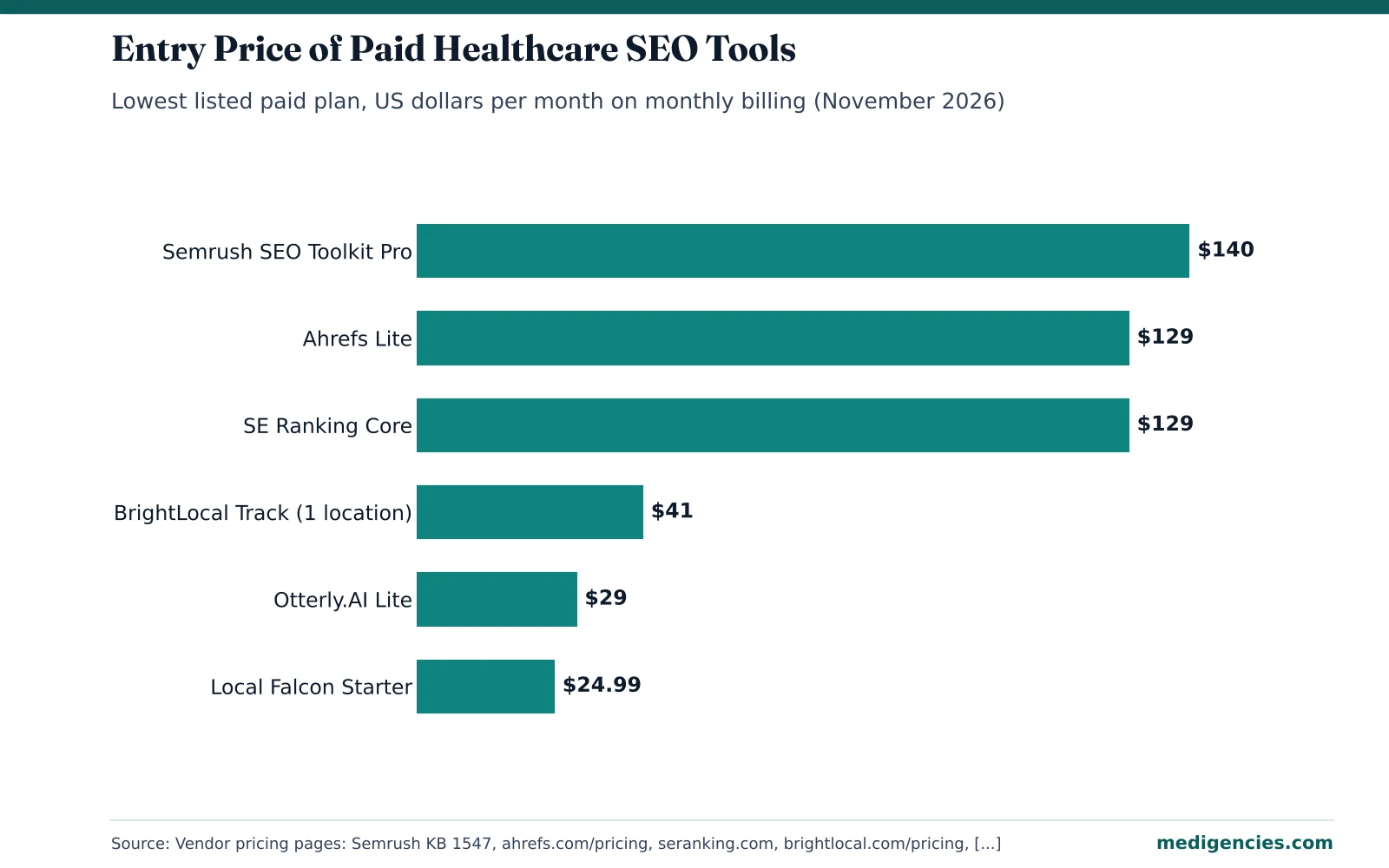
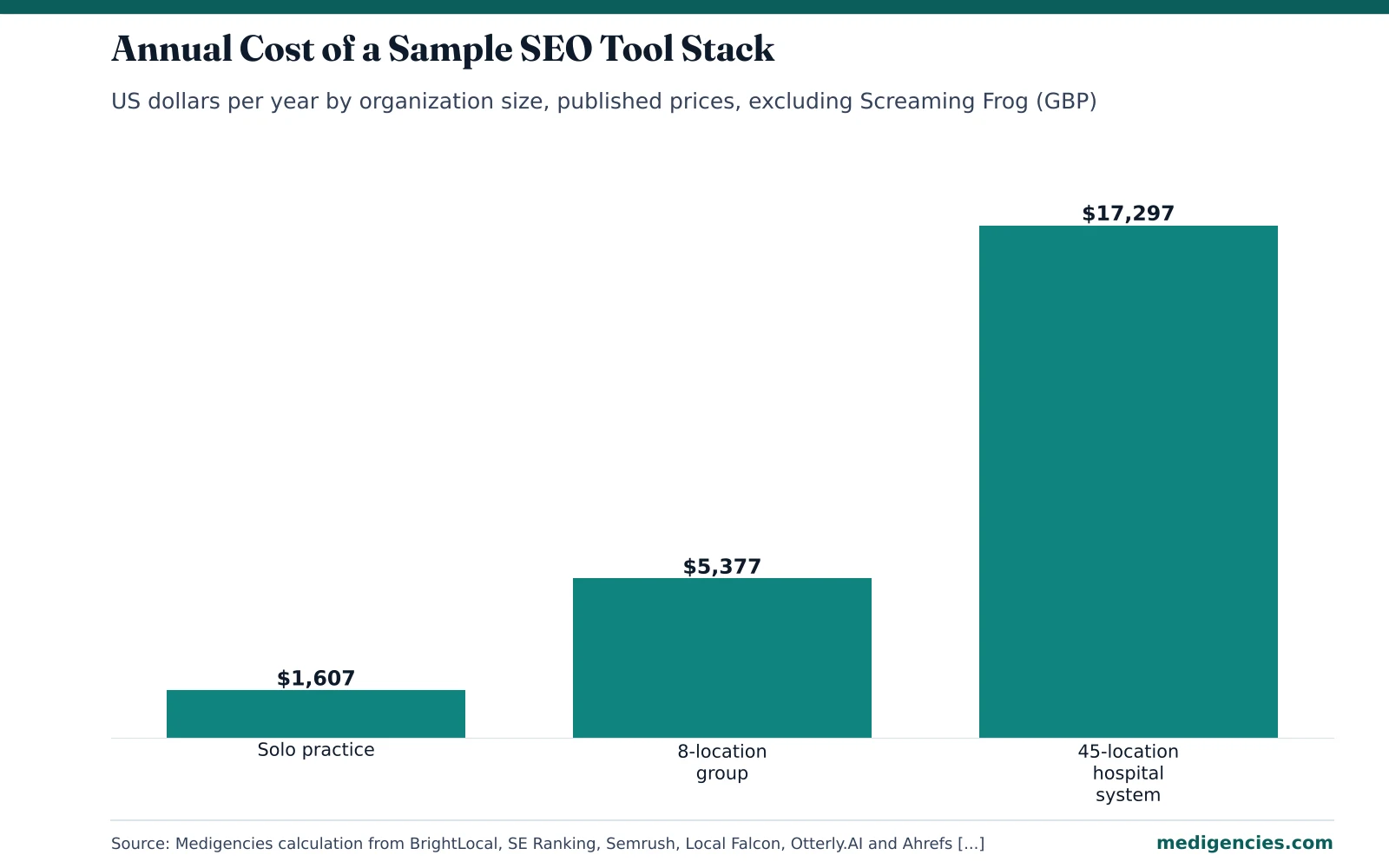
The chart shows the gap between the local tools and the full suites. A solo practice can cover local tracking for under $50 a month. The big suites cost three to four times more because they add keyword databases, backlink indexes and site audits. For agency help choosing and running these tools, our list of healthcare SEO agencies shows who works with practices like yours.
The 12 SEO Tools Healthcare Marketers Use Every Day
Each entry below covers the job the tool does on a medical site, the healthcare workflow it fits, the published price and the type of organization that gets the most from it. We did not run these tools on client sites. The details come from vendor pages and official Google and HHS documentation.
1. Google Search Console
Search Console is Google’s own report on how your site appears in search. It shows the queries that trigger your pages, the clicks and impressions each page earns, and which URLs Google has indexed. It also has a Core Web Vitals report that Google tells site owners to check (Google Search Central).
For a clinic, the most useful habit is to filter the Performance report by page. Look at one provider page at a time. If a cardiologist’s page gets impressions for “cardiologist near me” but few clicks, rewrite the title tag with the doctor’s name, specialty and city. Do the same for each location page. Search Console also has a privacy advantage: it reports search data from Google’s side, so it needs no tracking tag on your pages. It is free and suits every practice, from a single dentist to a hospital system.
2. Google Analytics 4
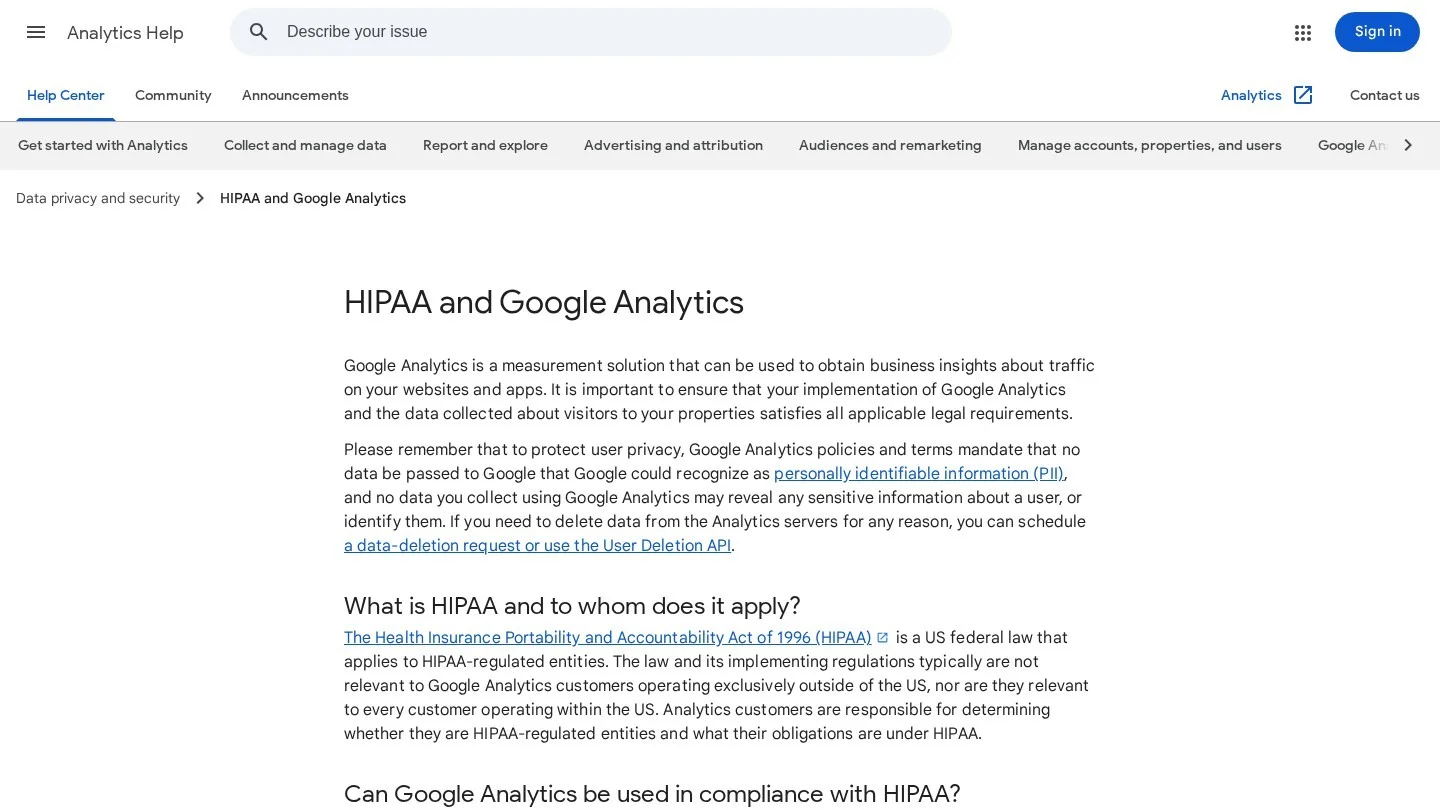
GA4 tracks what visitors do after they land: which pages they read, where they came from, and whether they call or submit a form. It is free. For healthcare, the setup matters more than the reports. Google says it “does not offer Business Associate Agreements” for Analytics. It also says HIPAA-regulated customers may only use it “on pages that are not HIPAA-covered” (Google Analytics Help).
In practice, that means three setup rules. First, keep GA4 tags off the patient portal and any logged-in page, since Google calls these likely HIPAA-covered. Second, keep tags off unauthenticated pages tied to care, such as an appointment request form. HHS gives booking pages and symptom checkers as examples of public pages that may still collect PHI, such as an email address or the reason for a visit (HHS OCR tracking guidance). Third, never pass form fields or URL parameters that hold a name, condition or date of birth into an event.
The legal picture changed in 2024. On 20 June 2024, a federal court in Texas vacated the part of the HHS guidance that said linking an IP address to a visit on a public condition or provider page triggers HIPAA. HHS kept the rest, including the rules for portals, apps and booking flows. GA4 suits blog posts, service pages and location pages. Ask your counsel to sign off on which pages are tagged.
3. Google Business Profile
Business Profile controls how each office appears in Google Maps and the local pack. It is free. Healthcare has its own rules here, and breaking them can get a listing suspended. Google says a practitioner should have a profile if they are public-facing and can be reached at the verified location during stated hours. Support staff should not have their own profiles, and one doctor should not have several profiles for different specialties (Google Business Profile guidelines).
A group practice gets one profile for the office and one for each public-facing doctor. The doctor’s profile title should hold only the doctor’s name, though credentials such as “MD” are allowed. A solo doctor in a branded practice shares one profile, named in the format “[brand]: [practitioner name]”. Hospitals can list departments, but each needs a distinct name and a different main category from the hospital. Google’s own example is “Massachusetts General Hospital Department of Dermatology”. Every location of the same brand must use the same name and share one main category. Business Profile suits every practice, and multi-location groups should audit it each quarter.
4. Semrush
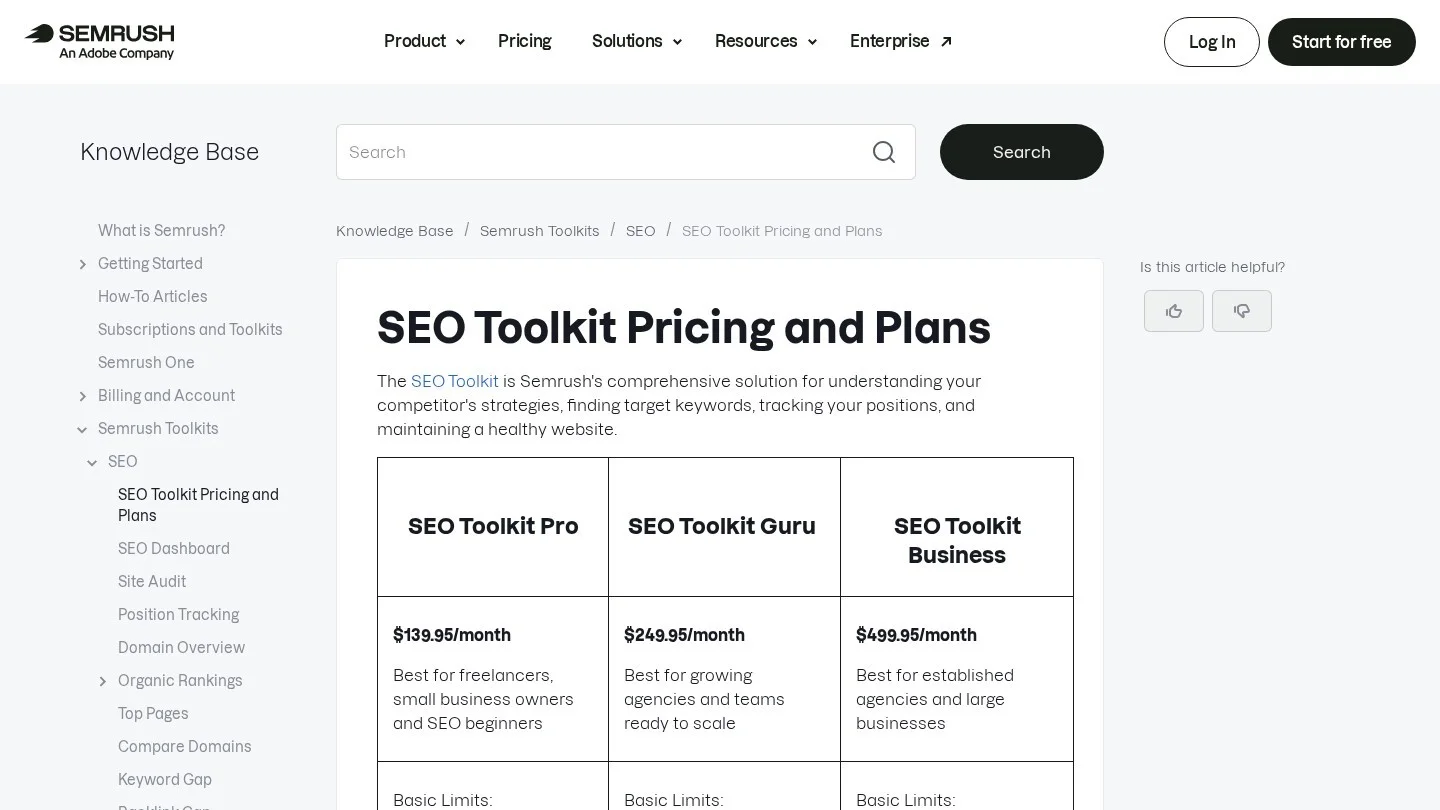
Semrush is an all-in-one suite for keyword research, competitor analysis, site audits and rank tracking. A practice marketer uses it to find the terms patients search, such as “knee replacement recovery time”, and to see which local competitors rank for them. Its Local toolkit adds listing management and a map rank tracker for each location.
A good healthcare workflow is the condition hub. Pull every question around one condition from the keyword tool, group them, and build one physician-reviewed page per cluster. Then track those terms by city. The SEO Toolkit costs $139.95 a month for Pro (500 tracked keywords, 5 sites), $249.95 for Guru (1,500 keywords) and $499.95 for Business (5,000 keywords) (Semrush). The Local toolkit costs $30 per location a month on Base and $60 on Pro, billed annually (Semrush Local pricing). Semrush suits multi-location groups and in-house hospital teams that need research and local tools in one login.
5. Ahrefs
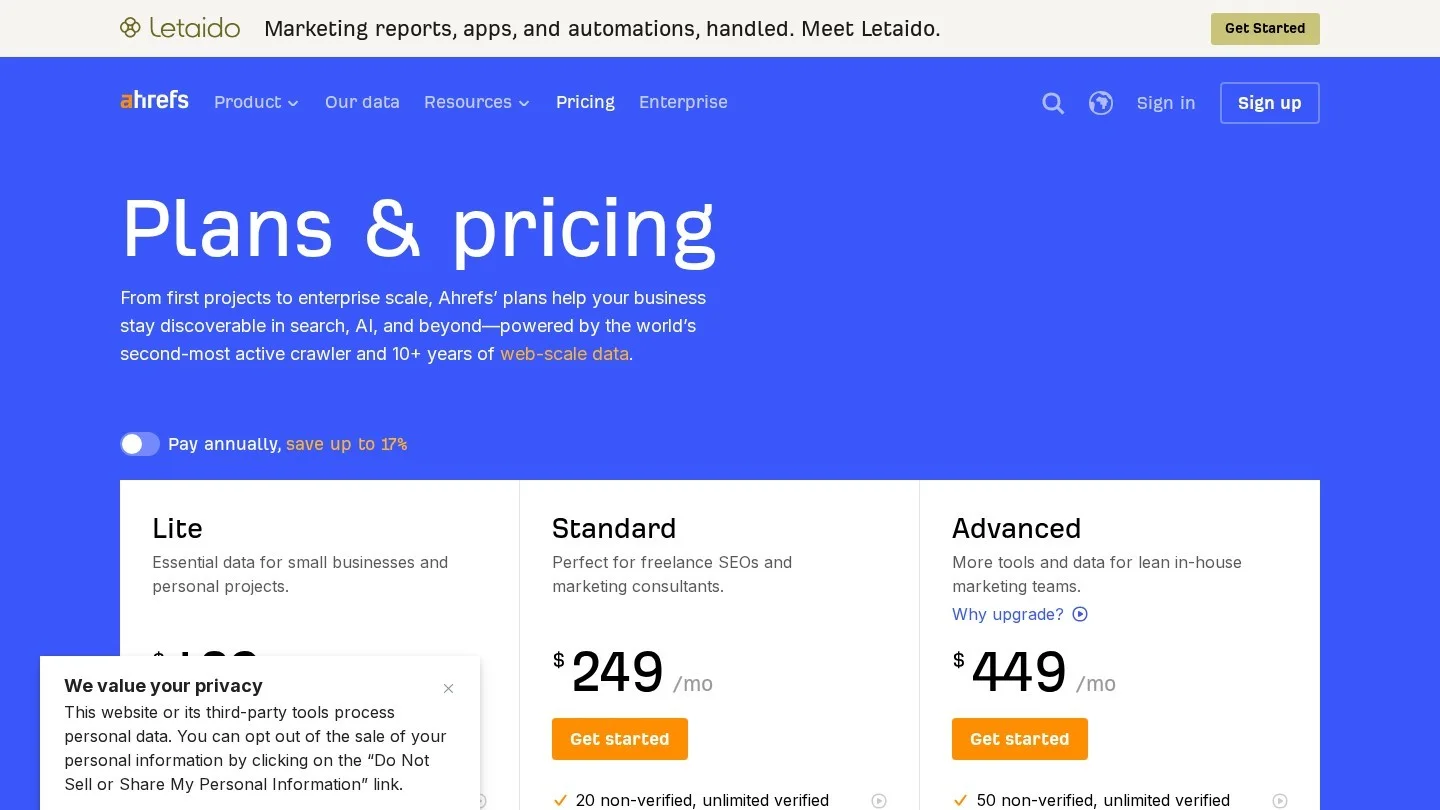
Ahrefs is best known for its backlink index. In healthcare, links from medical schools, health departments, news sites and specialty societies carry weight on YMYL topics. Ahrefs shows which of those sites link to competing hospitals and not to you. Its Content Gap view shows topics competitors rank for that your site does not cover.
Hospitals use it to find unlinked mentions of their doctors in local news, then ask the outlet to link to the doctor’s profile page. Pricing is $129 a month for Lite (750 tracked keywords), $249 for Standard, $449 for Advanced and $1,499 for Enterprise with an annual commitment. A Starter plan costs $29 a month. The Brand Radar AI add-on, which tracks brand mentions in AI answers, starts at $199 a month (Ahrefs pricing). Ahrefs suits hospital systems and content-heavy groups that publish health guides at scale.
6. Screaming Frog SEO Spider
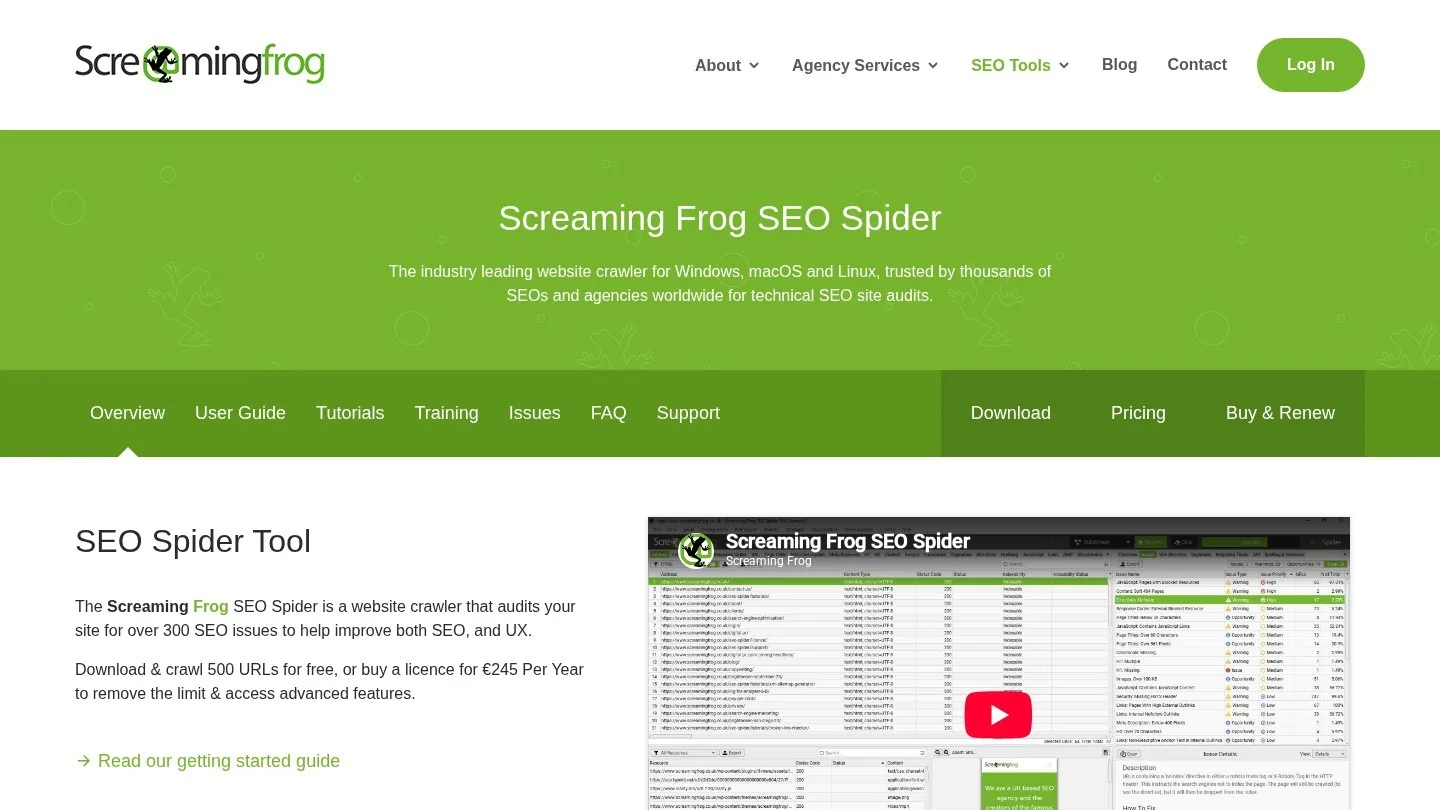
Screaming Frog is a desktop crawler. It visits every URL on your site and lists titles, status codes, redirects, canonical tags and structured data. Health systems often have thousands of provider and location pages built from a database. When a doctor leaves, the page may return a 404 or redirect to the home page. A crawl finds those cases in minutes.
A useful check is to crawl all URLs under the provider directory and export pages with duplicate titles. A templated directory can give every doctor the same title, such as “Find a Doctor”, and the export shows it at once. The free version crawls up to 500 URLs. A paid licence costs £199 a year, falling to £189 each for 5 to 9 licences (Screaming Frog pricing). It suits hospital systems and multi-location groups. A solo practice with 30 pages rarely needs more than the free version.
7. BrightLocal
BrightLocal is a local SEO platform. It checks local rankings, audits citations on directories, monitors reviews and builds new listings. For healthcare, citation consistency matters on medical directories as well as general ones. A doctor who moved offices often has the old address on several sites, and BrightLocal’s audit finds them.
Pricing scales by location count. For one location, Track costs $41 a month, Manage $54 and Grow $65 on monthly billing. Annual billing drops Track to $369 a year, which saves $123 against twelve monthly payments. A group with 6 to 10 locations pays $131 a month for Grow, or $1,178 a year. Citation Builder is pay-as-you-go from $2 per citation with bulk credits (BrightLocal pricing). BrightLocal suits solo practices that want one simple local dashboard and groups that need location-level reports. Groups that hand this work to a partner can compare healthcare reputation management agencies.
8. Local Falcon
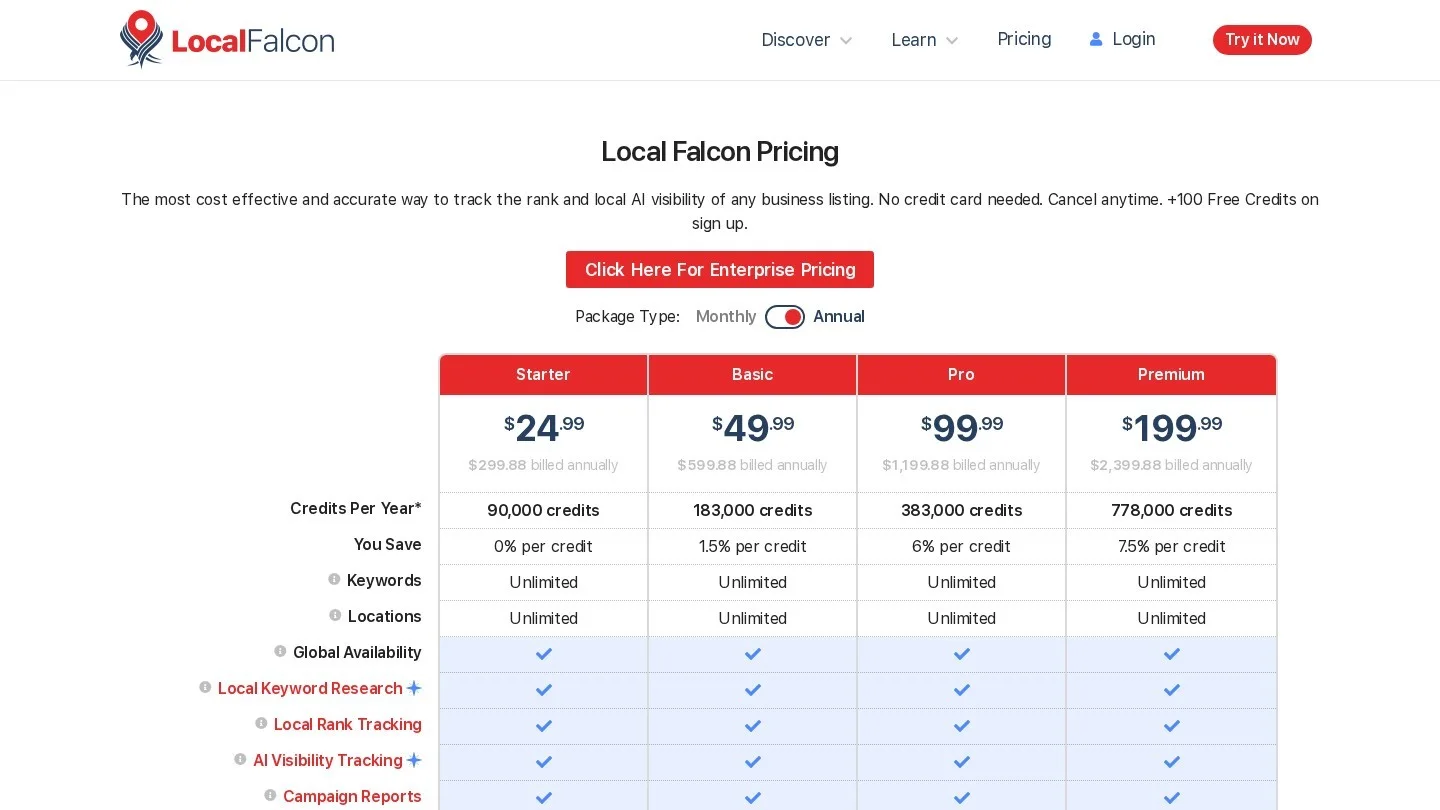
Local Falcon runs geo-grid scans. It checks where a listing ranks in Google Maps from many points around an office and shows the result as a colored grid. A clinic may rank first for “urgent care” two blocks away and drop to tenth three miles out. A grid makes that visible, and it shows which neighborhoods need a new location page or more reviews.
Pricing is credit-based. Each grid point uses one credit, so a 9×9 grid uses 81 credits. Plans run from $24.99 a month for 7,500 credits to $199.99 for 63,150 credits (Local Falcon pricing). Here is the math for an eight-location group that tracks five keywords per office on a 9×9 grid. One round of scans uses 81 x 8 x 5 = 3,240 credits. Weekly scans average 3,240 x 52 / 12 = 14,040 credits a month, which fits the $49.99 Basic plan with 15,150 credits. Monthly scans would fit the Starter plan. Local Falcon suits multi-location groups, urgent care chains and dental groups.
9. SE Ranking
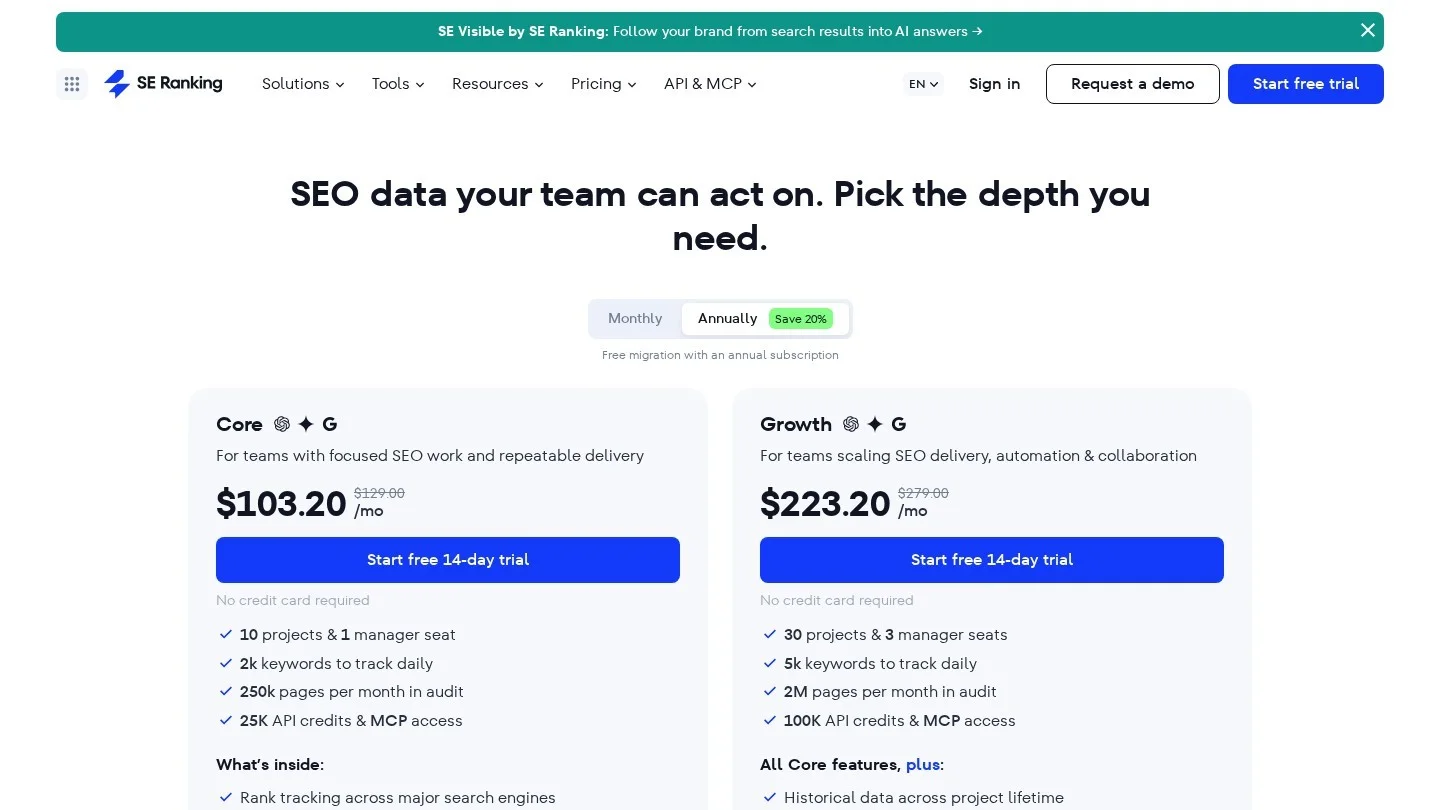
SE Ranking covers rank tracking, keyword research, site audits and backlink checks at a lower price per tracked keyword than the two big suites. For a small practice, its value is the daily rank tracker. Two thousand tracked keywords per day is enough to track every service in every nearby town.
A typical setup for a physical therapy clinic would track “physical therapy” plus each service, such as “vestibular therapy” and “pelvic floor therapy”, across five nearby towns. SE Ranking now sells Core at $129 a month ($103.20 a month on annual billing) with 2,000 tracked keywords and 10 projects, and Growth at $279 a month with 5,000 keywords. An AI Visibility add-on starts at $71 a month for 75 prompts (SE Ranking pricing). It suits solo and small practices that want one paid suite on a tight budget.
10. Rich Results Test and Schema Markup Validator
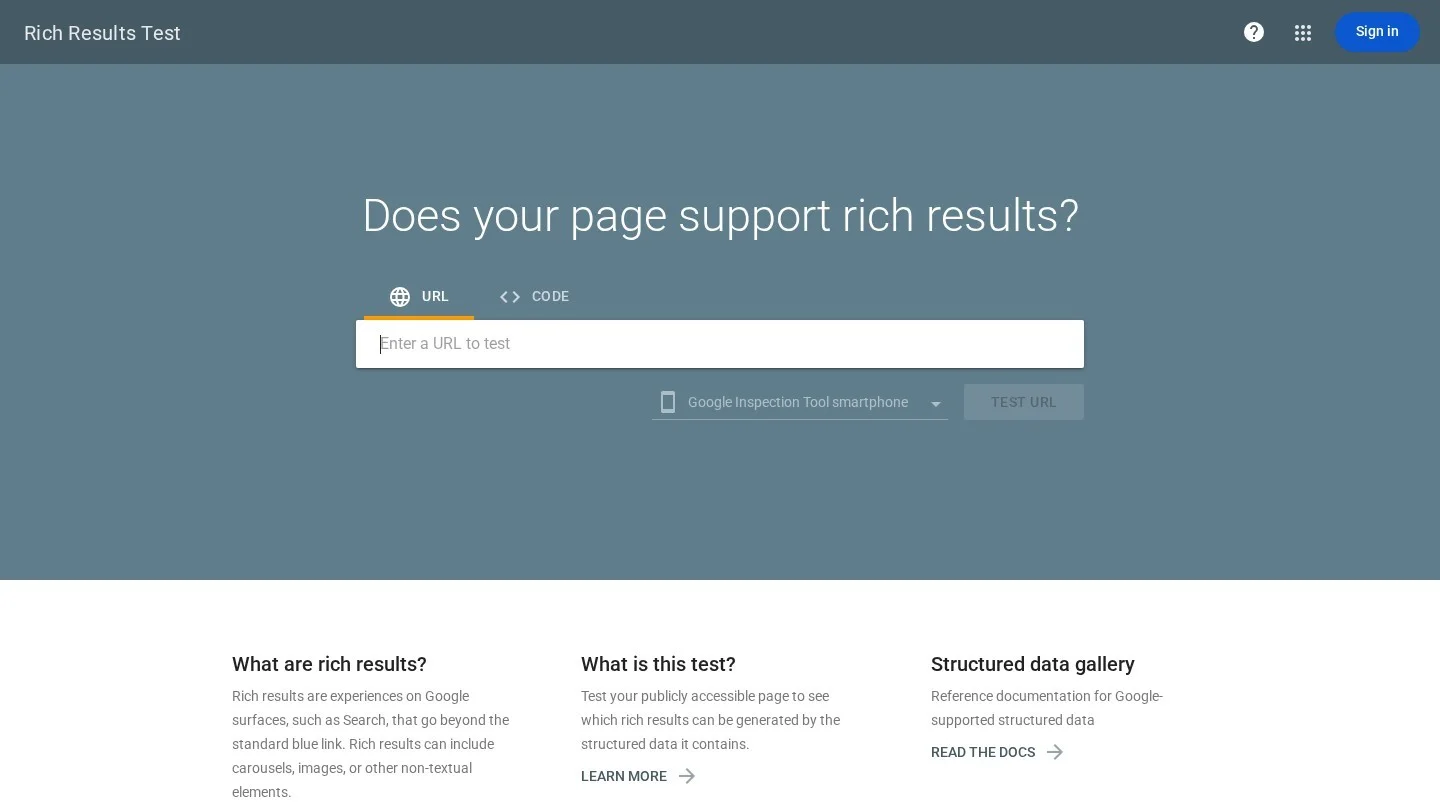
Structured data tells search engines what a page is about in a fixed vocabulary. Google’s Rich Results Test checks whether a page qualifies for Google features. The Schema Markup Validator checks any schema.org markup, including types Google does not use for rich results. Both are free.
For healthcare, the key type is Physician. Schema.org defines it as “an individual physician or a physician’s office”, and it sits under both MedicalOrganization and LocalBusiness. It supports properties such as medicalSpecialty, hospitalAffiliation, availableService and usNPI, the 10-digit National Provider Identifier. MedicalOrganization adds isAcceptingNewPatients and healthPlanNetworkId (Schema.org). A provider page template can fill these from the provider database. Then test one page per template in both tools after each release. These checkers suit every practice, and they matter most for systems with templated provider directories.
11. PageSpeed Insights
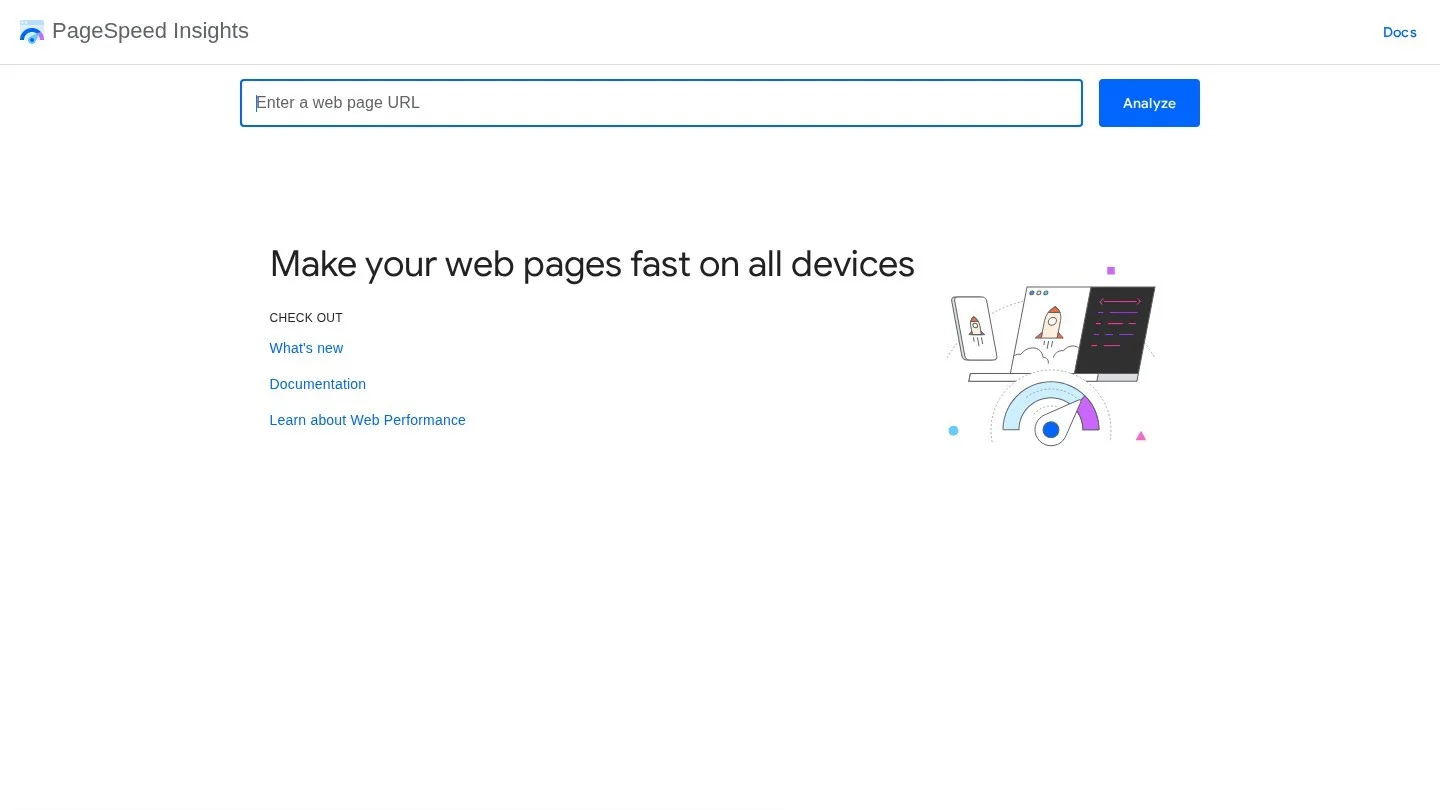
PageSpeed Insights tests one URL and reports Core Web Vitals from real Chrome users when enough data exists, plus a lab test. Google’s good targets are Largest Contentful Paint within 2.5 seconds, Interaction to Next Paint under 200 milliseconds and Cumulative Layout Shift under 0.1. Google “highly recommend[s]” good scores for success in Search (Google Search Central).
Two things to check first on medical sites are photos and widgets. Large hero photos of doctors slow down LCP, and chat widgets or booking pop-ups shift the layout. Test the home page, a location page, a provider page and the find-a-doctor search, since each uses a different template. Fixing the template fixes every page built from it. The tool is free and suits every site. Practices that need a rebuild can review healthcare web design agencies.
12. Otterly.AI
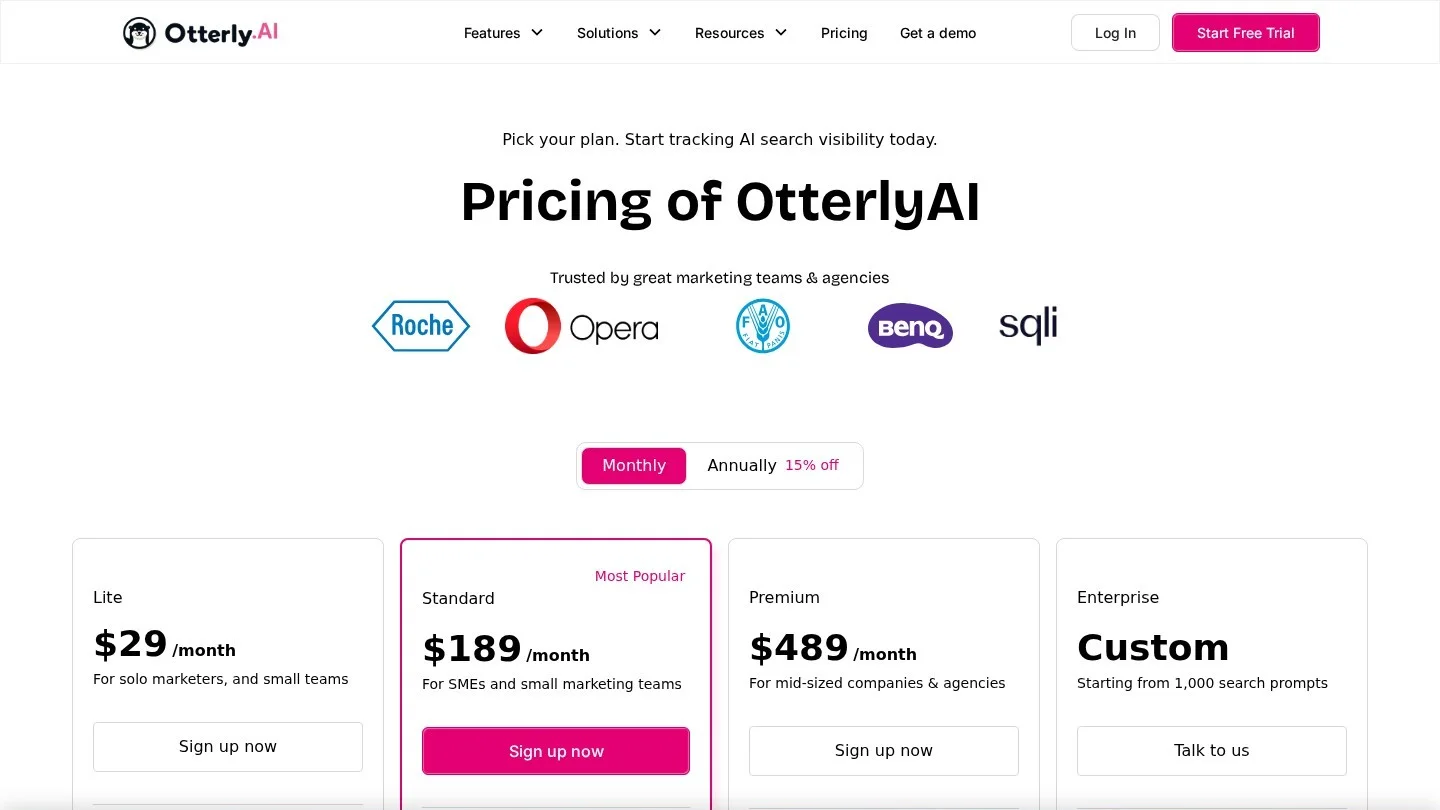
Patients now ask AI tools questions such as “best orthopedic surgeon for ACL repair in Denver”. Otterly.AI runs a set of prompts you choose through AI engines and records whether your practice is named and which sources are cited. The base plans cover ChatGPT, Google AI Overviews, Perplexity and Microsoft Copilot. Google AI Mode, Gemini and Claude are paid add-ons.
Lite costs $29 a month for 15 prompts, Standard $189 for 100 prompts, and Premium $489 for 400 prompts, with about 15% off on annual billing (Otterly.AI pricing). A good prompt set mixes condition questions, “near me” style questions by city, and doctor-name questions. Keep patient details out of prompts. The tool suits multi-location groups and hospital systems. For outside help with AI search, see our list of healthcare AEO and GEO agencies and our guide to AI agents in healthcare marketing.
HIPAA-Safe Analytics Setup for Medical Websites
Most SEO tools in this list never touch patient data. Semrush, Ahrefs, Screaming Frog, Local Falcon and SE Ranking read your public pages or Google’s results from the outside. The risk sits with tags that run in a patient’s browser, which is why GA4 needs care. HHS says a tracking vendor that handles PHI is a business associate “regardless of whether the required BAA is in place”. It also says a cookie banner is not a valid HIPAA authorization (HHS OCR).
HHS gives an example that shows why context matters. A visit to a hospital’s oncology page is a PHI disclosure if the visitor is seeking a second opinion on their own tumor treatment. The same visit by a student researching oncology services is not. A site cannot tell these visitors apart. A cautious setup keeps third-party tags off condition and booking pages and relies on Search Console for query data and on server-side or consented measurement for the rest.
| Page Type | GA4 Tag? | Reason |
|---|---|---|
| Patient portal and logged-in pages | No | Google says authenticated pages are likely HIPAA-covered |
| Appointment request and booking pages | No | HHS says booking pages may collect PHI such as reason for visit |
| Symptom checkers | No | HHS lists symptom checkers as pages that may collect PHI |
| Blog posts and general health guides | Yes, with counsel’s approval | Tracking on many unauthenticated pages has no access to PHI, per HHS |
| Location and provider pages | Ask counsel | Google advises against tags on public pages tied to providing care |
The Best SEO Tool Stack by Organization Size
No practice needs all 12 tools. The right stack depends on how many locations and providers you manage and how much content you publish. The three stacks below use published prices from November 2026, and every total was run in Python. Screaming Frog is left out of the dollar totals because it is priced in pounds.
Solo Practice: About $1,607 a Year
A single-location practice with one to three providers should start with the free Google tools: Search Console, GA4 on non-care pages, Business Profile, PageSpeed Insights and the Rich Results Test. Add BrightLocal Track on annual billing at $369 a year and SE Ranking Core on annual billing at $103.20 a month, or $1,238.40 a year. The total is $1,607.40 a year. That covers local rankings, reviews, citations and keyword tracking. Specialty owners can see how this works in our dental SEO guide and our chiropractor SEO guide.
Multi-Location Group: About $5,377 a Year
An eight-location group needs location-level data. A sample stack is Semrush SEO Toolkit Pro at $139.95 a month ($1,679.40 a year), BrightLocal Grow for 6 to 10 locations at $1,178 a year, Local Falcon Basic at $599.88 a year, and Otterly.AI Standard on annual billing at $160 a month ($1,920 a year). The total is $5,377.28 a year, plus one Screaming Frog licence at £199. That works out to about $672 per location per year. Groups that want help running this stack can browse medical practice marketing agencies.
Hospital System: About $17,297 a Year
A hospital system with 45 locations, hundreds of provider pages and a large health library needs depth. A sample stack is Ahrefs Advanced at $449 a month ($5,388 a year), BrightLocal Grow for 41 to 50 locations at $4,445 a year, Local Falcon Premium at $2,399.88 a year and Otterly.AI Premium at $422 a month on annual billing ($5,064 a year). The total is $17,296.88 a year. Add five Screaming Frog licences at £189 each, or £945 a year, so each web team member can crawl. Systems that want listing sync can add Semrush Local at $30 to $60 per location a month. Our directory of hospital and health system marketing agencies lists firms that support teams at this size.
How to Choose Healthcare SEO Software
Start with the job, not the brand. If your main problem is that patients cannot find your offices in Maps, buy a local tool first. If you publish condition content and need links from medical sites, buy a suite with a strong backlink index. If you run a provider directory with hundreds of pages, a crawler and a schema checker will find more problems than any rank tracker.
Then check three healthcare points before you sign. Confirm whether the tool places any code on your site, since that decides whether HIPAA is in play. Check whether pricing scales by location, keyword or credit, because a group adding offices can outgrow a plan fast. Finally, pick tools your team or agency already knows. Specialty sites follow the same logic, as our guides to cardiology SEO and medical equipment company SEO show. If you want a vetted partner instead, get matched with a healthcare marketing agency.
Analytics HIPAA Status, Doctor Profiles and Tool Costs Answered
What Is the Best SEO Tool for a Medical Practice?
Google Search Console is the best free starting point because it shows real search queries without a tag on your site. For a paid tool, a solo practice gets the most from a local platform such as BrightLocal, from $41 a month, and a group gets more from a suite such as Semrush or Ahrefs.
Is Google Analytics HIPAA Compliant?
Google says it does not offer business associate agreements for Google Analytics. HIPAA-regulated customers may only use it on pages that are not HIPAA-covered, and should keep tags off authenticated pages and pages tied to providing care (Google Analytics Help).
Can Each Doctor Have a Google Business Profile?
Yes, if the doctor is public-facing and can be reached at the verified location during stated hours. Each doctor gets one profile, not one per specialty. A solo doctor in a branded practice shares the practice profile instead (Google).
What Schema Should a Doctor’s Website Use?
Provider pages can use the schema.org Physician type with medicalSpecialty, hospitalAffiliation and usNPI. Clinic or office pages can add isAcceptingNewPatients from MedicalOrganization. Test them with the Rich Results Test and the Schema Markup Validator.
How Much Do Healthcare SEO Tools Cost?
Five of the 12 tools are free. Paid tools in this guide start at $24.99 a month for Local Falcon and reach $499.95 a month for Semrush Business. Our sample stacks cost about $1,607 a year for a solo practice and about $17,297 a year for a 45-location hospital system.
Vendor Pricing Pages and HHS and Google Policies Checked
- HHS OCR: Use of Online Tracking Technologies by HIPAA Covered Entities and Business Associates
- Google Analytics Help: HIPAA and Google Analytics
- Google Business Profile: Guidelines for representing your business
- Google Search Central: Understanding Core Web Vitals and Google search results
- Schema.org: Physician
- Semrush: SEO Toolkit Pricing and Limits
- Semrush: Local Toolkit Plans and Pricing
- Ahrefs: Pricing
- Screaming Frog: SEO Spider Pricing
- BrightLocal: Pricing
- Local Falcon: Pricing
- SE Ranking: Subscription Plans
- Otterly.AI: Pricing
Compare Agencies for This Topic
Chiropractic Marketing AgenciesDental Marketing AgenciesMedical Practice Marketing AgenciesHealthcare AEO and GEO AgenciesHealthcare Reputation Management AgenciesHealthcare SEO Agencies
More From the Blog

Guides
Cataract Surgery Center SEO: The Complete Guide
A full SEO guide for cataract surgery centers, from keywords and technical fixes to lens pages, Business Profiles, directories, links, AI citations, reviews and…
Nov 4, 2026

Guides
Interventional Cardiology SEO Guide for Cath Lab and Structural Heart Programs
A full SEO guide for interventional cardiology groups, from keyword research and technical fixes to procedure pages, Business Profiles, citations, links, AI search, reviews…
Nov 4, 2026

Statistics
Childhood Cancer Survival Rate Statistics
Childhood cancer survival rates by type, age and decade, with Medigencies calculations and guidance on communicating survival data ethically to families.
Nov 4, 2026