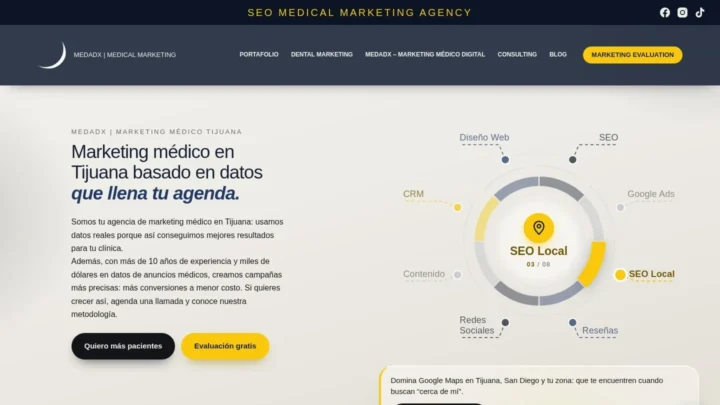
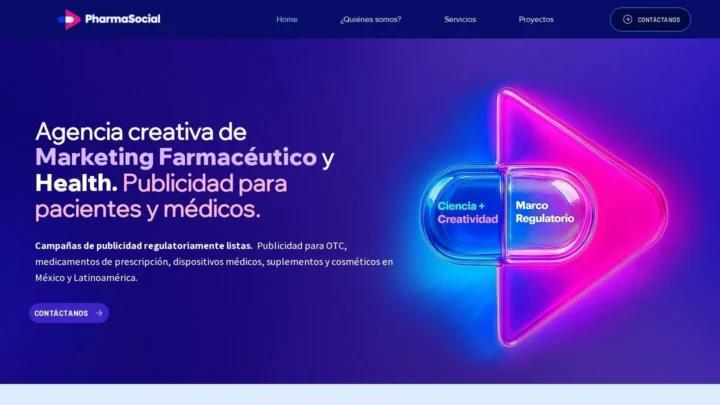
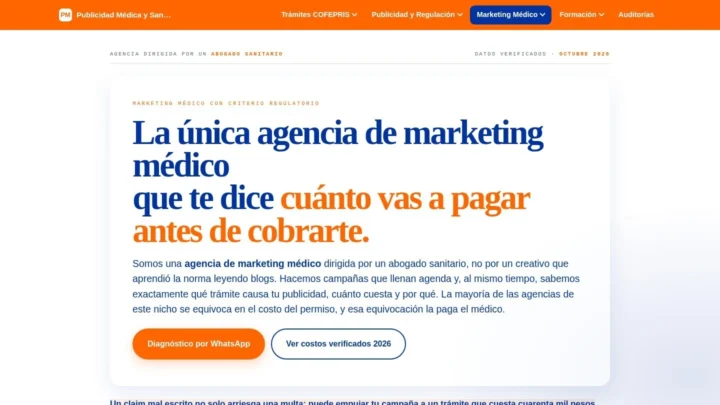
The agencies below run offices in Mexico and show work for hospitals, private practices, dental clinics or health brands. Beneath the list: how IMSS and the private sector split demand, what COFEPRIS and the General Health Law expect from ads, and how the 2025 data law treats patient details.
Mexico City pharmaceutical advertising agency producing medical communication, HCP digital programs, events and continuing medical education for laboratories and health brands.
Best for
Laboratories and health brands in Mexico needing regulated medical communication, KOL events and HCP digital tools
Specialties
Hospitals and Health Systems, Pharma and Life Sciences
Mexico City pharmaceutical marketing and health communication agency running omnichannel HCP, patient and health influencer programs across Latin America.
Best for
Pharmaceutical and OTC brands needing compliant HCP and patient communication in Mexico and Latin America
Bengaluru-headquartered life sciences commercialization company providing marketing content, campaign operations and AI search optimization to global pharma brands.
Best for
Global and Indian pharma companies needing high-volume, compliance-checked marketing content
Denver HubSpot agency building inbound marketing, websites and automation, with a published fertility clinic case study and healthcare among four target industries.
Best for
Multi-location fertility clinics wanting HubSpot-based lead nurturing, website and content programs
Mexico City communication agency producing medical webinars, continuing medical education platforms and scientific content for pharmaceutical companies.
Best for
Pharmaceutical companies running HCP education, webinars and launch events in Mexico
Pricing and terms as of each profile’s last verified date.
Public Institutes, a Coverage Gap and Private Clinics
Mexico’s public care is divided among institutions: IMSS for private-sector employees, ISSSTE for federal government workers and IMSS-Bienestar for people without social security. Access is uneven. INEGI’s 2024 poverty measurement found that 34.2% of the population, about 44.5 million people, lacked access to health services, 18.6 percentage points more than in 2016.
Private doctors’ offices, specialty practices and hospital groups fill much of that gap, and they are the main buyers of marketing, along with fertility centers, plastic surgeons and pharmaceutical brands. Cross-border care adds a second audience. Fabián Walters Arballo, president of the Baja Health Cluster, told El Imparcial in July 2026 that dentistry is still the top reason foreign patients come to Tijuana, while bariatric surgery has dropped by 50% to 70% as GLP-1 weight-loss drugs spread. He named internal medicine, general surgery, assisted reproduction, ophthalmology and orthopedics as growing fields.
Why a Mexican Agency Earned a Spot
We list a firm only after confirming it runs an office in Mexico, checking that its website shows real work for healthcare clients, and matching the services we display to what it offers itself. Ranking order is never sold.
Article 83 and the COFEPRIS Advertising Notice
The General Health Law (Ley General de Salud) makes professionals and specialists display the institution that granted their degree, their cédula profesional number and, where relevant, their current specialty certificate. Article 83 extends the same details to stationery and to any advertising about the practice, so a doctor’s Google ad or Instagram post should carry them too.
Article 86 of the Regulation on Advertising (Reglamento de la Ley General de Salud en Materia de Publicidad) requires a notice (aviso) to the health authority for ads about professional, technical, auxiliary and specialty activities, filed on form COFEPRIS-02-002-A. Medicines and other health supplies promoted to the public need a COFEPRIS permit instead, and only over-the-counter drugs may be pitched to consumers. Prescription products stay with health professionals. Consumer medicine ads cannot present a product as a definitive cure and must tell readers to consult their doctor.
Who May Advertise Cosmetic Surgery
Articles 272 Bis and 272 Bis 1 require anyone performing specialty surgery to hold a specialist cédula from the education authorities and a valid certificate from the specialty’s council. In June 2023 COFEPRIS and the health ministry’s quality directorate (DGCES) issued a risk notice about doctors with only a master’s degree in aesthetic surgery operating in private hospitals, linking the practice to serious harm and deaths. The notice says CONACEM, the committee that oversees specialty councils, recognizes only the Mexican Council of Plastic, Aesthetic and Reconstructive Surgery (CMCPER) for this field, and it tells patients to look doctors up in the SEP cédula registry. An agency promoting a surgeon should see both credentials before any ad runs.
Creator Campaigns Under COFEPRIS and PROFECO
PROFECO, the federal consumer protection agency, published an influencer advertising guide in 2023. It suggests plain labels such as #PublicidadPagada or #PatrocinadoPor, warns that loose tags like #Ad or Embajador can confuse followers, and treats gifts, trips and free products as payment. In 2024 COFEPRIS released its own Guide to Roles and Responsibilities in Influencer Advertising (GRRUPI), which reaches health products and services and asks creators to confirm that a COFEPRIS advertising permit exists and to include the mandatory warnings. A clinic paying a creator should expect its agency to manage both.
Written Consent for Health Data Since March 2025
A new Federal Law on Protection of Personal Data Held by Private Parties (LFPDPPP) appeared in the official gazette on 20 March 2025 and applied from the following day, replacing the 2010 statute. Oversight passed from the dissolved INAI to the Secretariat of Anticorruption and Good Government. Present or future health status counts as sensitive data, and Article 8 demands express, written consent for it, given by handwritten or electronic signature or another authentication method. The same article bars databases of sensitive data that lack a legitimate, specific purpose, and privacy notices must now flag which data is sensitive and which purposes need consent. Lead forms on treatment pages are where this bites first.
Authority
What it oversees
Question for your agency
COFEPRIS and state health services
Advertising notices and permits
Has the aviso or permit been filed before launch?
SEP and specialty councils
Cédulas and specialty certificates
Does every ad show the right cédula numbers?
PROFECO
Consumer claims and sponsored posts
Will paid creator content carry a clear label?
Secretariat of Anticorruption and Good Government
Personal and sensitive data
How do forms capture written consent?
Hiring for Domestic and Cross-Border Patients
Mexican Spanish carries campaigns at home, while clinics in Tijuana, Monterrey or Cancún courting patients from the United States and Canada need fluent English copy and an agency that understands how those patients compare providers. StatCounter recorded Google at 86.55% of Mexican searches in October 2026, so each location’s Business Profile and Maps listing deserves steady care.
Credentials: Will they collect cédula and council certificate numbers before drafting a surgeon’s ads?
Filings: Who prepares COFEPRIS notices or permits, and who keeps the copies?
Consent: How will web forms record written consent for health details, and where do the records live?
Contract: Does the clinic own its ad accounts, how often will results be reported, and how can either side exit?
Frequently Asked Questions
Do doctors in Mexico need COFEPRIS approval to advertise?
Doctors and other professionals generally file a notice rather than seek a permit. Article 86 of the Regulation on Advertising under the General Health Law requires an aviso for ads about professional, technical, auxiliary and specialty activities, submitted on form COFEPRIS-02-002-A. Advertising medicines or health supplies to the public needs a COFEPRIS permit. Confirm with COFEPRIS or your state health service which route your campaign follows.
What information must a doctor's ad in Mexico include?
Article 83 of the General Health Law requires professionals to display the institution that issued their degree, their cédula profesional number and, where it applies, their current specialty certificate. The article says the same information must appear in their stationery and in any advertising about their practice. Ask your agency to add these details to profiles, landing pages and paid ads.
Who is allowed to perform and advertise cosmetic surgery in Mexico?
Under Articles 272 Bis and 272 Bis 1 of the General Health Law, specialty surgery requires a specialist cédula and a current certificate from the specialty council. A June 2023 COFEPRIS risk notice warned that a master’s degree in aesthetic surgery does not qualify a doctor and said CONACEM recognizes only the Mexican Council of Plastic, Aesthetic and Reconstructive Surgery for this specialty.
Do influencers in Mexico have to label sponsored health posts?
PROFECO’s 2023 influencer guide recommends clear labels such as #PublicidadPagada or #PatrocinadoPor and counts gifts, trips and free products as payment. COFEPRIS added its GRRUPI guide in 2024 for health products and services, asking creators to check that an advertising permit exists and to include mandatory warnings. Clinics hiring creators should agree on labels and approvals in writing.
What consent does a Mexican clinic need to use patient data in marketing?
The LFPDPPP published in March 2025 treats health status as sensitive data. Article 8 requires express, written consent for it, through a handwritten or electronic signature or another authentication method, and forbids sensitive-data databases without a legitimate, specific purpose. The Secretariat of Anticorruption and Good Government now supervises compliance, so forms and privacy notices may need revising.
Not Sure Which Agency Fits?
Tell us about your practice, budget and goals. We will suggest agencies from this directory that match, and you decide who to contact.